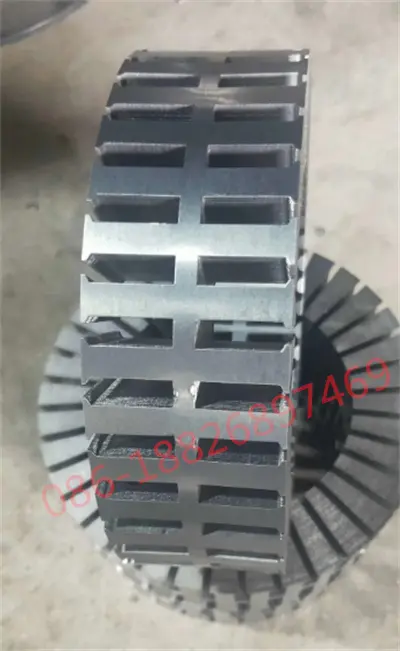
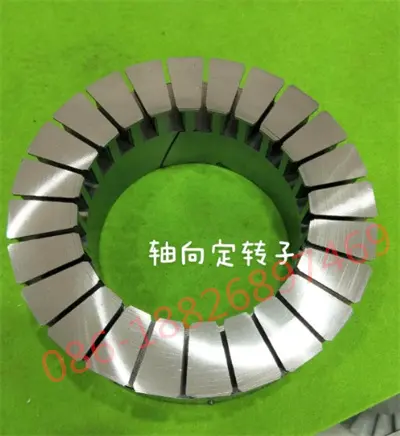
Precision Stator Core Manufacturing for eVTOL & Aerospace Electric Propulsion: Achieving 98%+ Stacking Factor Under Extreme Power Density Constraints

An engineering breakdown of material selection, progressive carbide die mechanics, Backlack self-bonding (In-Mold Curing), and vacuum hydrogen stress-relief annealing for high-frequency traction applications.
✨ Executive Engineering Overview ✨

Next-generation electric propulsion systems for eVTOL (electric Vertical Takeoff and Landing) platforms, UAV systems, eCTOL aircraft, and hypercar powertrains demand high continuous power output with minimal mass. Achieving high power density and thermal stability requires optimizing the stator and rotor lamination stack—specifically pushing the stacking factor (packing factor, \(K_{Fe}\)) from conventional 93%–95% limits to \(\ge 98\%\).

This whitepaper details the manufacturing methodologies, metallurgical controls, and tooling parameters required to eliminate physical air gaps, suppress high-frequency eddy current losses, and ensure structural integrity under extreme dynamic envelopes.

I. Electromagnetic and Thermal Trade-Offs in High-Frequency Core Stacking

Aerospace traction motors typically operate at fundamental electrical frequencies exceeding 1,000 Hz, with switching frequencies pushing into the tens of kilohertz. Under these operating envelopes, total core loss (\(P_{core}\)) is governed by the classic Steinmetz equation extended for high-frequency dynamics:

Pcore = Phys + Peddy + Pexc = kh · f · Bn + ke · f2 · B2 · d2 + ka · f1.5 · B1.5

Where \(d\) represents single lamination thickness. While reducing \(d\) to 0.10 mm dramatically decreases classical eddy current loss (\(P_{eddy} \propto d^2\)), traditional lamination stacking techniques introduce severe performance bottlenecks:

Stacking Technology Mechanical / Structural Impact Impact on \(K_{Fe}\) (Stacking Factor) Electromagnetic & Loss Penalties
Interlocking / Stacking Lugs Local mechanical deformation; high residual stress zones around lugs. 92.0%–94.5% Disrupts magnetic flux lines; creates local air gaps and high localized core heating.
Laser Outer-Diameter Welding Heat-Affected Zone (HAZ) alters grain structure along the outer seam. 94.0%–95.5% Short-circuits laminations at weld seams, causing parasitic eddy currents and NVH spikes.
Riveting / Through-Bolts Requires punch holes in back-iron/yoke, reducing effective iron cross-section. 93.0%–95.0% Distorts flux paths; insulation sleeve degradation risks major phase-to-ground faults.
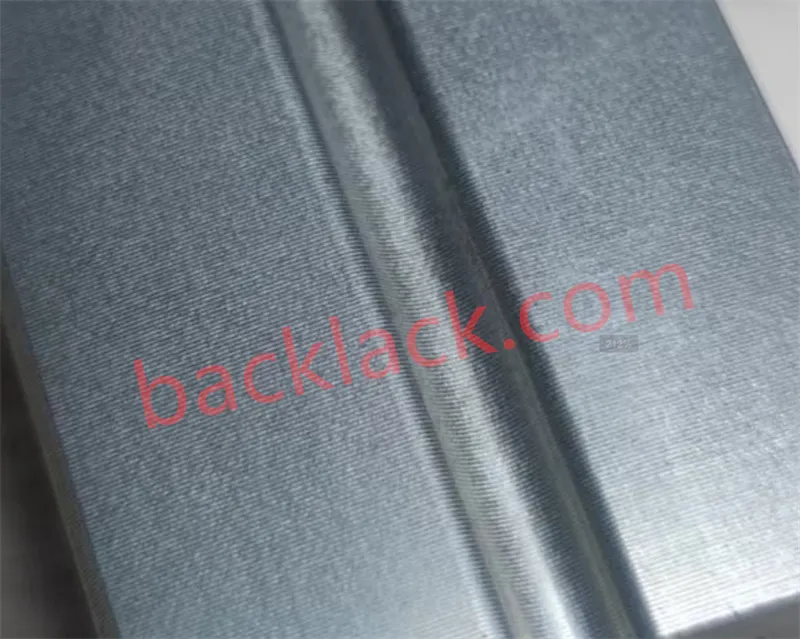
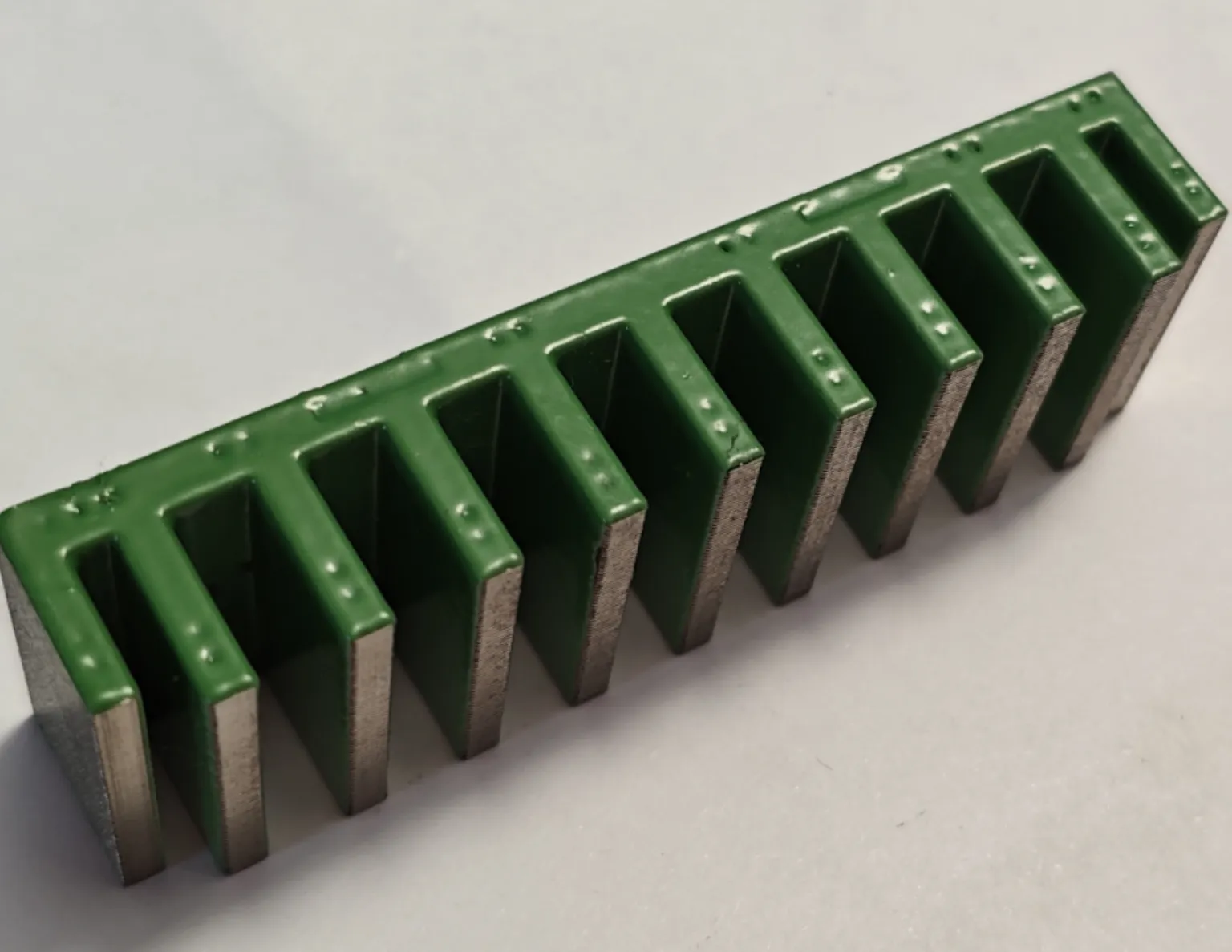
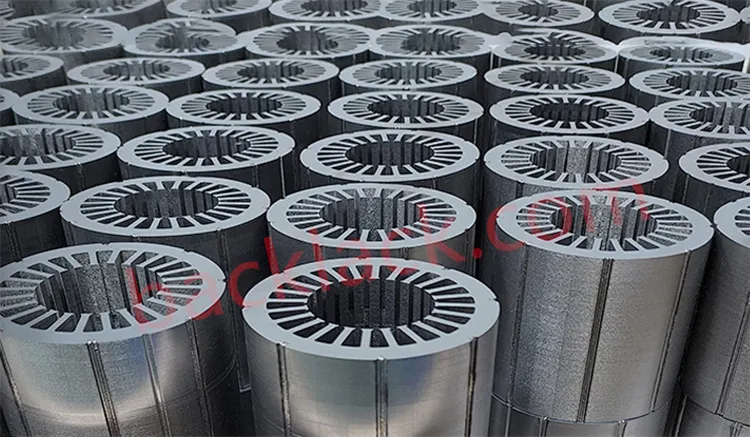
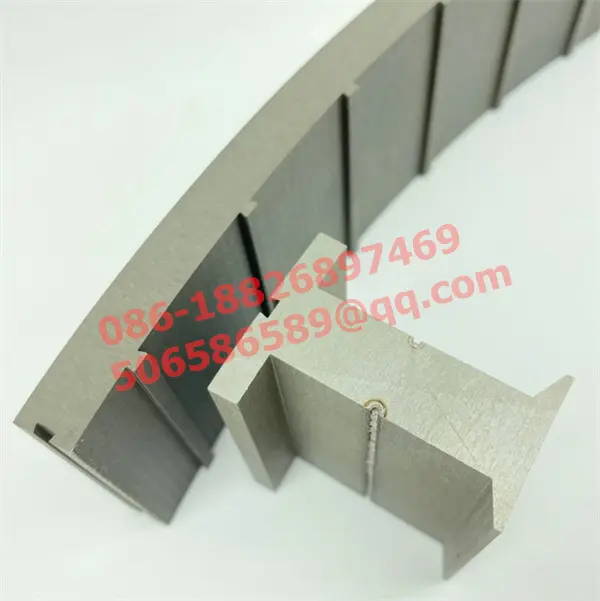
Backlack (In-Mold Curing) Uniform full-surface adhesion; zero mechanical stress concentrations. 98.0%–98.8% Eliminates inter-lamination short circuits; maintains optimal B-H curve and minimal core loss.
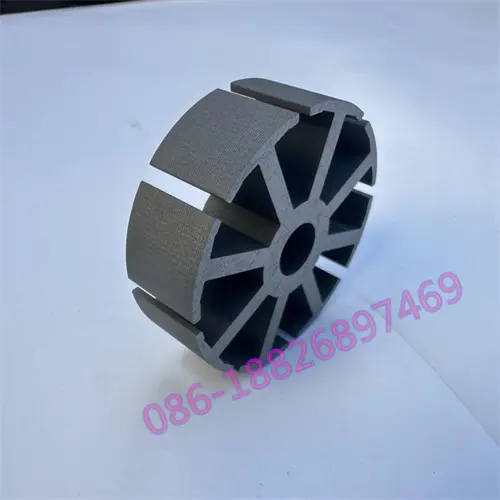
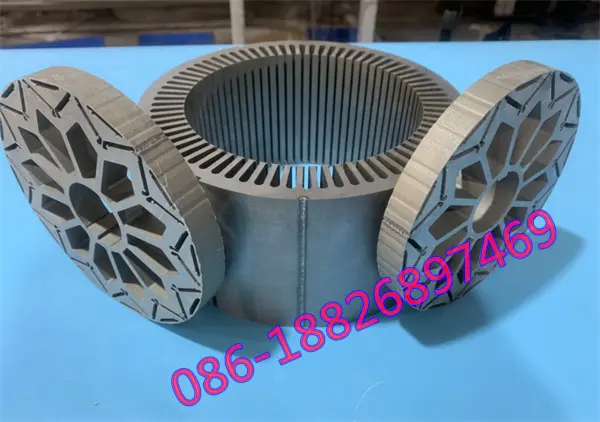
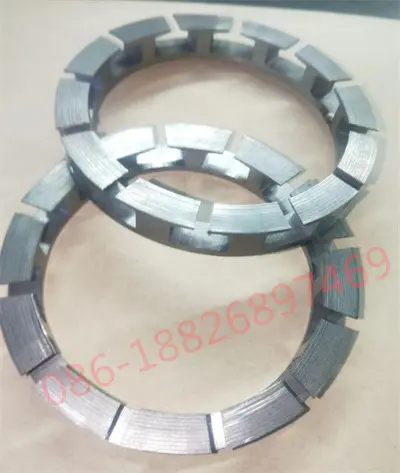
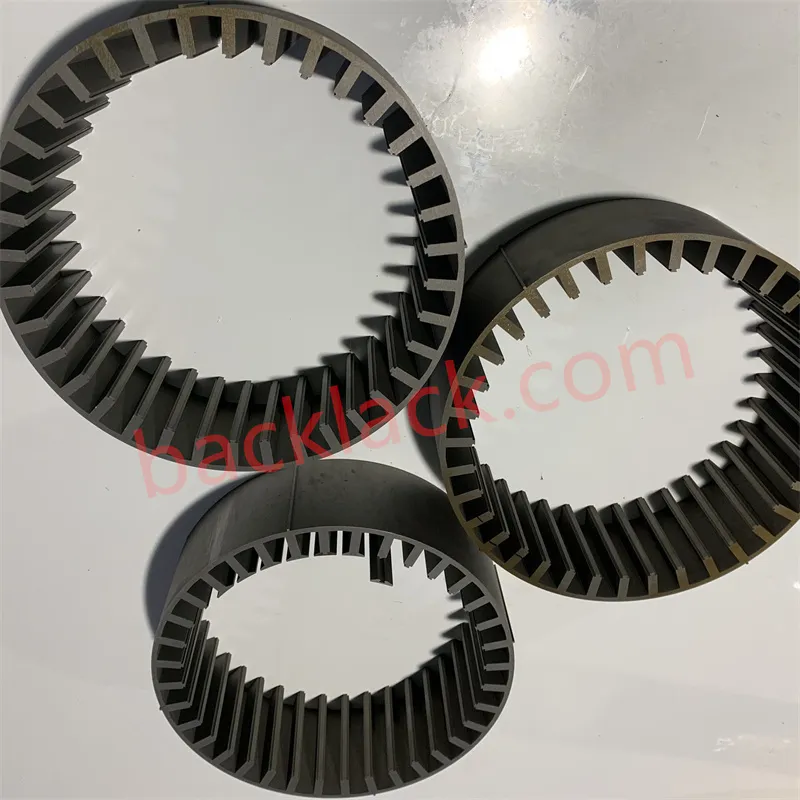
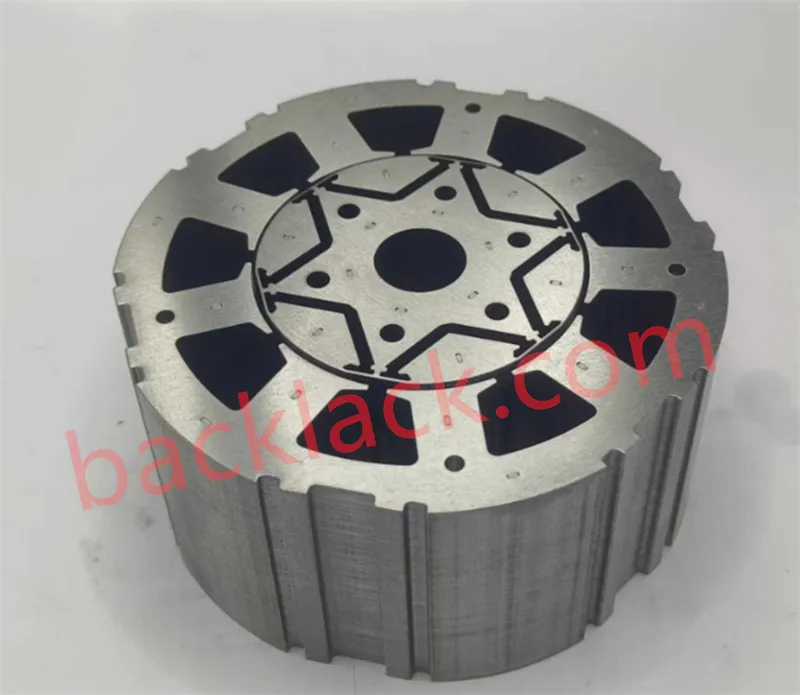
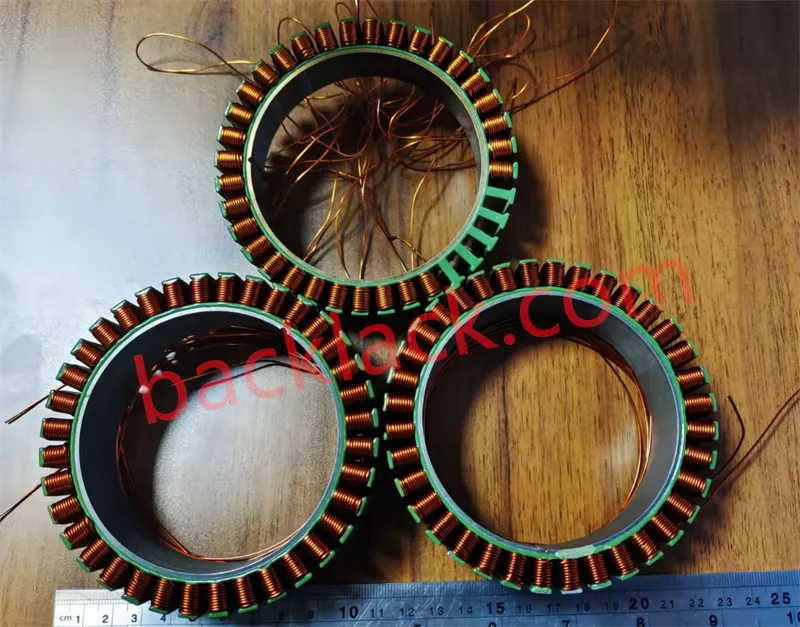
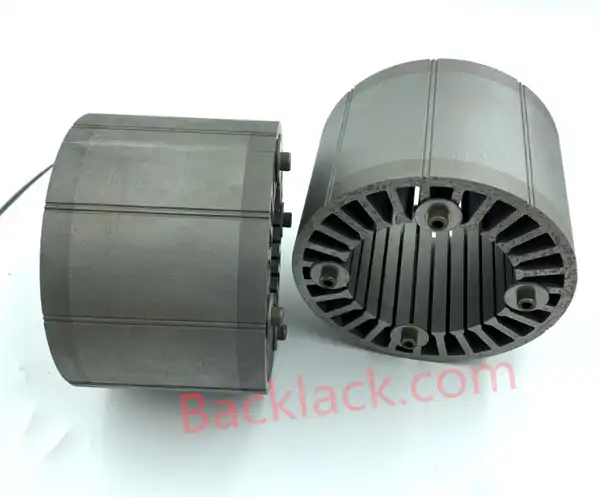
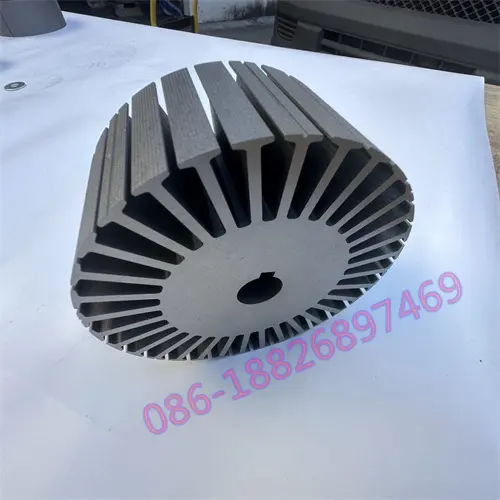
Custom Evtol Motor Stator Core Manufacturing With 98 Percent Stacking Factor
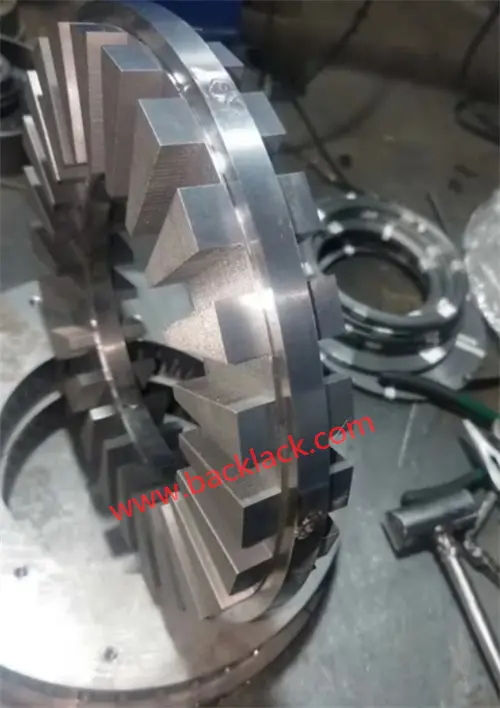
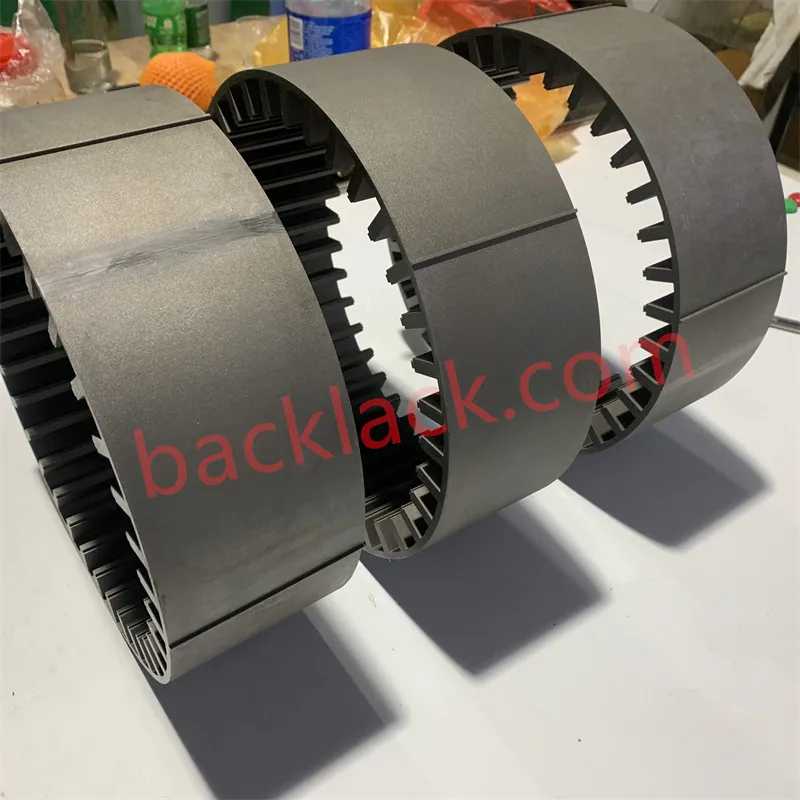
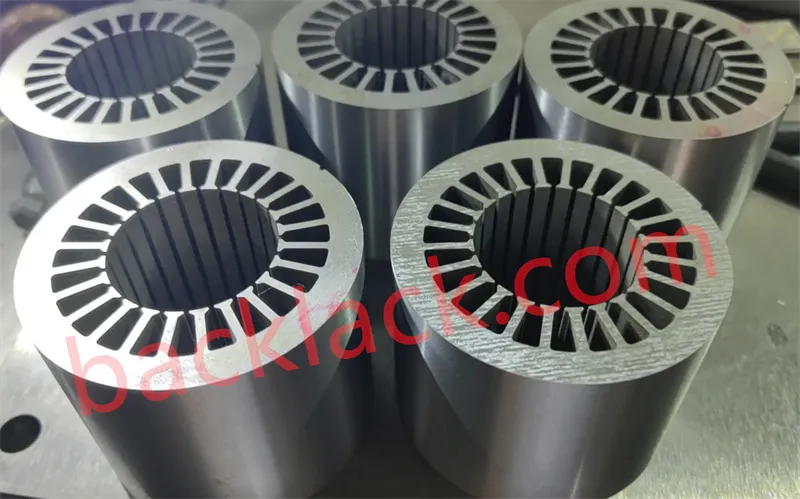
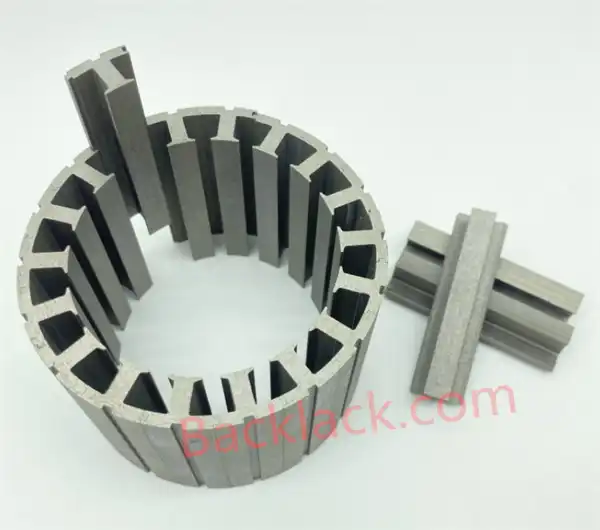
Backlack In Mold Self Bonding Stator Lamination Stacking Factory
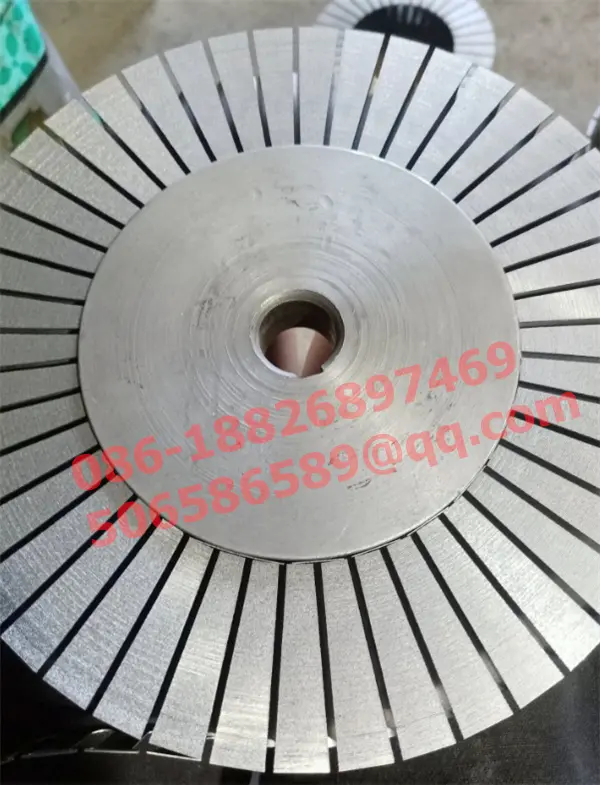
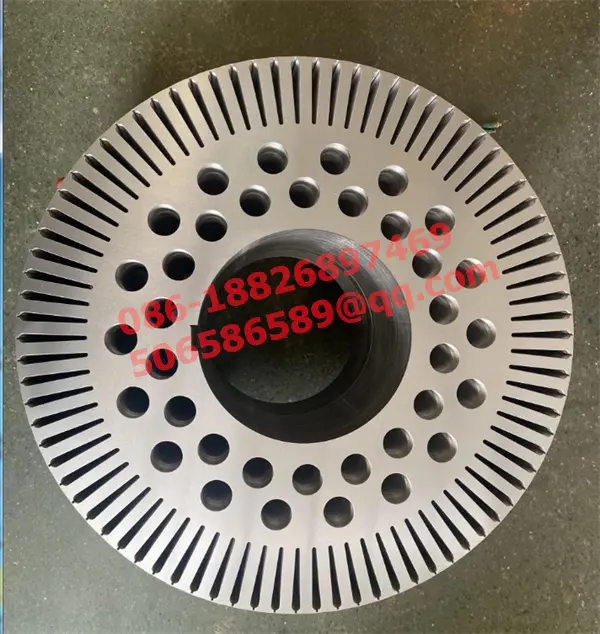
Ultra Thin 0.10Mm Jfe 10Jnex900 Silicon Steel Stamping Manufacturer
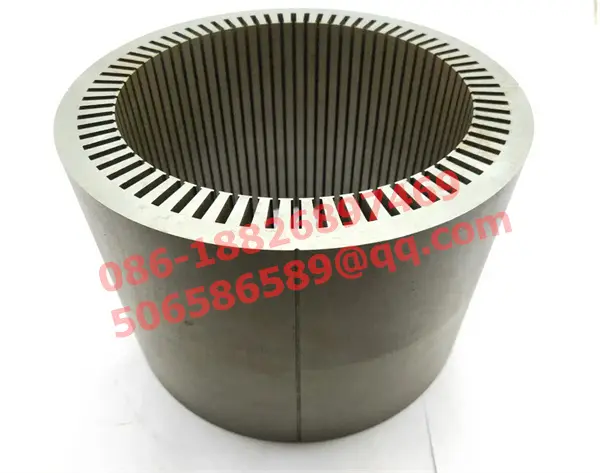
Carbide Progressive Die Precision Stamping For Aerospace Motor Cores
Vacuum Hydrogen Annealing Stress Relief For 1J22 Vacoflux 50 Laminations
High Frequency Eddy Current Loss Reduction In Aviation Stator Stacks
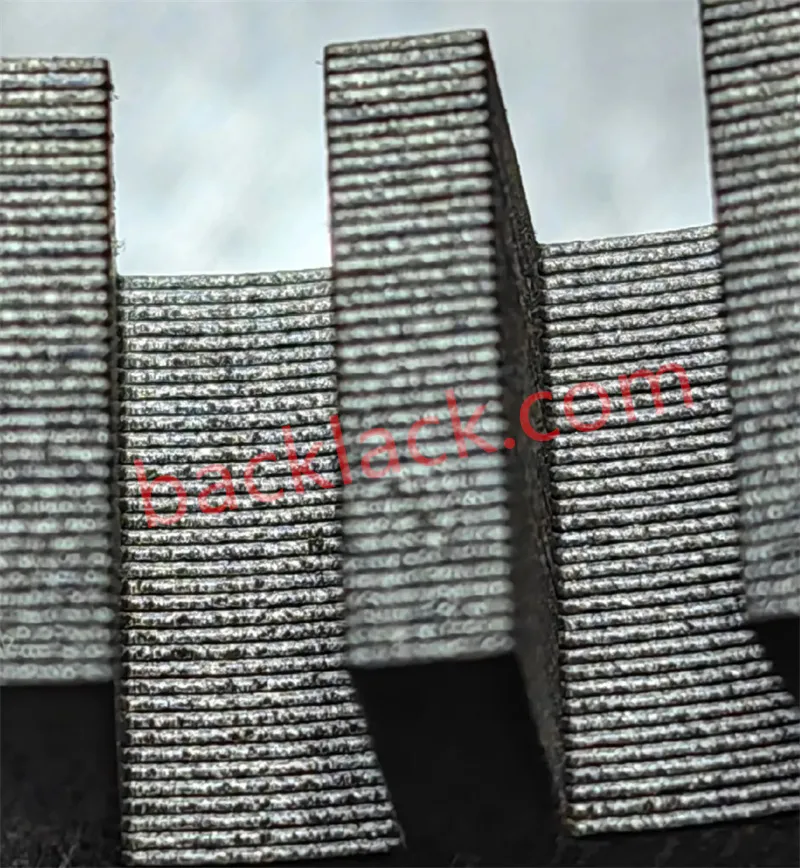
Micro Burr Control Under 0.003Mm For Thin Electrical Steel Laminations
Rivet Free Backlack Bonded Rotor Core For High Rpm Ev Traction Motors
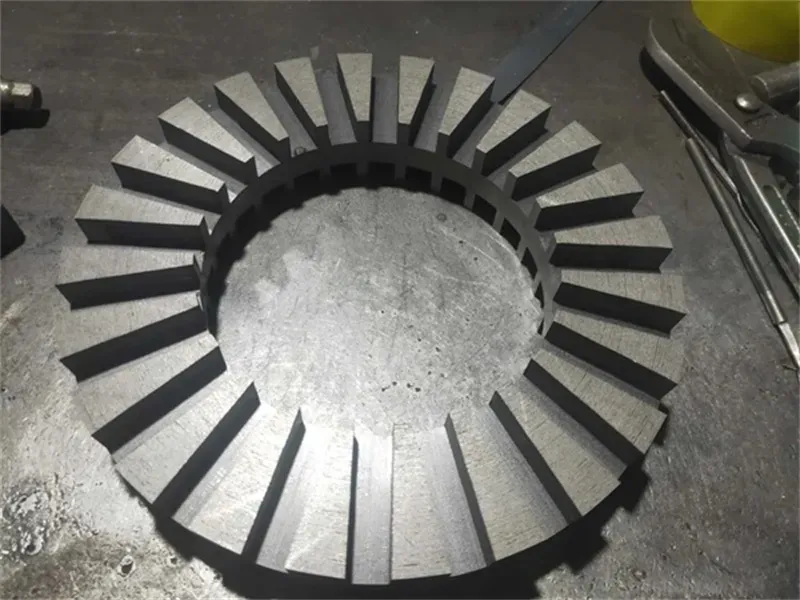
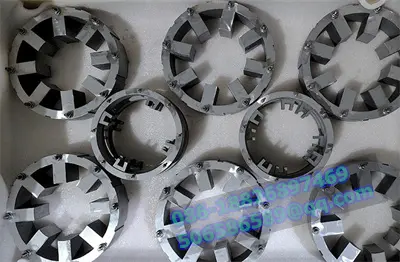
Precision Custom Axial Flux Motor Stator Core Manufacturing
Dfm Feasibility Assessment For Custom Motor Lamination Prototypes
0.20Mm JFE Steel 20Jneh1200 Backlack Bonded Stator Manufacturing
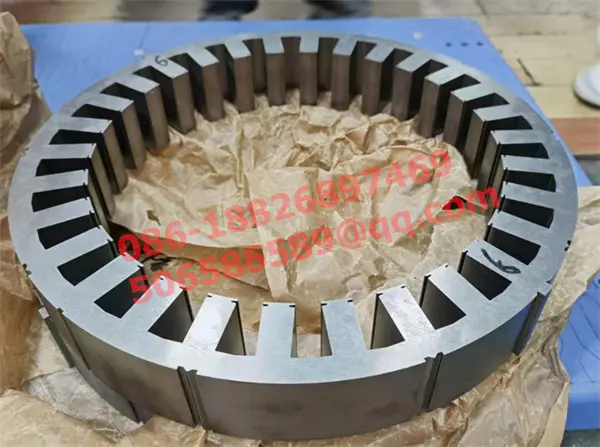
High Power Density Evtol Electric Propulsion Stator Core Supplier
Full Surface Adhesive Bonding Shear Strength Testing For Motor Rotors
Wire Edm Prototyping Services For Custom Soft Magnetic Alloy Cores
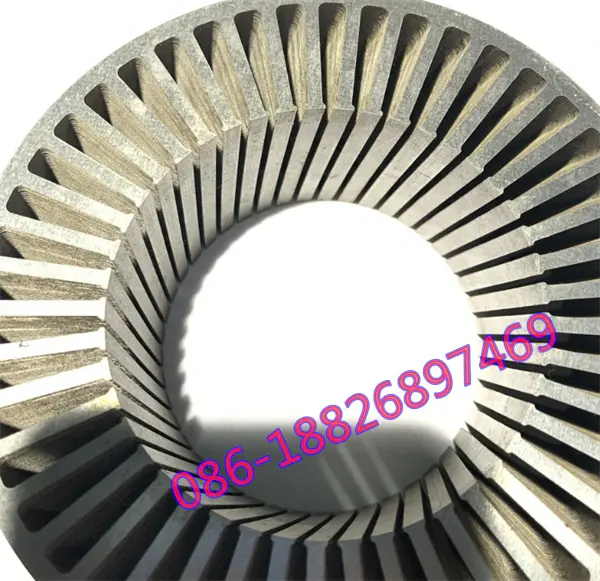
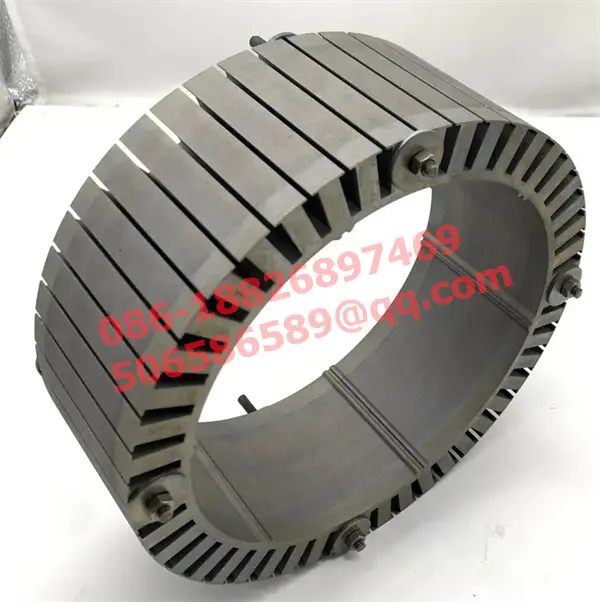
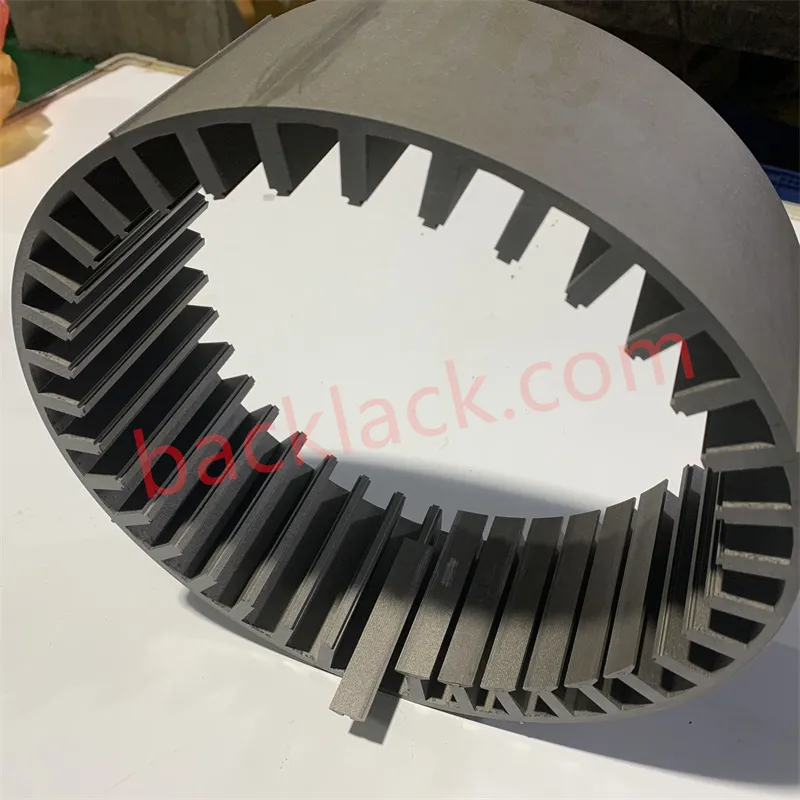
High Precision Skewed Slot Backlack Stator Core Manufacturing Process
High Temperature thermosetting Epoxy Coating M3 M7 Bonding Core Factory
Suppressing Pwm Harmonic Iron Loss In High Speed Traction Motor Stators
Custom Cobalt Iron 1J22 Vacoflux 50 Stator Stack Manufacturing
High Packing Factor Silicon Steel Laminations For Uav Drone Motors
Micro Slitting and Precision Stamping of Ultra Thin Electrical Steel
Non Oriented Electrical Steel Backlack Curing Process For Automotive Motors
Interlamination Short Circuit Prevention In High Frequency Stator Cores
Custom Frameless Motor Stator and Rotor Lamination Stack Manufacturer
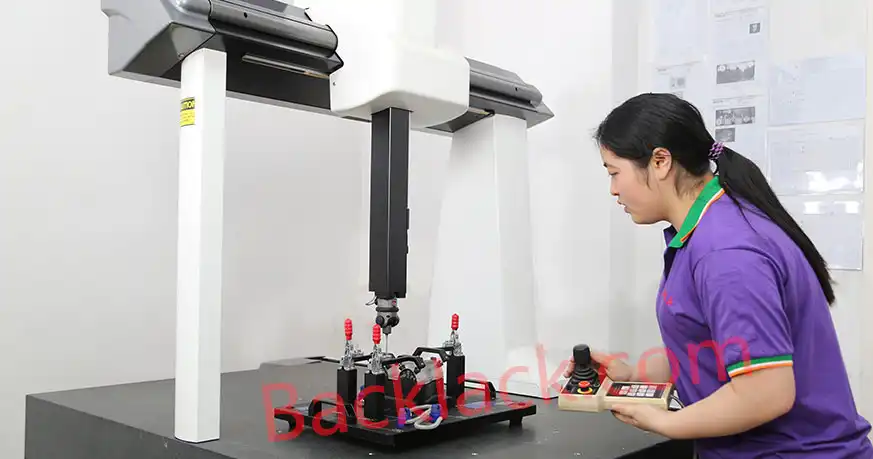
Quality Control and Optical Cmm Inspection For Backlack Stator Stacks
High Strength Rotor Lamination Stacking For Hypercar Electric Powertrains
Rapid 5 To 7 Day Prototyping For Custom Bonded Motor Lamination Cores
Optimizing Stator Core Packing Factor For Ectol Aircraft Electric Drives
Precision Silicon Steel Coil Slitting and Progressive Die Tooling Factory
Nvh Suppression In High Speed Stator Cores Using Backlack Bonding
Tier 1 Supplier Custom Stator Rotor Lamination Stacks For Electric Propulsion

II. Advanced Manufacturing Pillars to Break the 98% Stacking Threshold

Pillar 1: Materials

High-Grade Thin Silicon Steel & Alloys

Processing 0.10 mm (JFE 10JNEX900), 0.20 mm (JFE 20JNEH1200), and Fe-Co-V alloys (1J22 / Vacoflux 50 / Vacodur 49) for maximum magnetic saturation (\(B_s > 2.3\text{ T}\)).

Tolerance: ±0.002 mm
Pillar 2: Tooling

Micro-Clearance Carbide Tooling

Progressive stamping dies with tungsten carbide inserts engineered to eliminate roll-over edge degradation and control micro-burrs.

Burr Height: < 0.003 mm
Pillar 3: Bonding

Backlack Self-Bonding (In-Mold)

Thermosetting epoxy varnish pre-coated at 2–4 \(\mu\text{m}\) per side, solidifying under precise thermo-compressive force during progressive stacking.

Target Factor: > 98.5%

1. Ultra-Thin Lamination Handling & Strip Tension Control

Stamping ultra-thin electrical steel (0.10 mm to 0.20 mm) introduces extreme susceptibility to strip wrinkling and elastic springback. YOUYOU-TECH utilizes servo-driven precision feeder systems with active closed-loop tension control, maintaining strip planarity prior to die entry to prevent micro-buckling across narrow stator tooth sections.

2. Precision Progressive Die Stamping & Sub-3μm Burr Suppression

When punching 0.10 mm lamination sheets, cutting clearance between the punch and die matrix must be maintained at 3% to 5% of material thickness (\(\sim 3\text{--}5\,\mu\text{m}\)). Excessive burrs act as physical spacers between layers, dramatically lowering macroscopic density:

🔍Industry Focus: Max Allowed Burr Height (\(h_{burr}\)) ≤ 0.003 mm Parallelism Tolerance across Stack Height ≤ 0.01 mm

3. Backlack In-Mold Self-Bonding Mechanics (Full-Surface Integration)

Instead of post-stack varnish dipping or mechanical locking, single laminations with pre-coated thermosetting epoxy resin are bonded under controlled temperature-pressure profiles (\(150^\circ\text{C}\text{ to }220^\circ\text{C}\) at \(1.5\text{--}3.0\text{ MPa}\)).

  • Zero Air Gaps: Full-surface adhesive flow eliminates internal voids, reaching measured density ratio \(K_{Fe} = \rho_{stack} / \rho_{raw} \ge 98.5\%\).
  • Mechanical Rigidity: Shear strength exceeds \(12\text{ MPa}\) across operating temperatures from \(-55^\circ\text{C}\) to \(180^\circ\text{C}\), withstanding severe thermal cycling and high rotational speeds.
  • Vibration Damping: Continuous polymer layer acts as a micro-structural acoustic damper, suppressing high-order spatial harmonic resonance and motor NVH.

III. Metallurgical Restoration: High-Vacuum Hydrogen Stress-Relief Annealing

Mechanical shearing during progressive stamping distorts the metallic crystal lattice near the cut edges, creating residual stress fields up to 200μm into the tooth width. This stress severely degrades permeability and increases hysteresis loss.

YOUYOU-TECH Vacuum Annealing Process Cycle

Stage 1: Vacuum Evacuation Deep evacuation down to \(10^{-3}\text{ Pa}\) to remove trace oxygen and prevent intergranular oxidation on ultra-thin sheet edges.
Stage 2: Pure H2 Thermal Soak Controlled ramp to \(780^\circ\text{C}\text{ to }850^\circ\text{C}\) in 99.999% dry hydrogen atmosphere to reduce surface oxides and recrystallize grain boundaries.
Stage 3: Controlled Cooling Slow furnace cooling to prevent thermal shock, fully restoring initial \(B\text{--}H\) magnetization curves and low high-frequency core loss properties.

IV. DFM Feasibility, Prototyping & Quality Inspection Standards

To accelerate development cycles for aerospace and automotive motor programs, YOUYOU-TECH bridges initial CAD concepts to mass production via dedicated DFM engineering protocols:

For R&D Engineering Teams

  • Prototyping Options: Precision Wire-EDM and low-stress prototype bonding for rapid bench testing.
  • Metrology: CMM 3D optical scanning, micro-hardness profile mapping, and cross-sectional micrograph layer inspection.
  • Magnetic Validation: Single-sheet testing and Epstein frame characterization under custom frequency sweeps up to 2,000 Hz.

For Supply Chain & Procurement Managers

  • Material Traceability: Complete mill test certificates (MTC) with lot-level electromagnetic test reports.
  • Rapid DFM Turnaround: Engineering response and technical manufacturability feedback within 24–48 hours.
  • Scalability: Seamless transition from short-run prototype tooling to multi-cavity tungsten carbide progressive dies.

Backed by Aerospace Motor Core Pioneers and Advanced Manufacturing Experts

Mastering ultra-thin electrical steel processing, carbide progressive die stamping, and Backlack in-mold self-bonding to achieve a 98%+ stacking factor for eVTOL, UAV, and high-performance motorsport powertrains.

As a specialized precision motor core manufacturing factory, Youyou Technology combines prime mill-direct supply of ultra-thin electrical steels—including JFE 10JNEX900 (0.10mm) and JFE Steel 20JNEH1200—with advanced high-speed progressive die stamping and vacuum hydrogen annealing. Our engineering and production teams specialize in micro-burr control (<0.003mm), full-surface Backlack self-bonding (In-Mold Curing), and stress-relief restoration. From raw material distribution and DFM tooling evaluation to rivet-free stator and rotor lamination stacks, we bridge the gap between high-frequency magnetic optimization and aerospace-grade volumetric power density.

To date, we have partnered with global motor innovators across the eVTOL, aerospace, and high-performance automotive sectors—delivering custom-engineered lamination stacks that completely eliminate interlamination short circuits, suppress high-frequency PWM core losses, and ensure structural stability under extreme rotational centrifugal forces.

Ready to Source Precision Motor Cores or Request a DFM Review?

Whether you need ultra-thin silicon steel stamping, Backlack self-bonded stator stacks, or vacuum hydrogen annealing for your next-generation aerospace or motorsport electric propulsion project, Youyou Technology is ready to deliver.
Request DFM Review & RFQ

Precision Quality Control for Ultra-Thin Electrical Steel & Backlack Stacks

As a specialized Custom Precision Motor Core Factory, Youyou Technology enforces rigorous quality assurance across 0.10–0.20 mm ultra-thin silicon steel (JFE 10JNEX900, JFE 20JNEH1200), vacuum-annealed soft magnetic alloys (1J22 / Vacoflux 50 / Vacodur 49), and Rivet-Free Backlack Stacks—guaranteeing micro-burrs ≤ 0.003 mm, stacking factors ≥ 98.5%, and shear strength ≥ 12 MPa (thermosetting M3/M7 stability) to survive extreme dynamic envelopes, high-frequency iron loss, and centrifugal stresses in eVTOL, aerospace, and hypercar electric propulsion.

98%+ Stacking Factor & Parallelism Tolerance: Full-surface Backlack in-mold thermal curing eliminates physical air gaps, achieving a verified density ratio (KFe ≥ 98.5%) with lamination thickness variation controlled within ±0.002 mm across 0.10–0.20 mm sheets.

Micro-Burr Control (< 0.003 mm): Precision tungsten carbide progressive tooling restricts shearing burrs strictly under < 0.003 mm, completely preventing interlaminar electrical shorts, preserving 2–4μm insulation coatings, and protecting fine magnet wire during winding.

Full-Surface Bonding & Dynamic Integrity: Backlack epoxy resin thermal curing provides uniform shear strength (> 12 MPa across -55°C to 180°C), resisting extreme rotor centrifugal forces and high-rpm mechanical vibrations without mechanical rivets or weld seams.

Vacuum Annealing & NVH Suppression: Post-stamping high-vacuum pure hydrogen annealing (780–850°C) completely eliminates mechanical edge stress to restore B-H curves, suppressing high-frequency PWM harmonic core losses and operational NVH by up to 5 dB.

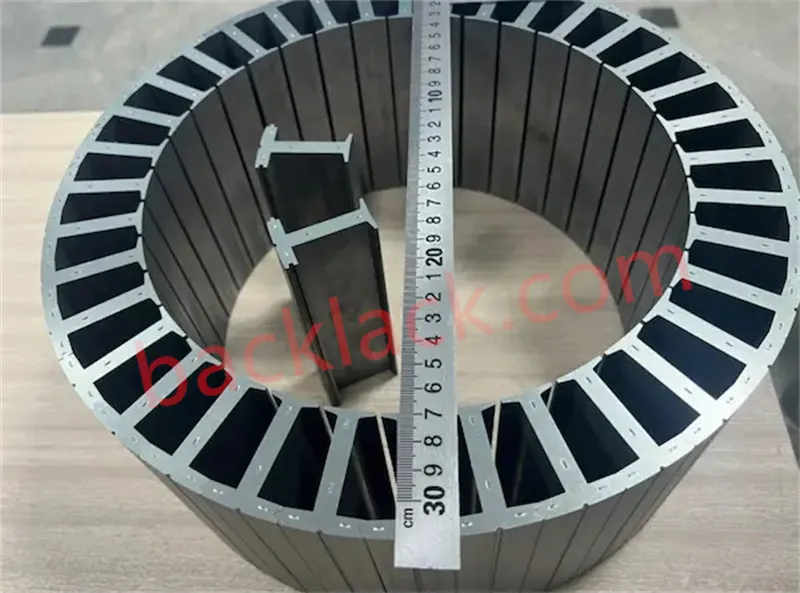
Quality Control for Skewed Backlack Motor Stator Cores

FREQUENTLY ASKED QUESTIONS

We process ultra-thin non-oriented electrical steel grades including JFE 10JNEX900 (0.10 mm) and JFE Steel 20JNEH1200 (0.20 mm), alongside high-saturation cobalt-iron soft magnetic alloys such as 1J22 / Vacoflux 50 / Vacodur 49 (Bs > 2.3 T), engineered for extreme power density in eVTOL platforms, UAV systems, and motorsport powertrains.

By eliminating mechanical interlocking lugs and outer welding seams, our Backlack in-mold self-bonding technology achieves 100% surface-to-surface adhesion. Combined with micro-burr control (< 0.003 mm) and ultra-tight single-sheet thickness tolerances (±0.002 mm), our measured lamination stacking factor consistently exceeds KFe ≥ 98.5%.

We utilize ultra-high-rigidity servo presses paired with tungsten carbide (carbide) progressive dies, maintaining cutting clearance at 3%–5% of sheet thickness. This restricts stamping edge burrs to hburr < 0.003 mm, completely preventing interlaminar short circuits, protecting fine magnet wire during winding, and suppressing high-frequency PWM eddy losses.

Mechanical shearing induces crystalline distortion up to 200 μm along the tooth edge. Our post-stamping vacuum hydrogen annealing (780–850°C in 99.999% H2 at 10-3 Pa) completely eliminates residual shearing stress, fully restoring material B-H magnetization curves and optimizing high-frequency core loss properties.

We deliver comprehensive DFM feasibility reports within 24–48 hours upon receiving 3D STEP / 2D CAD files. For rapid prototype verification, we offer wire-EDM sample stacks, optical CMM metrology, Epstein frame magnetic testing up to 2,000 Hz, and seamless transition to production progressive die tooling.

Aerospace & Motorsport Motor Core Manufacturing

Ready to Maximize Stacking Factor & Conquer High-Frequency Core Loss Constraints for Next-Gen Electric Propulsion?

Start Your Custom Ultra-Thin Electrical Steel & Backlack Self-Bonding Core Project Today

Seeking a premier precision motor core manufacturer specializing in ultra-thin electrical steel (0.10–0.20 mm JFE 10JNEX900 & JFE 20JNEH1200), vacuum-annealed soft magnetic alloys (1J22 / Vacoflux 50 / Vacodur 49), and Backlack in-mold self-bonding technology? Look no further! By combining prime material supply with full-surface thermosetting resin curing (shear strength > 12 MPa), Youyou Technology completely eliminates physical air gaps, slashes high-frequency PWM core losses, and guarantees a industry-leading stacking factor of ≥98.5%. From eVTOL, UAV, and eCTOL aerospace platforms to hypercar motorsport powertrains, we deliver rigid, rivet-free stator and rotor cores with micro-burr control (<0.003 mm) and high-frequency efficiency.

Contact our engineering team today to submit your 3D STEP / 2D CAD drawings, get rapid prototyping quotes, or receive a free 24–48 hour DFM feasibility and Backlack thermal-curing evaluation for your high-speed electric propulsion project!

Get Your Custom Quote Now
、