1. Manufacturing Challenges Driven by Topological Shift: Radial vs. Axial Cores
Axial Flux Motors (AFMs) fundamentally alter the direction of magnetic flux. For manufacturing facilities, this shift invalidates the traditional stamping and laminating process flow:
| Feature / Dimension | Traditional Radial Flux Cores | Axial Flux Cores (Pancake Style) | Manufacturing Impact & Shop-Floor Challenges |
|---|---|---|---|
| Magnetic Circuit | 2D Planar Circuit (Parallel to lamination sheet) | 3D Spatial Circuit (Perpendicular to rotor axis) | Standard silicon steel exhibits high reluctance along the axial path; requires SMC or helical winding. |
| Core Structure | Laminated concentric rings/slotted sheets | Segmented stator teeth / Helical continuous winding | Cannot be stamped using standard progressive dies; requires specialized winding or molding presses. |
| Tolerances | Relaxed axial length tolerances | Extremely sensitive to planar end-face runout | End-face runout must be strictly held within ±0.008 mm to prevent rotor-stator rubbing. |
| Heat & Loss | 2D anisotropic heat dissipation | High eddy currents at tooth tips; complex 3D heat flow | Requires integrated micro-channels or high-resistivity SMC materials. |
2. Core Manufacturing Solutions across Three Key Robot Application Scenarios
A. High-Torque Leg & Hip Joints: YASA (Yoke-And-Segmented-Armature) Cores
Leg joints must withstand high dynamic impact loads and deliver massive peak torque (often hundreds of N·m).
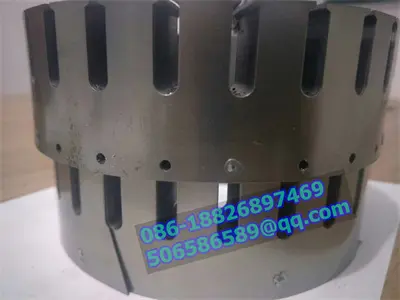
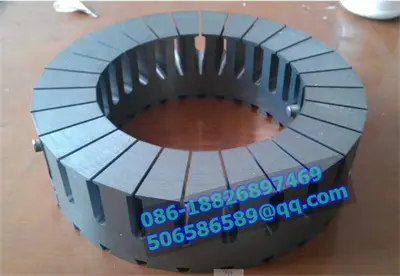
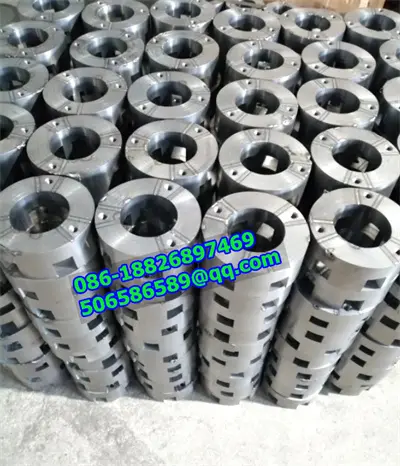
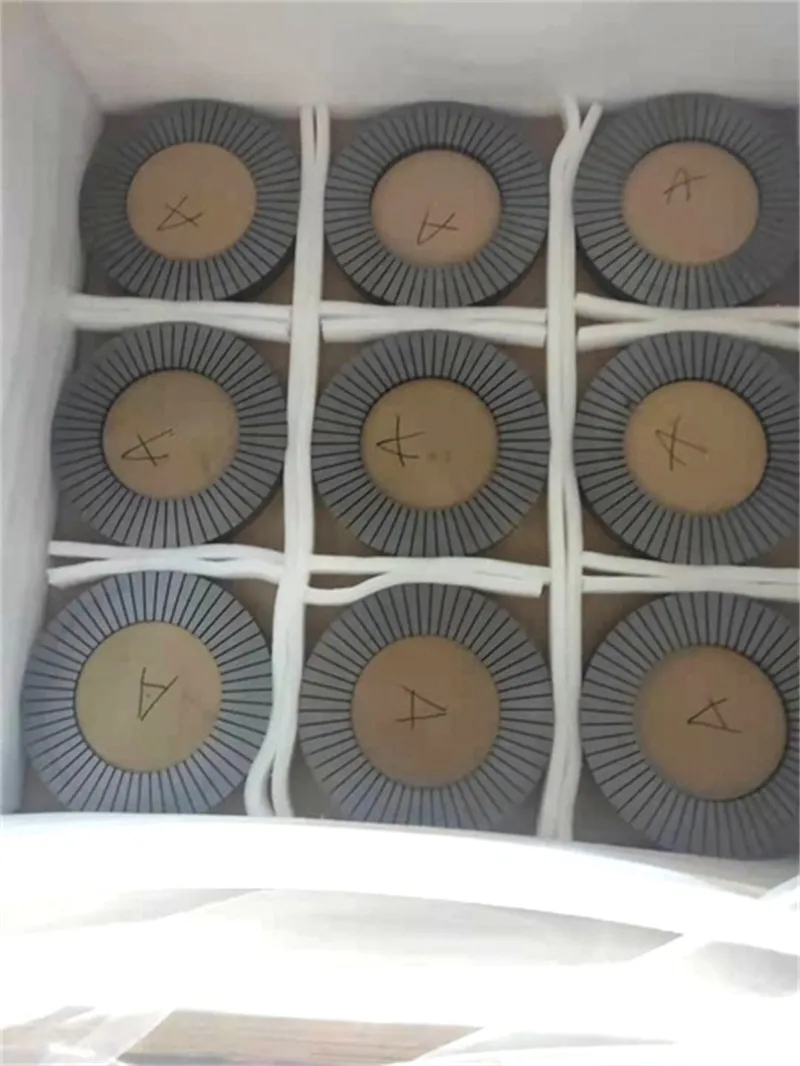
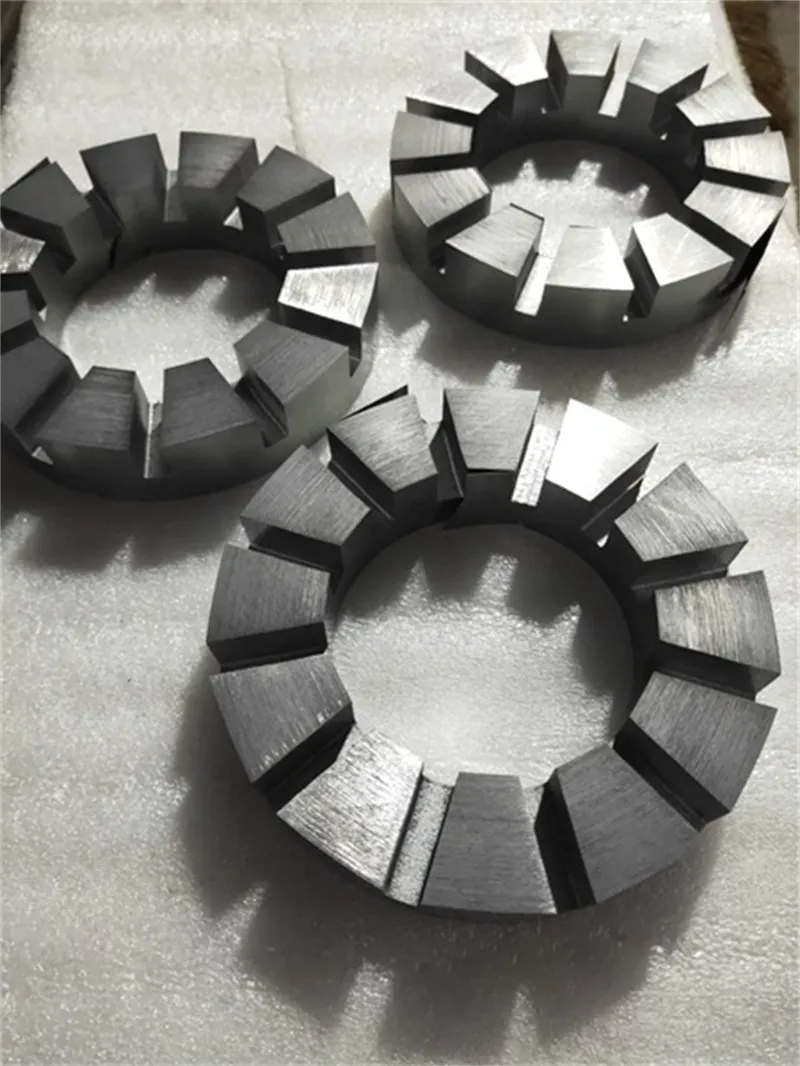
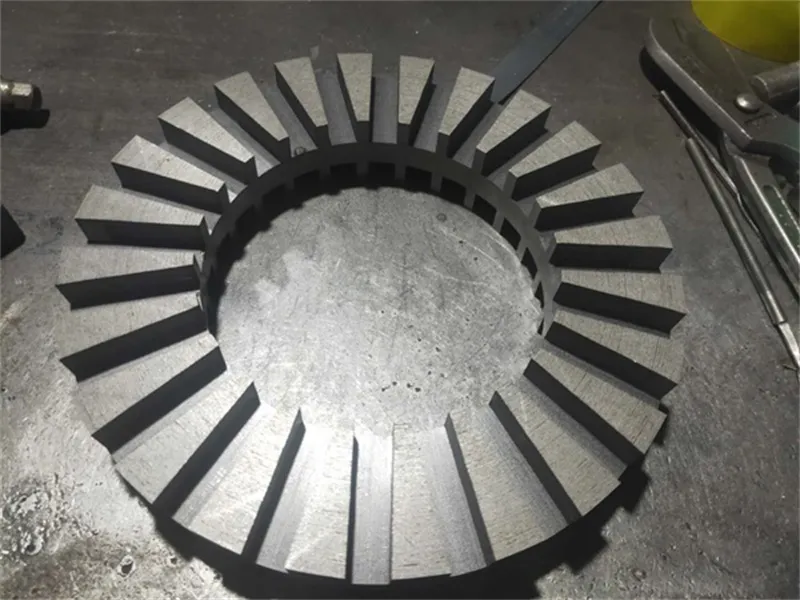
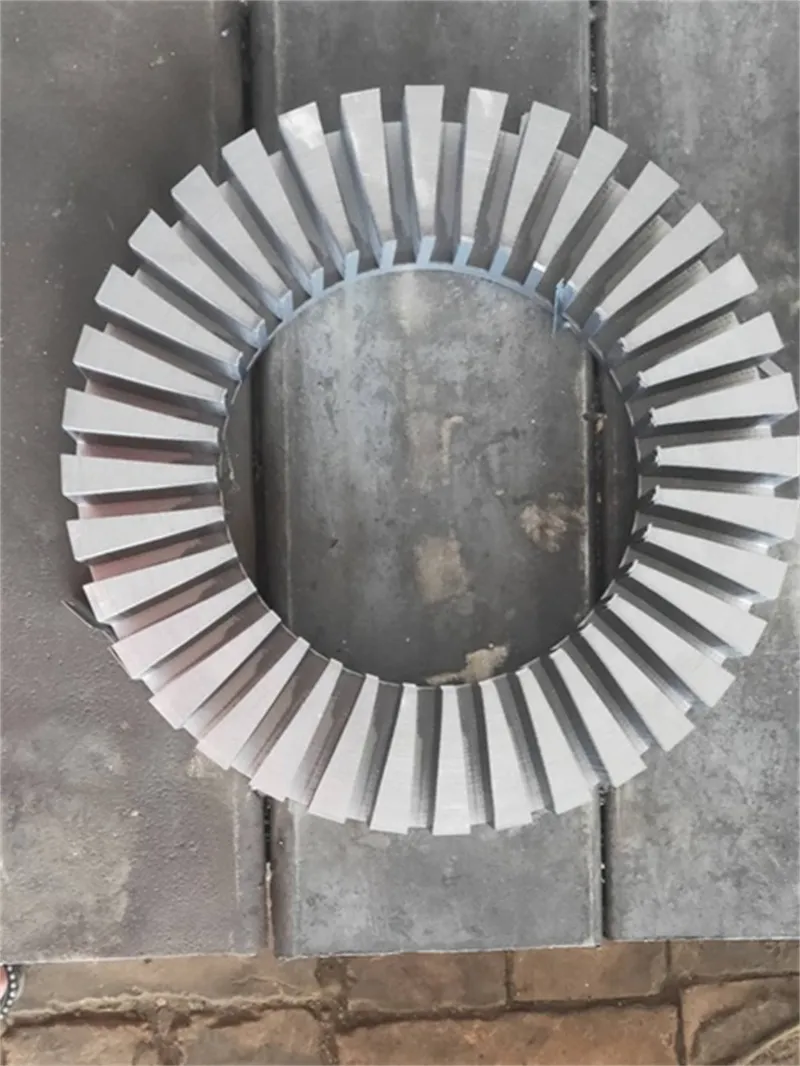
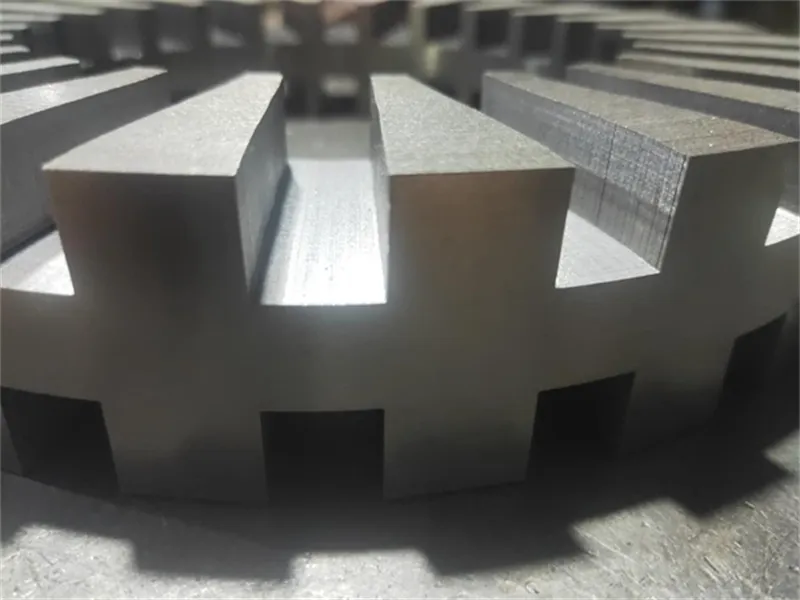
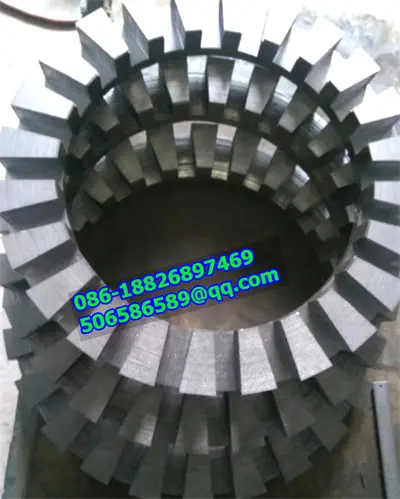
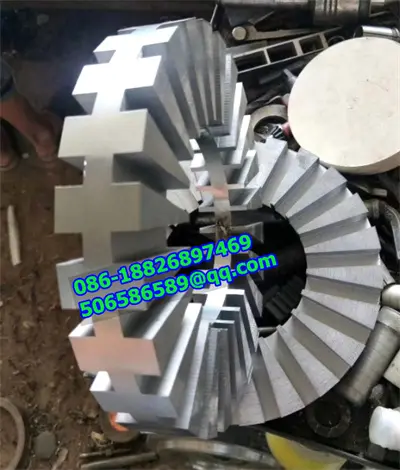
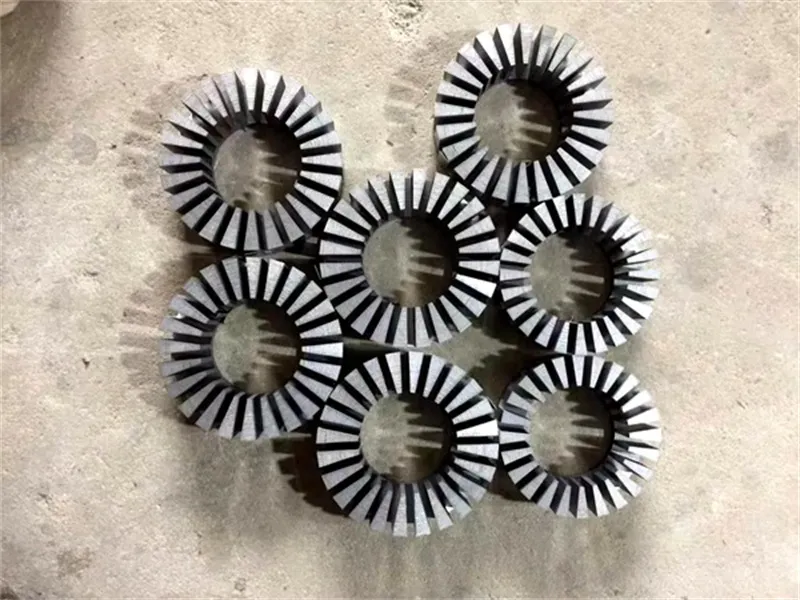
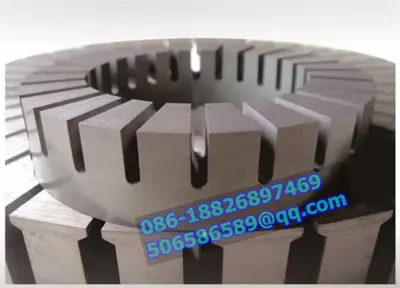
- Segmented Tooth Fabrication: The stator is split into individual wedge-shaped teeth, eliminating the stator yoke to reduce overall weight.
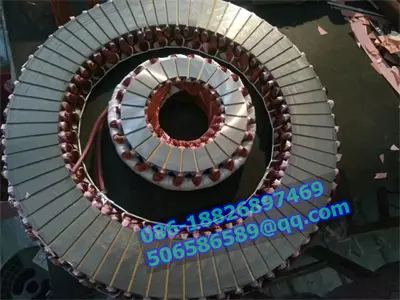
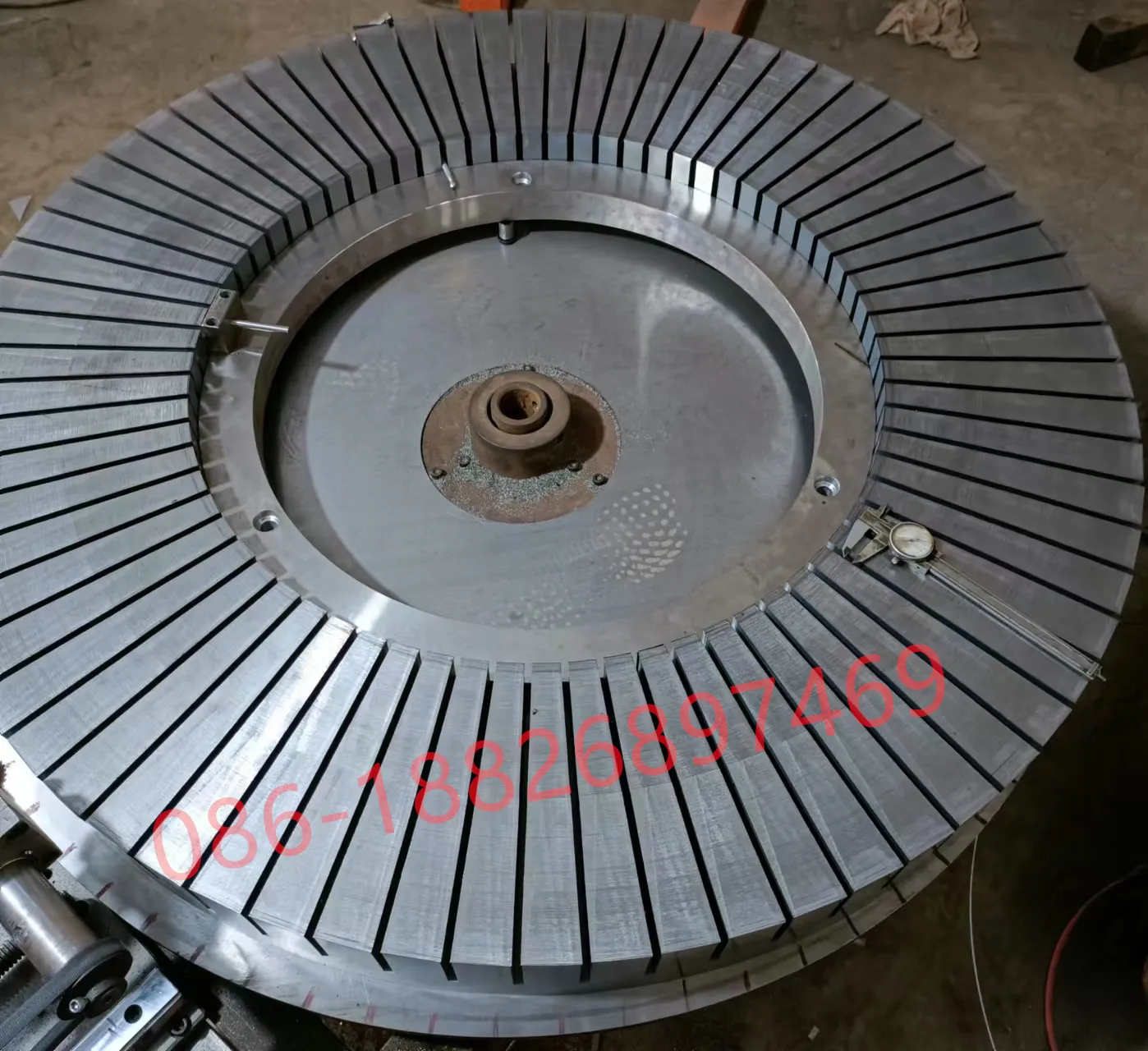
- Variable-Tooth-Width Winding: Utilizing 0.1 mm–0.2 mm high-grade grain-oriented or non-oriented silicon steel strips, servo-controlled winding machines continuously adjust tension and indexing to achieve core packing densities >98%.
- High-Strength Overmolding: Segmented teeth are overmolded with specialized insulating polymers, ensuring the insulation layer does not crack or delaminate under thousands of high-impact load cycles.
B. Dexterous Hands & Micro-Joints: SMC Molding & Coreless Solutions
Space inside robotic dexterous hands is measured in millimeters, making traditional micro-laminations impossible to rivet or glue:
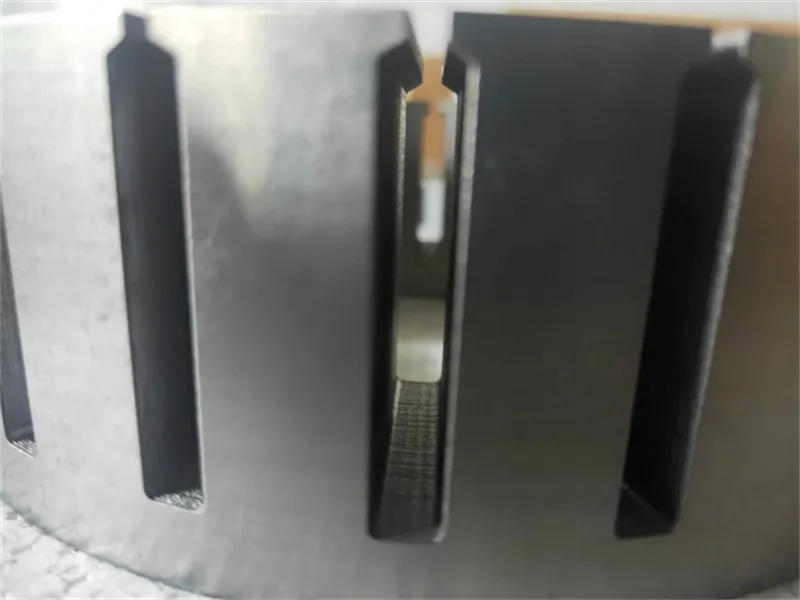
- SMC High-Pressure Molding: Using Soft Magnetic Composite (SMC) materials, micro-teeth with complex chamfers and cooling grooves are pressed in a single step at 800–1000 MPa, completely bypassing micro-lamination stacking.
- Coreless / PCB Winding: For ultra-thin pancake motors (e.g., 5 mm total thickness), multi-layer PCB copper foil etching is used to replace both the iron core and copper wiring.
C. Concentric Integrated Joint Modules: Ultra-Thin Helical Cores
For compact actuator modules where the motor and harmonic reducer are concentrically nested:
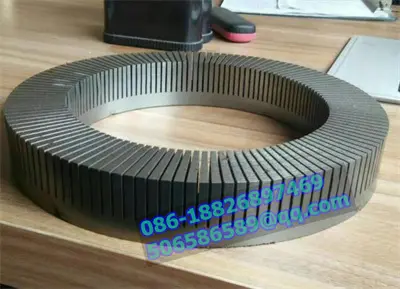
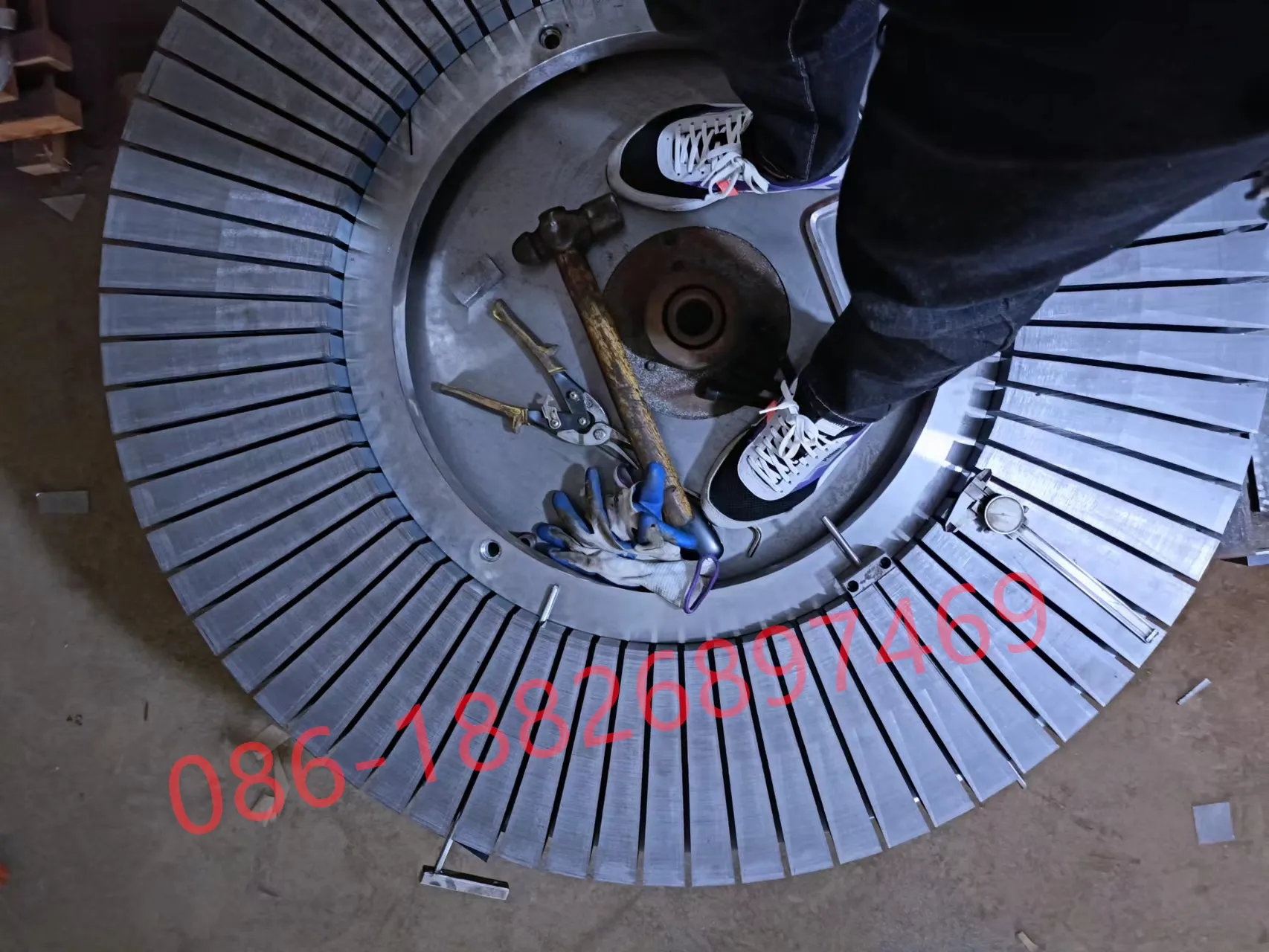
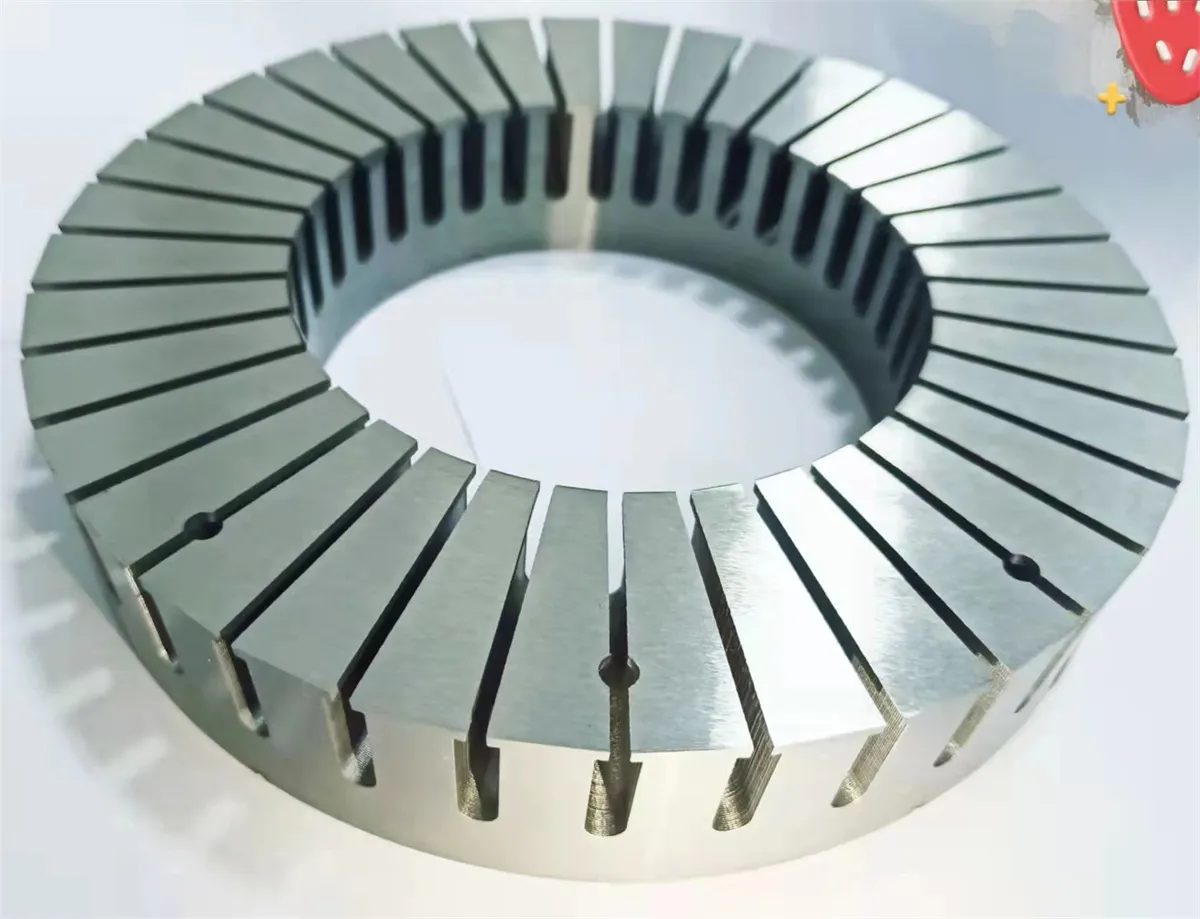
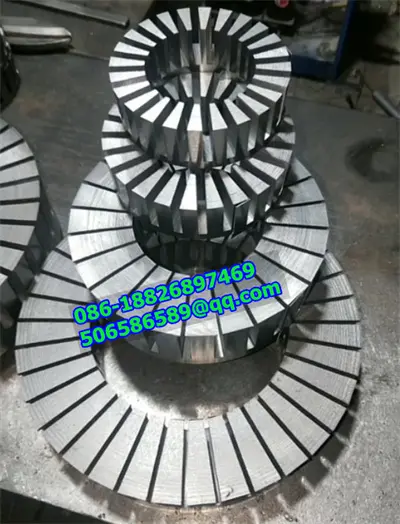
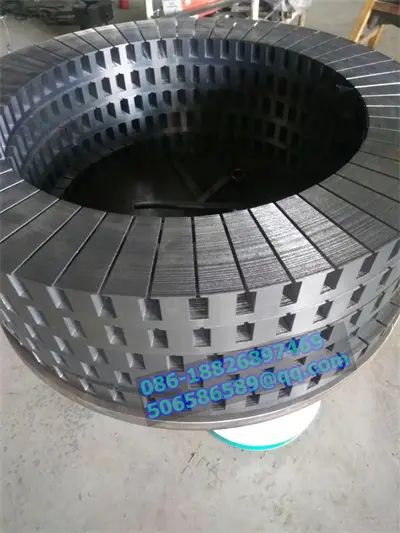
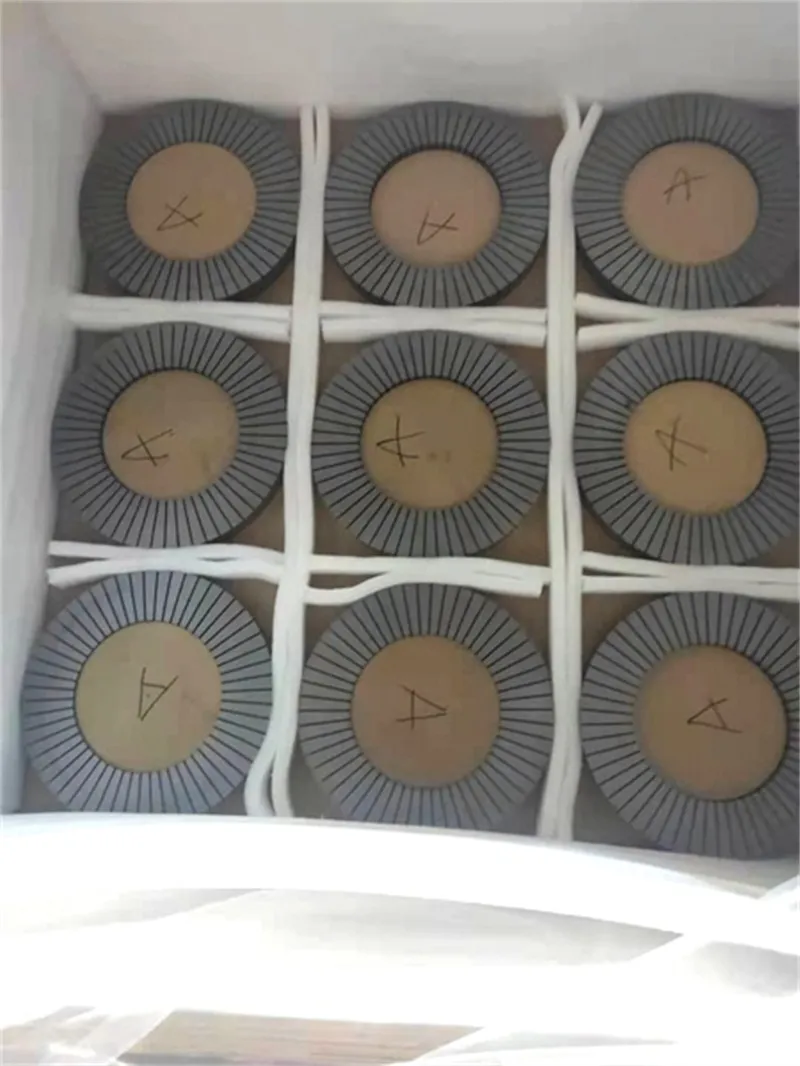
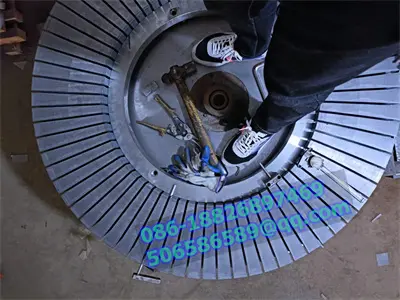
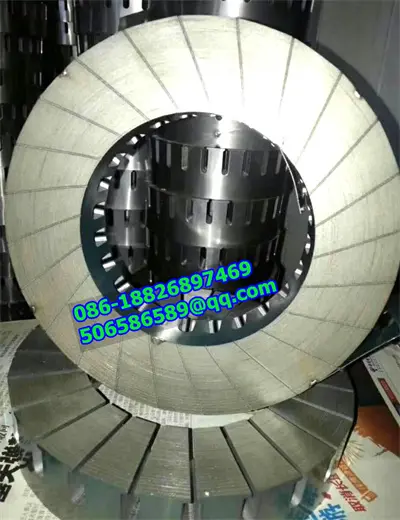
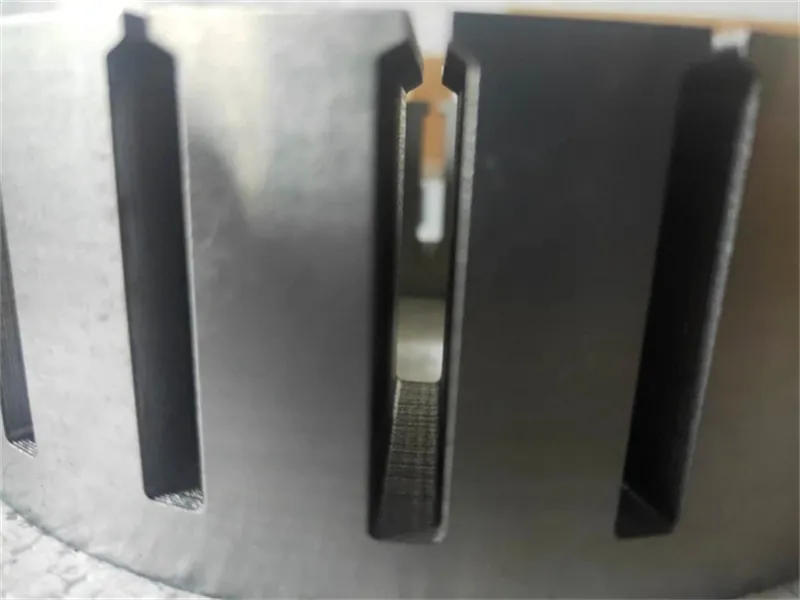
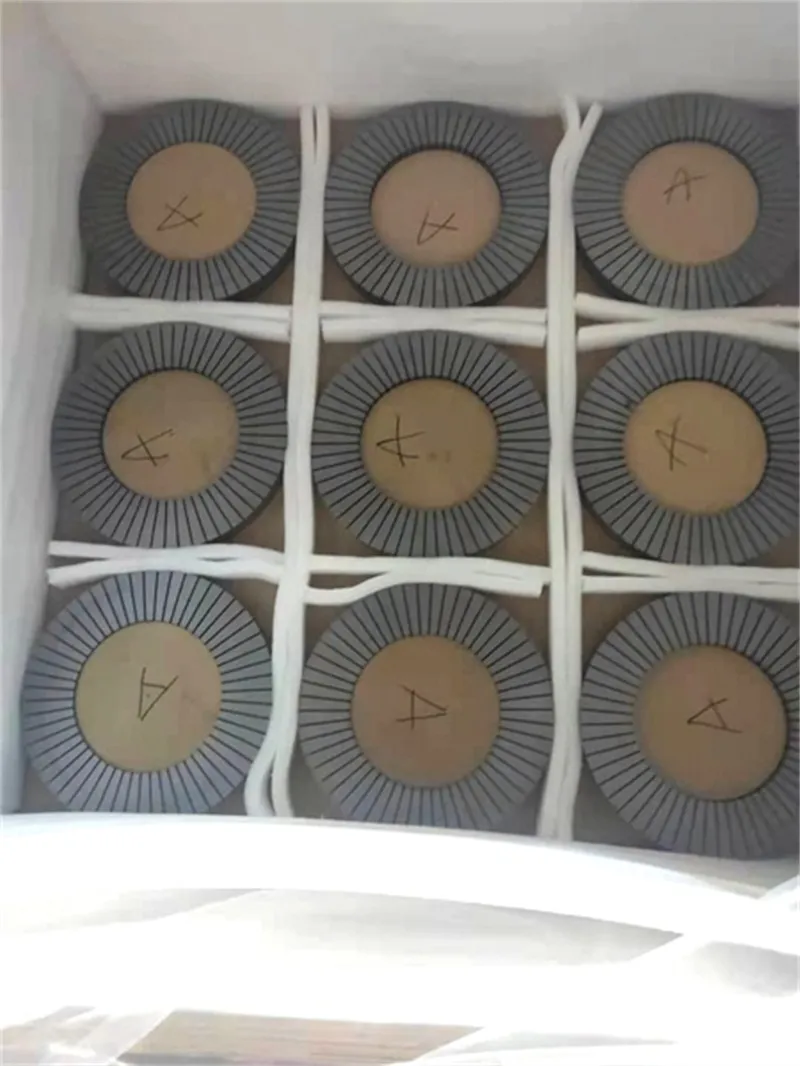
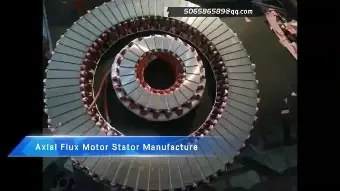
- Thin silicon steel strips are continuously wound helically into a pancake geometry.
- Post-winding, the core is secured via micro-seam laser welding and face-ground to compress total axial thickness down to 10 mm–15 mm.


3. Four Core Shop-Floor Bottlenecks & Practical Engineering Fixes
Challenge 1: Planar Air-Gap Control & Rubbing Prevention (Micro-Level Grinding)
The planar air gap in axial flux motors is typically only 0.3 mm–0.5 mm, subject to massive axial magnetic pull forces. Any micro-level warping on the core surface will lead to mechanical rubbing.
Engineering Solution: After winding or pressing, the assembly undergoes precision CNC surface grinding paired with ultrasonic thickness gauging, capping planar runout strictly within ±0.008 mm. Tooth tips are deburred to eliminate flash.
Challenge 2: 3D Anisotropy & High-Frequency Core Losses (SMC Integration)
Standard electrical steel laminations suffer from local magnetic saturation and severe eddy current losses at the tooth tips when handling 3D axial flux.
Engineering Solution: Implementation of Soft Magnetic Composite (SMC) technology. Each iron particle in SMC is coated with an insulating layer, providing 3D isotropic magnetic properties. High-pressure compacting combined with precise annealing reduces high-frequency (400 Hz+) core losses by 35%–40%.
Challenge 3: Mold Release & Density Uniformity in Complex Tooth Geometries
Pressing SMC powders into pancake cores with trapezoidal teeth and cooling ports often causes uneven density distribution and micro-cracks during ejection.
Engineering Solution: Utilizing a multi-punch floating die set paired with warm compaction to ensure uniform powder flow across the die cavity. Special high-polymer lubricants raise core density uniformity to 99.2% and yield rates to >95%.
Challenge 4: Tooth Topology Optimization for Reduced Magnet Usage (Cost Reduction)
Optimizing core geometry to lower overall motor bill-of-materials (BOM) cost without altering frame size.
Engineering Solution: Modifying tooth-tip topology (designing flux-concentrating profiles tailored to Halbach arrays) increases magnetic field utilization by 15%. This allows motor designers to reduce expensive NdFeB rare-earth magnet usage by 10%–15% while maintaining output torque.
4. Quality Control & Inspection Standards
To ensure every axial core delivered to motor and joint manufacturers satisfies rigorous reliability standards, we enforce the following Quality Assurance protocols:
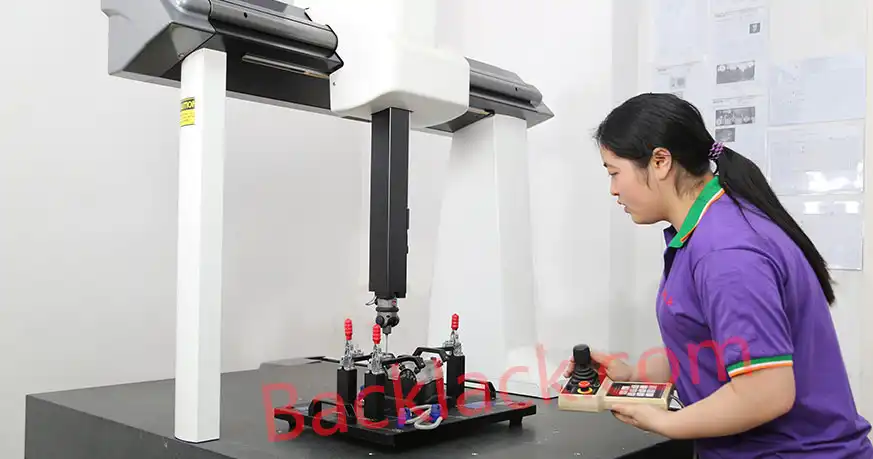
- End-Face Runout & Parallelism: 100% inspection using CMM (Coordinate Measuring Machine); total face runout must remain ≤0.01 mm.
- Interlaminar Insulation & Hi-Pot Testing: Application of 1500V/50Hz AC voltage for 1 minute with leakage current <1mA to prevent inter-lamination short circuits.
- High-Frequency Core Loss Measurement: Core loss testers evaluate specific losses at 400Hz/1.0T; non-compliant units are immediately rejected.
- Mechanical Bonding & Impact Resistance: Segmented tooth units undergo 2,000 cycles of high-frequency vibration/impact testing to verify zero micro-cracks or insulation delamination.
About YouYou Company
As a specialized manufacturer of high-precision motor lamination stacks and high-frequency reactor cores in China, YouYou Company delivers state-of-the-art precision stamping, 0.10mm ultra-thin self-bonding (Backlack) lamination, Axial Flux motor core manufacturing (YASA segmented stator / helical winding), SMC (Soft Magnetic Composite) 3D powder compacting. We provide global OEMs and Tier-1 suppliers with end-to-end soft magnetic solutions—ranging from 3D magnetic flux optimization and rapid prototyping (Micro-Wire EDM / SMC Tooling / CNC Surface Grinding) to high-volume automated production with zero core loss degradation and maximum torque density.
Developing next-generation EV traction motors, humanoid robot actuators (axial flux / dexterous hand joint cores), drone propulsion, or high-frequency power electronics? Contact our engineering team for Axial Flux stator prototyping, SMC mold pressing trials, Backlack bonding tests, and magnetic core optimization.
Ready to Upgrade Your Motor & Core Design?
Services: Axial Flux Motor Core Manufacturing (YASA Segmented Teeth & Helical Winding), SMC 3D Soft Magnetic Powder Molding, Backlack Self-Bonding Lamination, and Custom High-Speed Motor Stators/Rotors.