Overcoming Performance Bottlenecks: Why Gradient High-Silicon Steel (JNHF) Achieves Zero Loss Deterioration in High-Frequency Reactors

Solving Localized Overheating in High-Frequency Reactors with Precision 0.10mm JNHF Block-Type Self-Bonding Cores.

In today’s power electronics landscape—where inverters and converters are rapidly advancing toward higher frequencies and higher power densities—core loss in reactors and inductors operating at 20 kHz and beyond has become a decisive factor limiting overall system efficiency and thermal management performance. Transitioning from raw soft magnetic material to a finished core introduces mechanical stresses and structural impacts that often severely degrade magnetic performance.

I. The "Processing Degradation" Dilemma

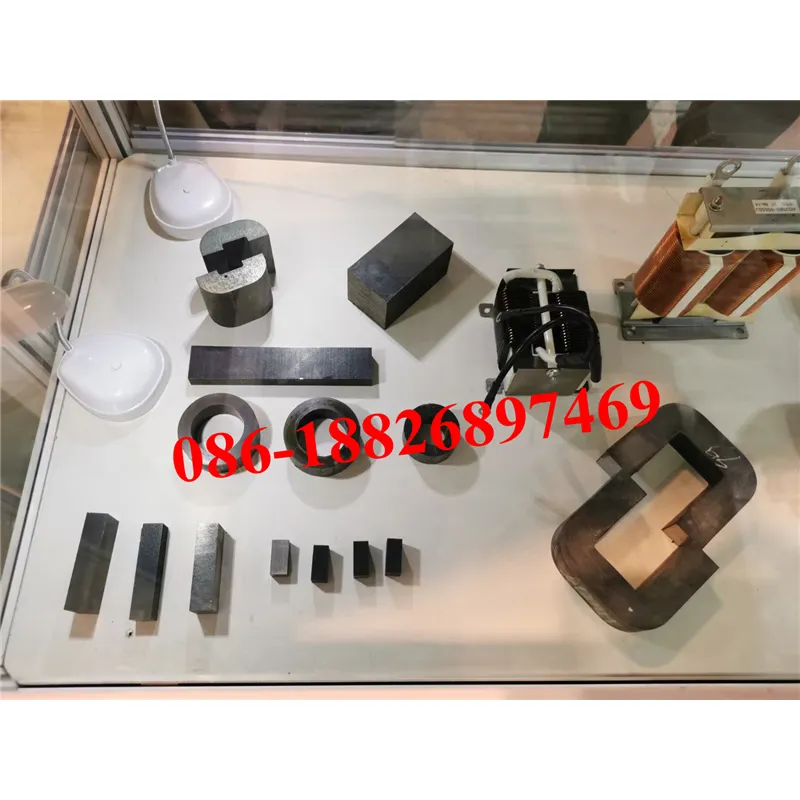
Design engineers frequently rely on raw material datasheets when selecting core materials. However, in real-world manufacturing, different soft magnetic materials exhibit drastically different degrees of core loss deterioration once processed into finished cores:

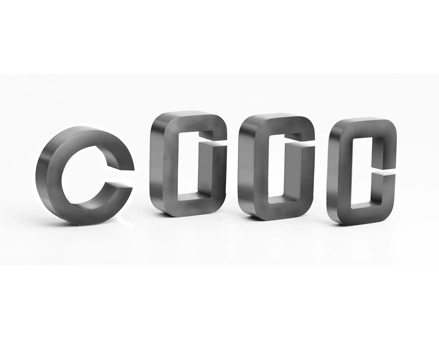
  • Fe-Based Amorphous Alloys: Featuring an ultra-thin ribbon gauge of just 0.025 mm, amorphous ribbons exhibit extremely low raw material core loss. However, they are exceptionally sensitive to mechanical stress. Even after stress-relief annealing, winding into C-cores, cutting, and assembly result in a 68% loss deterioration rate (jumping from a raw material loss of 1.31 W/kg to 2.20 W/kg in the finished core @ 20 kHz, 0.05 T).
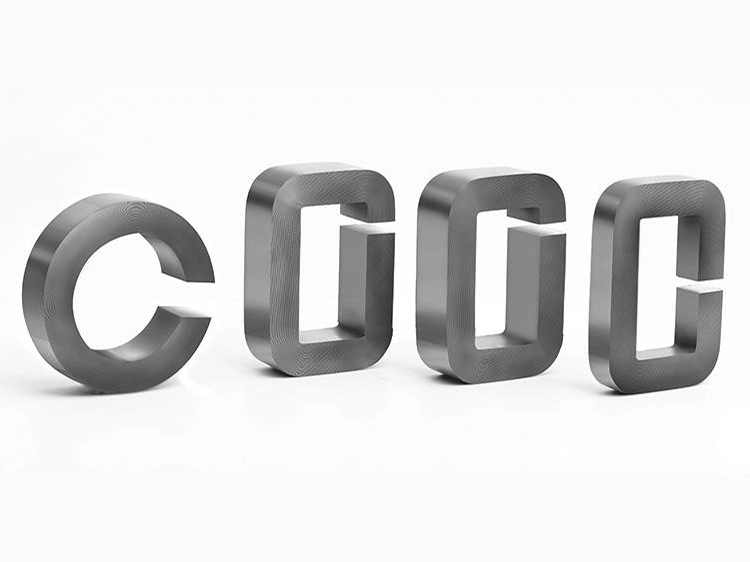
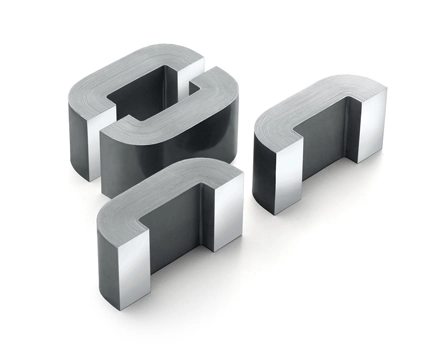
  • Thin-Gauge Grain-Oriented Steel (GO): Due to its strong magnetic anisotropy, GO steel must be manufactured as wound C-cores. Subject to winding stress and assembly constraints, it experiences a ~5% core loss degradation (increasing from 9.75 W/kg to 10.24 W/kg).
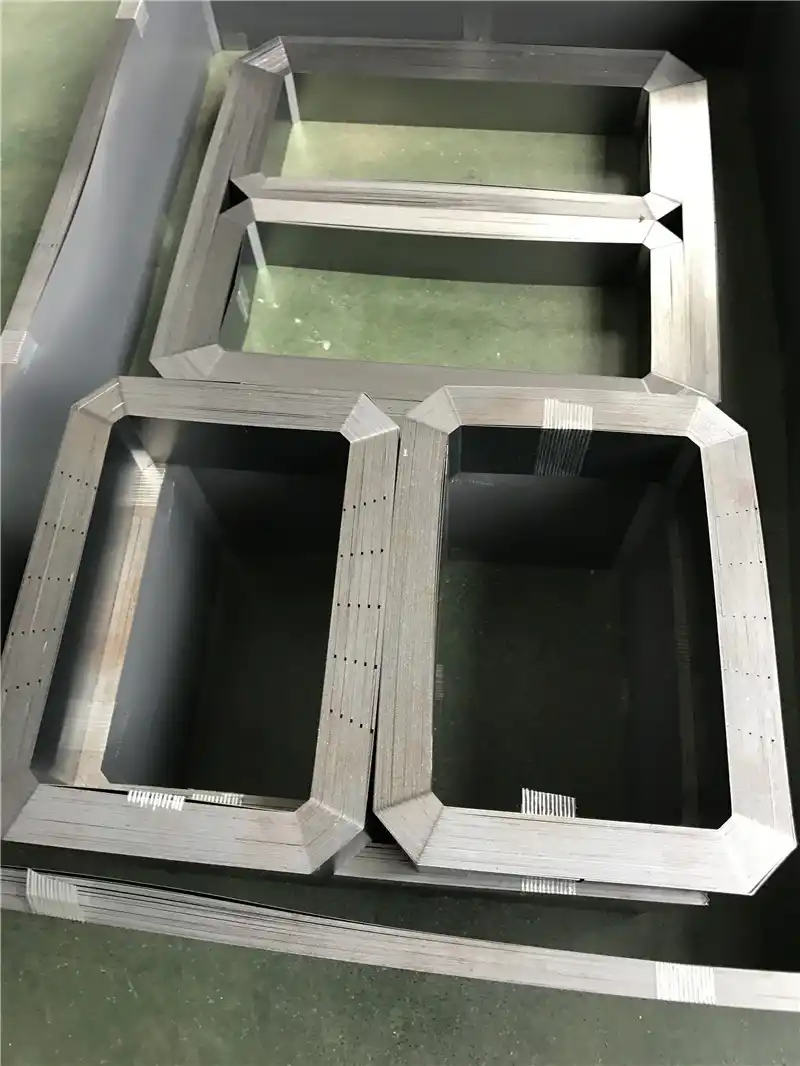
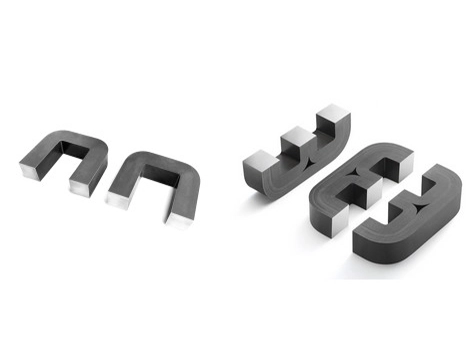
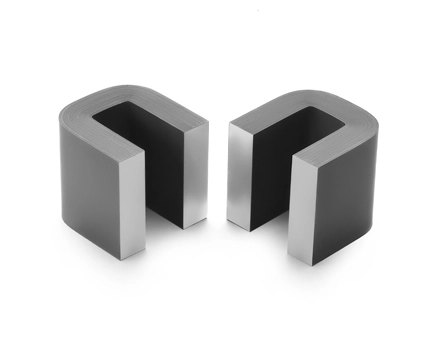
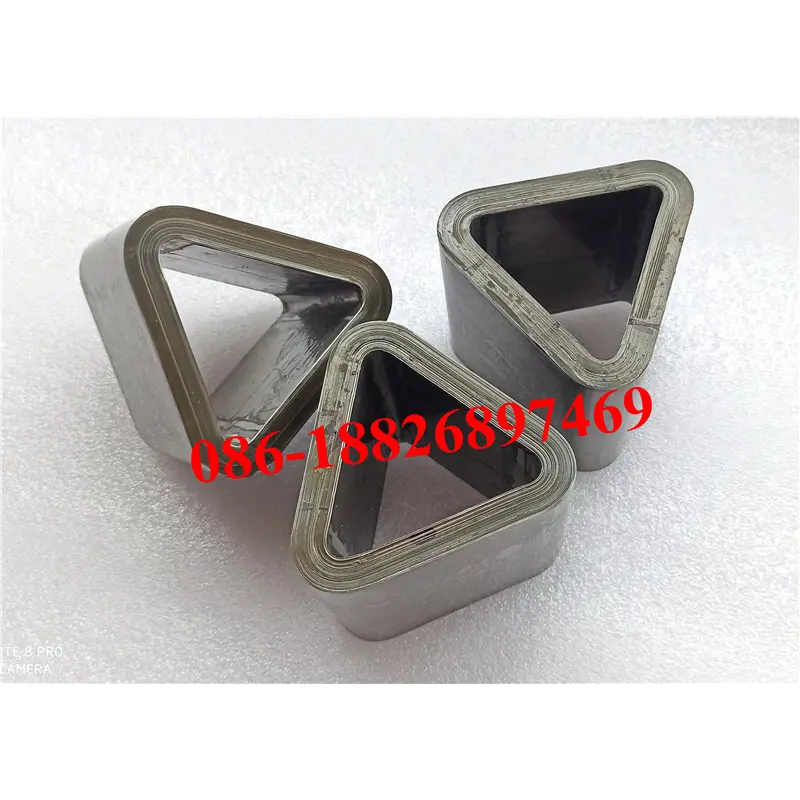
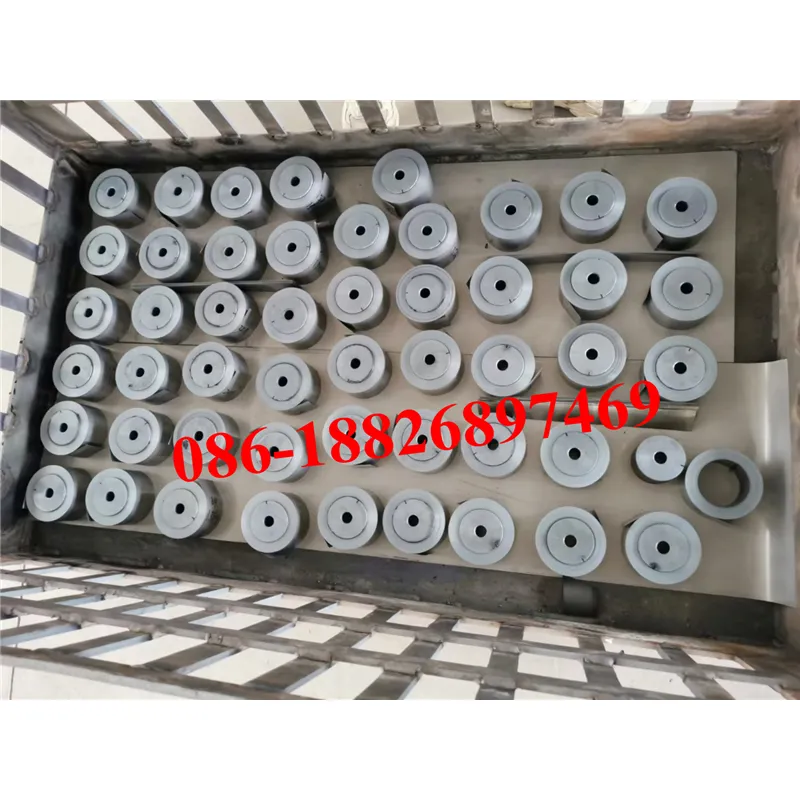
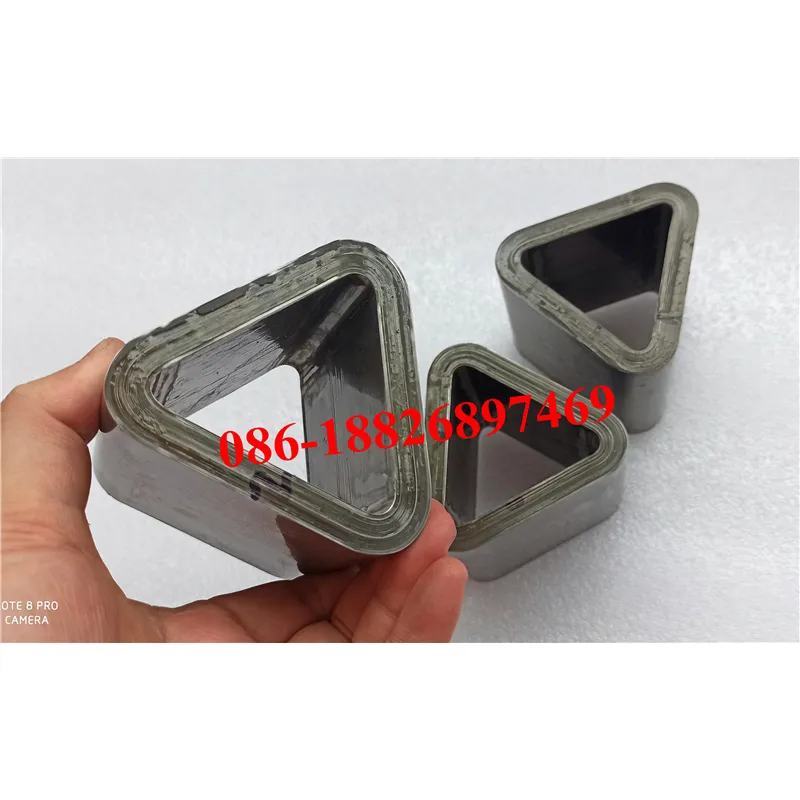
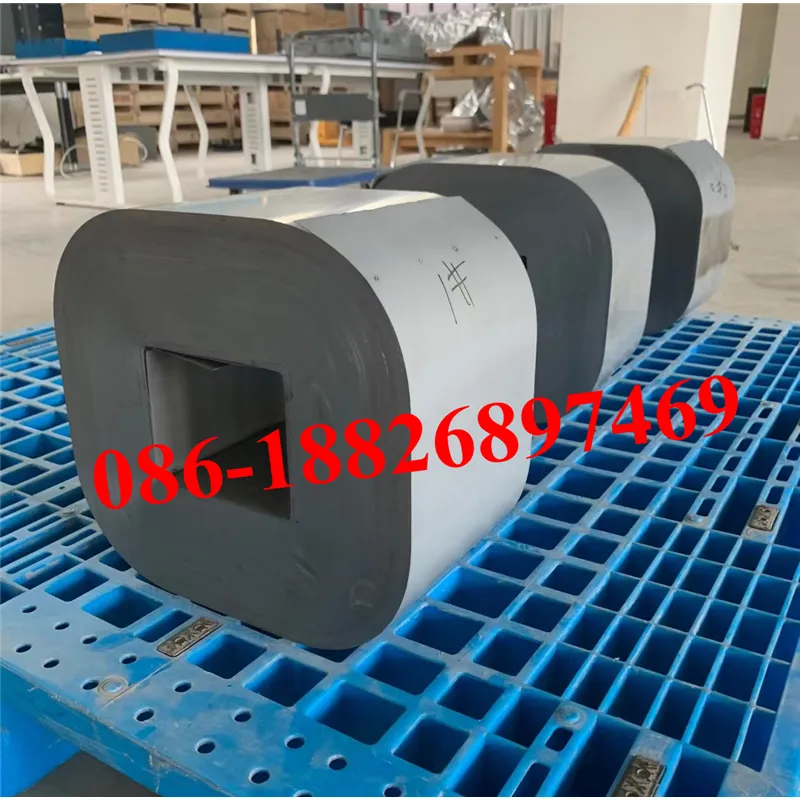
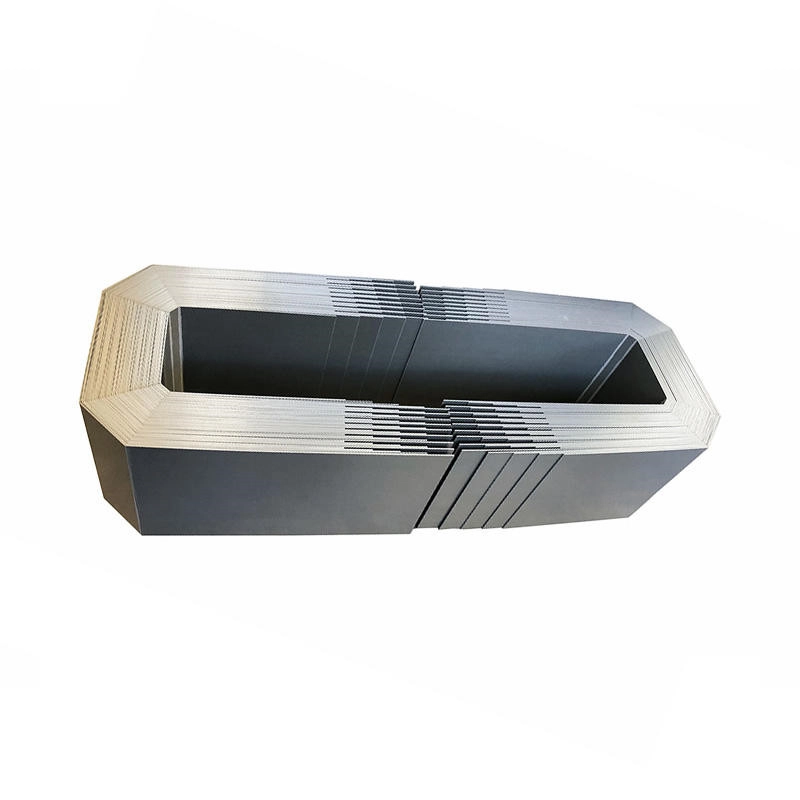
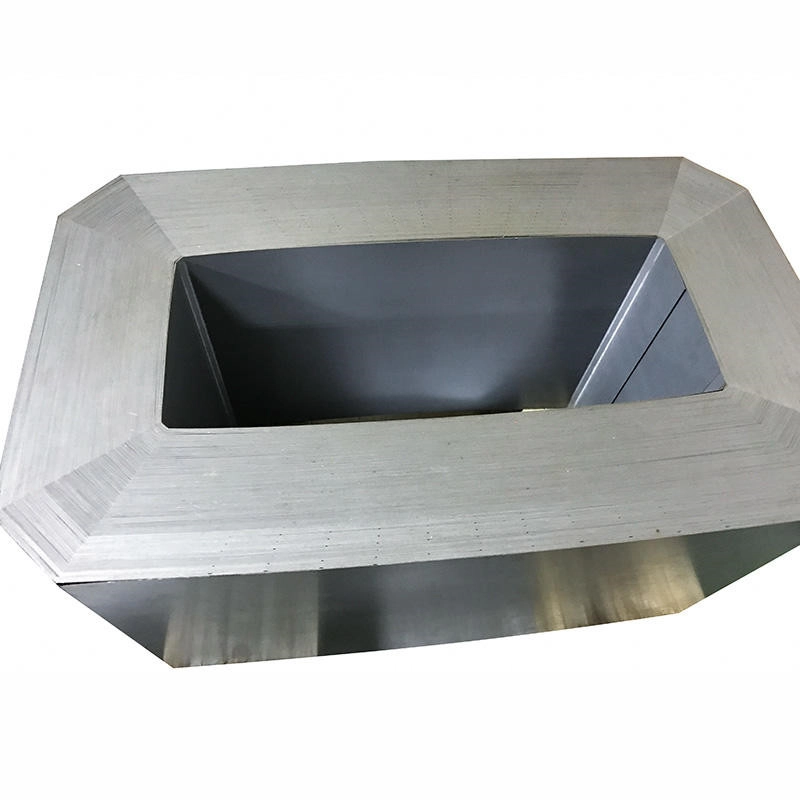
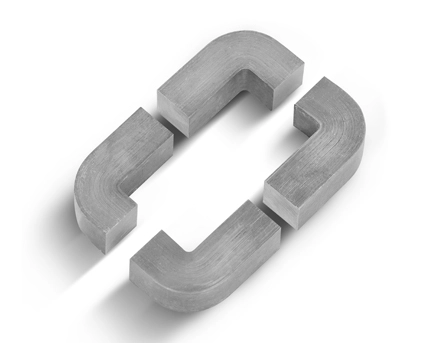
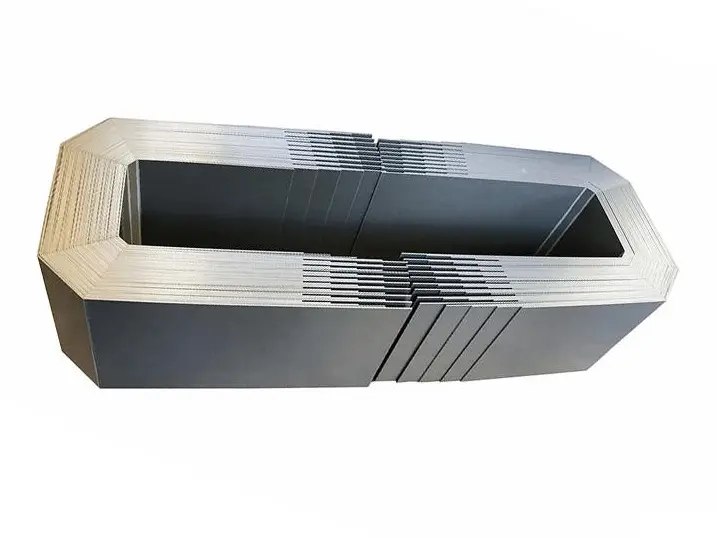
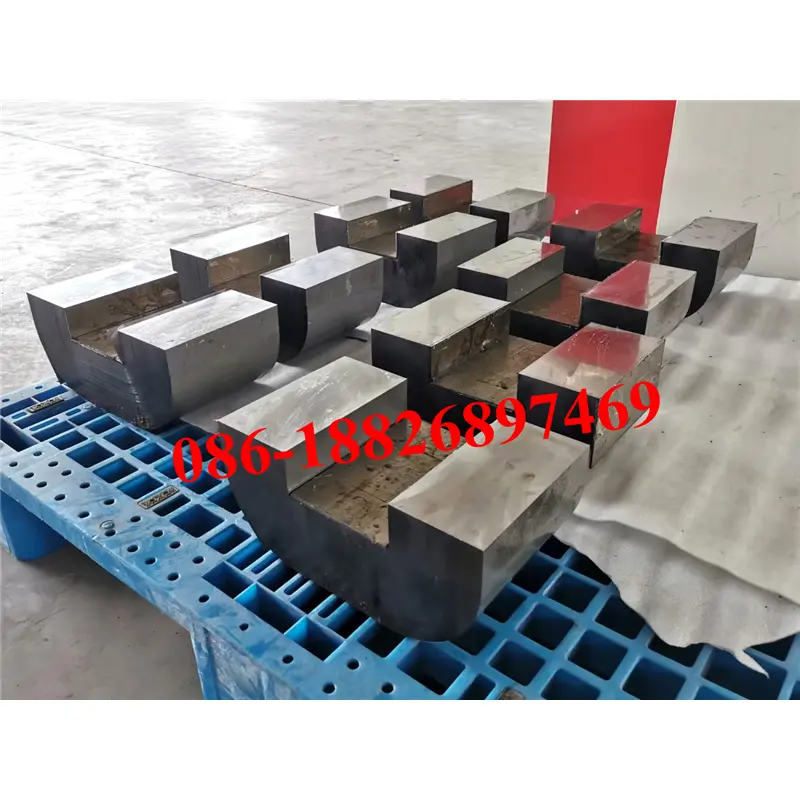
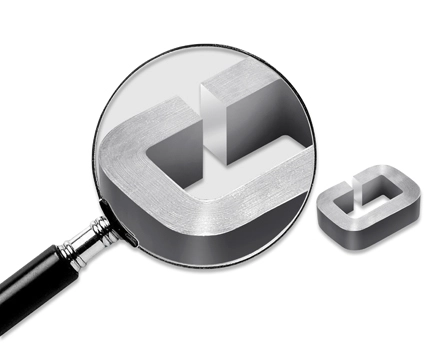
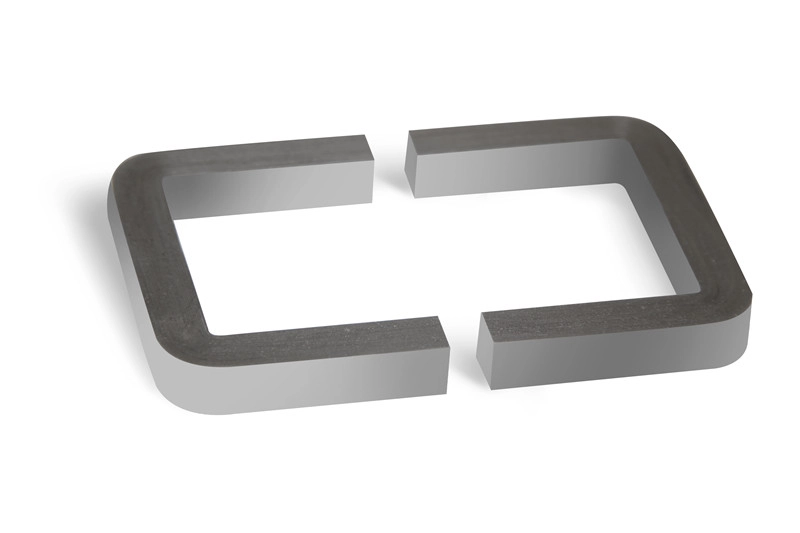
  • Gradient High-Silicon Steel (JNHF-Core): By employing precision stamping/cutting combined with a glued block-type stacked lamination structure (Stacked Core), empirical data proves that JNHF achieves a 0% core loss deterioration rate in finished cores (4.89 W/kg raw material vs. 4.88 W/kg finished core).
Material Type Thickness (mm) Core Structure / Processing Type Raw Loss W0.5/20k (W/kg) Finished Core Loss (W/kg) Core Loss Degradation Rate (%)
JNHF-Core (Gradient High-Si) 0.10 Glued Square Sheet Stacked Core 4.89 4.88 0% (Zero Loss Degradation)
Thin-Gauge GO Steel 0.10 Wound C-Core 9.75 10.24 +5%
Fe-Based Amorphous 0.025 Wound C-Core 1.31 2.20 +68% (Severe Spike)

💡 Engineer's Insight (From Youyou Technology)

Raw material parameters are merely the starting point. The actual core loss under real operating conditions determines system heat dissipation and temperature rise. JNHF is inherently insensitive to processing stress. Combined with our stress-free self-bonding lamination process, 100% of the material's native high-frequency, low-loss characteristics are preserved.
Overcoming Core Loss Degradation Why Gradient High Silicon Steel Jnhf Outperforms Amorphous Alloys In High Frequency Reactors Beyond the Raw Datasheet Evaluating Real World Core Loss Degradation In 20Khz Power Electronics Transformers Say Goodbye To 68 Percent Loss Spikes How Mechanical Processing Stresses Impact Amorphous Ribbon Vs Jnhf High Silicon Steel Raw Material Loss Vs Finished Core Heating A Performance Comparison Between Wound C Cores and Glued Stacked Block Cores Preserving Native Soft Magnetic Performance How Stress Free Self Bonding Lamination Protects 010Mm Electrical Steel Thin Gauge Go Vs Fe Based Amorphous Vs Jnhf Steel Empirical Performance Analysis In High Power Reactors Eliminating Localized Overheating the Fringing Flux Suppression Mechanism of Jnhf Multi Gap Block Type Cores Beating Fringing Induced Eddy Currents Leveraging Air Gap Dispersion Effect In 010Mm High Silicon Steel Stacks Why Assembled Multi Gap Block Cores Are the Superior Choice For 20Khz High Current Dc Ac Inductors Mitigating Inter Lamination Hotspots In Boost Reactors Advanced Distributed Air Gap Strategies Breaking Geometry Constraints of Conventional Wound C Cores Structural Innovations In High Silicon Steel Block Assemblies Dual Permeability Advantage How Jnhf Thickness Gradient Structure Delivers Exceptional Dc Bias Resistance Preventing Inductance Collapse At High Ampere Turns 20Khz Dc Bias Roll off Comparison of Amorphous Go and Jnhf Steel Design Guide For Pfc Inductors Dc Dc Converters Maintaining High Residual Inductance Beyond 2000 At Balancing High Saturation Induction and High Frequency Permeability Under Large Current Ripples Youyou Technology One Stop Solutions Precision 010Mm Ultra Thin Jnhf Self Bonding Lamination Manufacturing Eliminating Welding Short Circuits How Interlock Free Self Bonding Technology Eradicates Inter Lamination Eddy Loss Ultra Quiet Core Solutions For Ev Inverters and Medical Power Supplies 65 Percent Si Jnex Core Near Zero Magnetostriction Assemblies From Precision Stamping To Micro Cutting Custom Multi Gap High Silicon Steel Reactor Core Fabrication Reducing Audible Noise and thermal Footprint Custom Core Fabrication Combining Jnhf and Jnex High Silicon Alloys Next Generation Power Electronics Reactor Selection Boosting Efficiency In Pv Inverters and Wind Converters High Frequency Reactor Selection Guide For Ev Hev On Board Chargers Obc and High Voltage Dc Dc Modules Solving thermal Bottlenecks In High Frequency Industrial Inverters Via Self Bonding Block Type Cores Enabling High Power Density In Semiconductor Equipment Power Units and Smps High Frequency Inductors 20Khz 100Khz High Power Inductor Materials Soft Ferrite Vs Amorphous Vs Gradient High Silicon Steel High Frequency Reactor Core Performance Empirical Core Loss and Temperature Rise Test Report of Jnhf Steel At 20Khz 005T How To Prevent Magnetic Performance Degradation After Processing High Frequency Reactor Cores Looking For Low Loss High Frequency Inductor Cores A Deep Dive Into 010Mm Gradient Silicon Steel Self Bonding Block Structures Solving Dc Saturation and Fringing Leakage In High Power Reactors End To End Multi Gap Block Core Manufacturing Core Fabricators Perspective Why Self Bonded Jnhf Block Cores Are the Ideal Replacement For High Frequency Inductors

II. Structural Innovation: Air Gap Dispersion Effect Suppresses Localized Overheating

To prevent magnetic saturation under high DC currents, air gaps must be introduced into the magnetic circuit of DC/AC high-frequency reactors. However, conventional concentrated air gaps generate severe fringing flux (leakage flux), inducing large localized eddy currents in adjacent laminations and causing intense localized hot spots.

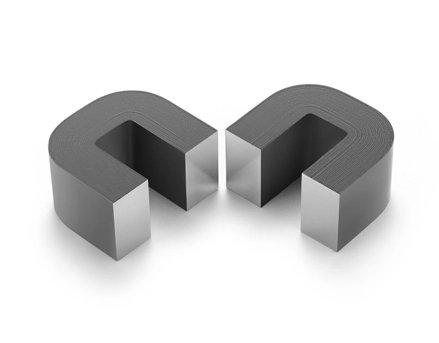
  1. Conventional Wound C-Cores: Restricted by their geometry, C-cores typically rely on 1 or 2 large concentrated air gaps. As the total gap length increases (e.g., to 4 mm), intense fringing flux causes the core loss of amorphous and GO steel cores to rise exponentially.
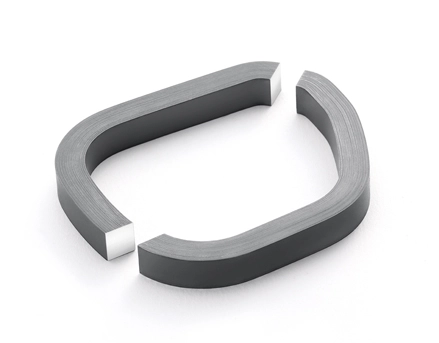
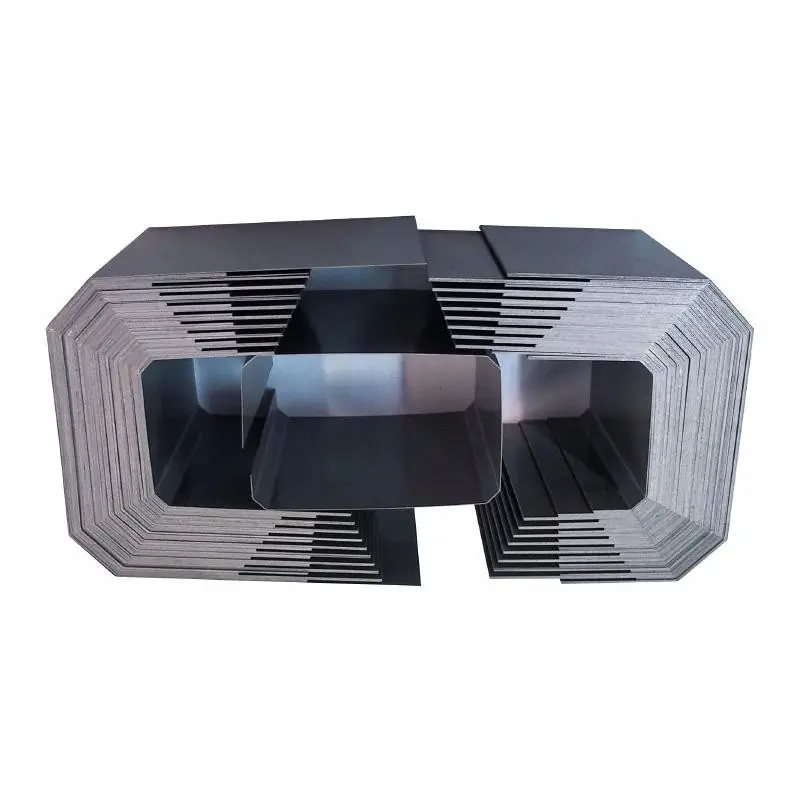
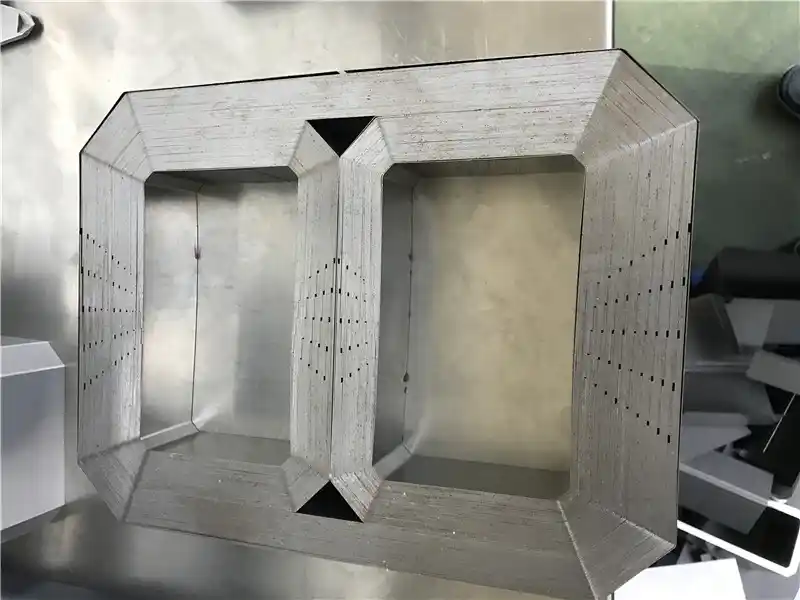
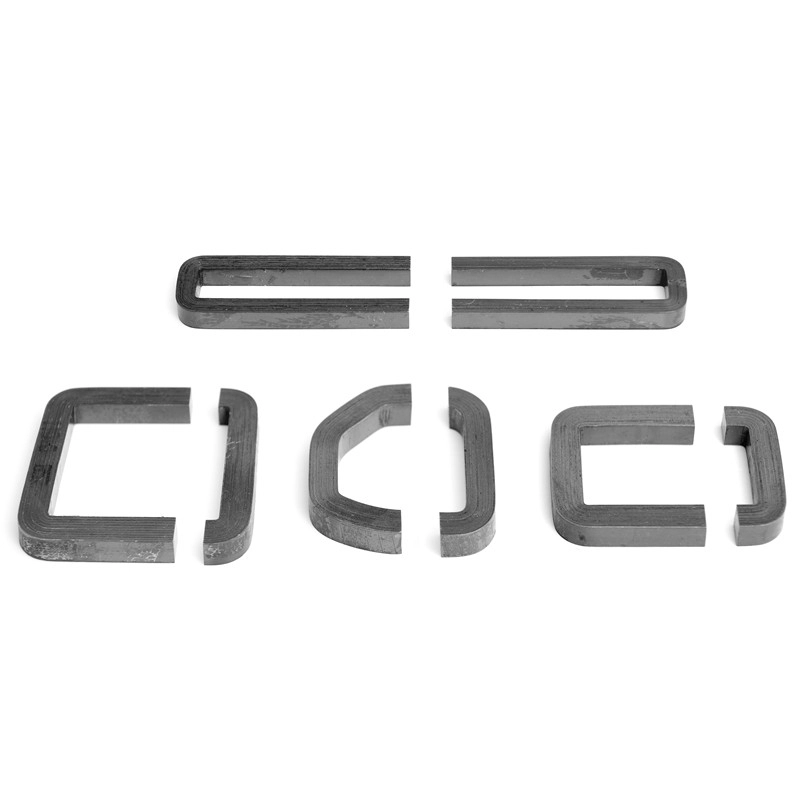
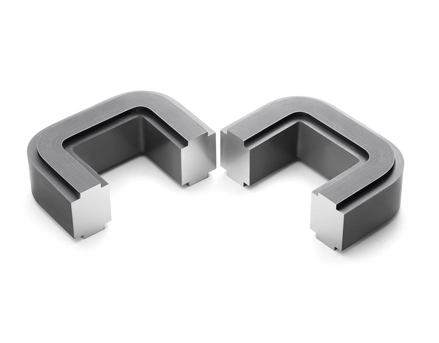
  2. JNHF Glued Block-Type Stacked Cores: Leveraging the non-oriented (NO) nature and superior mechanical behavior of high-silicon steel, JNHF can be configured as a multi-segment assembled block core, dividing a single large air gap into multiple smaller, distributed gaps:
    • For the same total air gap length (e.g., 4 mm), the length of each individual gap is drastically reduced;
    • Fringing flux is effectively contained, substantially suppressing fringing-induced losses;
    • Test results confirm that as total gap length expands from 0 mm to 4 mm, the core loss curve of JNHF remains remarkably flat, yielding significantly lower real-world losses at higher air gap lengths compared to amorphous and GO steel cores.

III. Dual Permeability Advantage: Superior DC Bias Resistance & High-Frequency Inductance Retention

For DC reactors in power electronics (such as Boost circuits, PFC inductors, and DC-DC converters), the DC bias characteristics of the core directly govern inductance stability under high load currents.

Excitation tests at 20 kHz, 0.01 T demonstrate:

  • Amorphous & GO Steel Cores: When the DC bias ampere-turns exceed 2,000 A·t, inductance (μH / turn2) drops sharply off a cliff.
  • JNHF Gradient Cores: Under high DC bias (from 2,000 A·t up to 4,000 A·t), JNHF displays an exceptionally smooth magnetic saturation roll-off, maintaining high residual inductance levels.

JNHF utilizes a silicon gradient structure across the sheet thickness (high silicon ~6.5% Si at the surface, lower silicon at the center):

  1. Low DC Permeability (μmax = 4,100): Compared to standard silicon steel (37,000) and amorphous alloys (300,000), JNHF features a lower DC permeability, providing strong intrinsic resistance to DC magnetic saturation.
  2. High High-Frequency Permeability (μ20kHz = 1,500): At 20 kHz, JNHF retains a high AC permeability of 1,500 (outperforming GO steel's 1,110), ensuring abundant inductance under high-frequency current ripple.

IV. Youyou Technology: One-Stop Precision Processing Solutions for High-Silicon Steel Cores

Youyou Technology Co., Ltd. specializes in precision stamping and self-bonding lamination for motor stators and high-frequency reactor cores. Tailored to the unique characteristics of JFE Super Core materials (JNHF-Core and 6.5% Si JNEX-Core), we provide comprehensive custom manufacturing solutions:

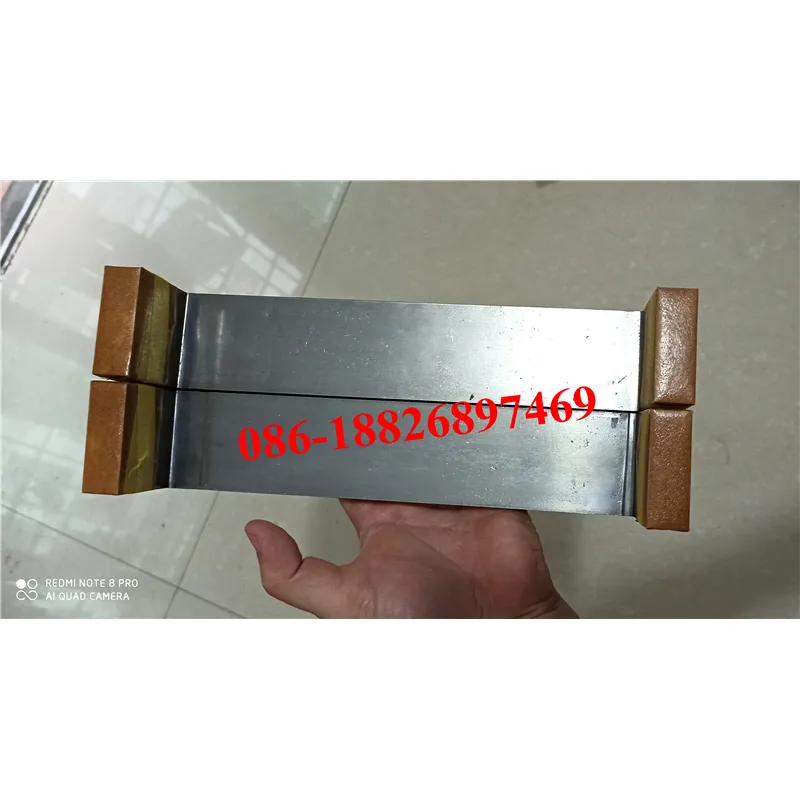
For 0.10 mm ultra-thin JNHF sheets, we utilize interlock-free, weld-free self-bonding/gluing technology. Eliminates inter-lamination short circuits and eddy current loops caused by traditional riveting or welding, fully unlocking 100% of the material's native high-frequency performance.

Equipped with ultra-precision stamping and micro-cutting capabilities, we engineer and process custom multi-gap block-type cores tailored to your inductance and DC bias requirements. Helps power electronics designers control leakage flux heat and reduce overall reactor footprint and weight.

For noise-sensitive applications (such as automotive inverters, medical equipment, or residential power units), we offer processing solutions based on 6.5% Si JNEX-Core, achieving near-zero magnetostriction for ultra-quiet operation alongside low high-frequency core loss.

About YouYou Company

As a specialized manufacturer of high-precision motor lamination stacks and high-frequency reactor cores in China, YouYou Company delivers state-of-the-art precision stamping, 0.10mm ultra-thin self-bonding (Backlack) lamination, and gradient high-silicon steel (JNHF/JNEX) processing services. We provide global OEMs and Tier-1 suppliers with end-to-end soft magnetic solutions—ranging from material selection and rapid multi-gap block core prototyping (Micro-Wire EDM / Self-Bonding) to high-volume automated production with zero core loss degradation.

Ready to Upgrade Your Design?

Services: Precision Stamping of High-Silicon Steel & Soft Magnetic Alloys, Self-Bonding Lamination, Custom High-Frequency Inductor/Reactor Block Cores
REQUEST CONSULTATION

Quality Control for High-Frequency Reactor & Motor Lamination Bonding Stacks

As a specialized stator, rotor, and high-frequency reactor lamination bonding stack manufacturer in China, Youyou Technology enforces stringent Quality Control (QC) protocols across every manufacturing stage to guarantee zero-defect, high-performance soft magnetic cores:

Strict Raw Material & Coating Inspection We strictly inspect incoming raw materials—including 0.10mm ultra-thin electrical steel, 6.5% Si high-silicon steel (JNEX/JNHF), and self-bonding (Backlack) pre-coated coils—verifying sheet thickness uniformity, surface insulation, and raw material loss before stamping or micro-cutting.

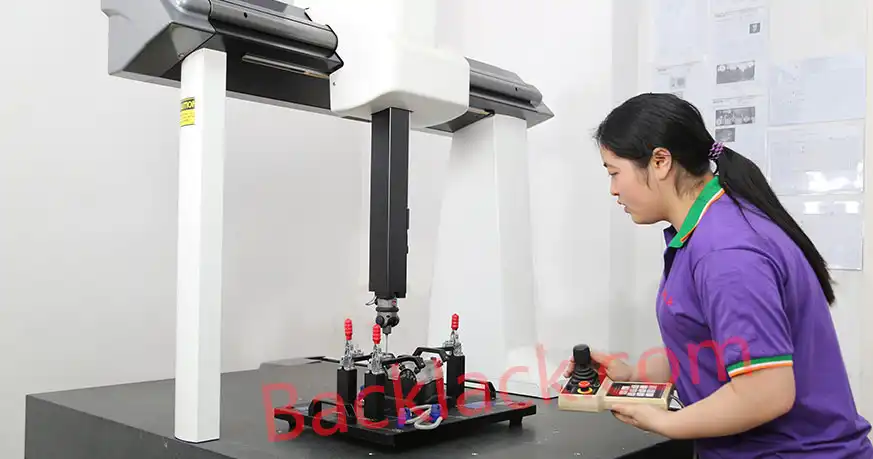
Precision Dimensional & Stack Height Verification Technicians utilize precision measuring instruments—such as calipers, micrometers, height gauges, and CMMs—to meticulously verify stack dimensions, hole/slot positions, parallelism, and multi-gap block tolerances, ensuring zero mechanical distortion in precision-bonded lamination stacks.

100% Comprehensive Visual Inspection Rigorous visual inspections are conducted to detect any surface imperfections, scratches, coating dents, or edge burrs. This prevents inter-lamination short circuits and protects the integrity of the self-bonding adhesive layer, avoiding localized eddy current overheating.

Magnetic Properties & High-Frequency Performance Testing Because motor lamination stacks and high-frequency reactor block cores are engineered from specialized soft magnetic alloys, it is critical to test essential magnetic properties—including permeability (μ), coercivity (Hc), saturation magnetization (Bs), and DC bias characteristics under high ampere-turns—ensuring minimal core loss degradation and optimal torque/inductance retention.

Quality Control For Adhesive Rotor and Stator Laminations

FAQS

Why do raw material data sheets show low core loss, but finished reactor cores suffer severe overheating?

Many soft magnetic materials—especially Fe-based amorphous alloys and thin-gauge grain-oriented (GO) steel—are extremely sensitive to mechanical stress. Traditional winding, cutting, or stacking operations introduce severe stress that degrades magnetic performance, causing amorphous cores to suffer a core loss deterioration rate of up to 68%. In contrast, JNHF gradient high-silicon steel combined with stress-free self-bonding lamination achieves 0% core loss deterioration in finished cores.

What is JNHF Gradient High-Silicon Steel, and how does it differ from conventional 6.5% Si steel like JNEX?

JNHF features a silicon gradient structure across its sheet thickness (6.5% Si at the surface with a lower silicon core). It is specifically engineered for high-frequency DC reactors to deliver superior DC bias resistance. Conversely, JNEX features a uniform 6.5% Si content throughout the sheet, offering near-zero magnetostriction for ultra-quiet operation in noise-sensitive high-frequency equipment.

What are the primary advantages of Self-Bonding Backlack Lamination over conventional interlocking or welding?

Mechanical interlocking or welding pierces surface insulation, creating local electrical short circuits that trigger severe inter-lamination eddy current losses and hot spots. Self-bonding Backlack utilizes a pre-coated thermosetting adhesive cured under heat and pressure. This creates a 100% full-surface, weld-free, and stress-free bond that completely preserves raw material magnetic performance.

How does JNHF steel prevent inductance collapse under high-current ripple in high-frequency reactors?

Under high current ampere-turns, traditional magnetic cores quickly saturate, leading to a sudden collapse in inductance. JNHF features an intrinsically low DC permeability (μmax = 4,100) for natural DC saturation resistance, while maintaining a high AC permeability (μ20kHz = 1,500) at 20 kHz. This ensures a smooth saturation roll-off curve and high residual inductance beyond 2,000 to 4,000 A·t.

How does YouYou Company suppress localized core overheating caused by reactor air gaps?

Concentrated air gaps cause intense fringing flux that cuts into adjacent laminations, inducing severe local eddy current heating. YouYou Company utilizes non-oriented high-silicon steel to manufacture Multi-Gap Block Cores. By dividing a large gap into multiple small distributed gaps, fringing flux is effectively contained, drastically reducing leakage-induced thermal hot spots.

What quality control procedures are performed on lamination bonding stacks at YouYou Company?

YouYou Company enforces a rigorous multi-stage QC protocol: strict incoming inspection of 0.10mm ultra-thin electrical steel and Backlack coatings, precision dimensional verification via CMM and micrometers, 100% visual inspection for coating defects or burrs, and specialized magnetic testing for permeability, coercivity, and high-frequency DC bias performance.

Is 0.10mm ultra-thin high-silicon steel prone to cracking, and how do you ensure high-precision stamping?

Due to its high hardness and reduced ductility, 6.5% high-silicon steel can crack under conventional stamping. YouYou Company employs specialized ultra-precision carbide tooling, micro-wire EDM cutting, and strain-relieved clamping fixtures tailored for ultra-thin soft magnetic alloys. This guarantees burr-free and crack-free precision lamination stacks for high-volume manufacturing.

What custom manufacturing services and turnaround times does YouYou Company support for prototype cores?

YouYou Company provides comprehensive end-to-end customization, from material selection (JNHF, JNEX, 1J50) to 0.10mm precision stamping and multi-gap block core assembly. For functional prototype samples, we utilize multi-axis Wire EDM taper cutting with pre-bonded Backlack blocks, delivering production-grade performance in as fast as 7 to 14 business days.

Are You Ready to Eliminate Core Loss Deterioration & Boost High-Frequency Efficiency?

Start Your Custom High-Silicon Steel Reactor Core Project Today

Looking for a trusted precision manufacturing partner in China specializing in JNHF/JNEX high-silicon steel, 0.10mm ultra-thin self-bonding lamination, and custom multi-gap block cores for 20kHz+ high-frequency reactors? Look no further! Whether you need zero-loss-degradation JNHF stacked cores for high-power DC inductors or near-zero magnetostriction JNEX cores for ultra-quiet operation, Youyou Technology provides tailored, high-density soft magnetic core solutions engineered to your exact specification.

Contact our engineering team now to request a rapid prototype quote for your custom high-frequency reactor & motor lamination stacks!

Get Your Custom Quote Now