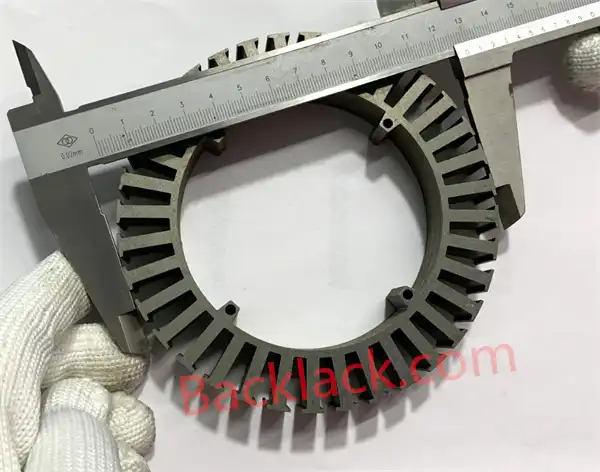
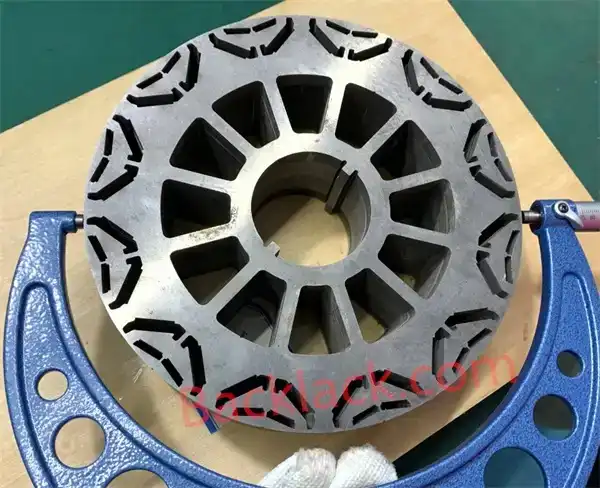
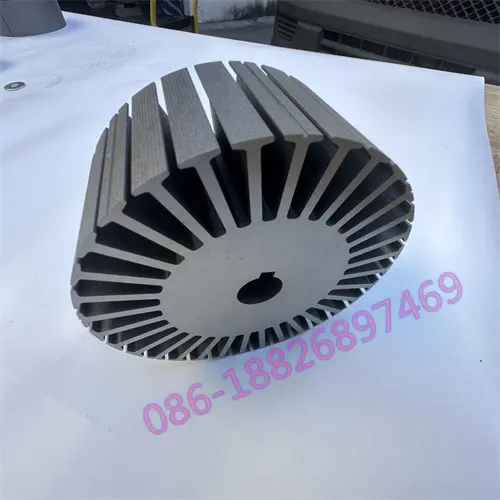
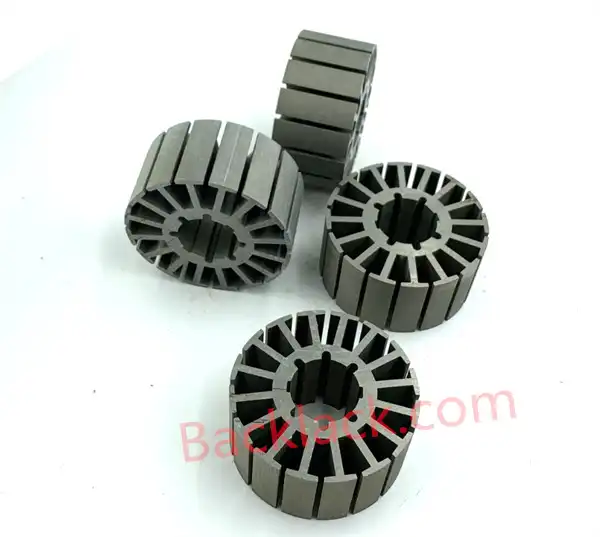
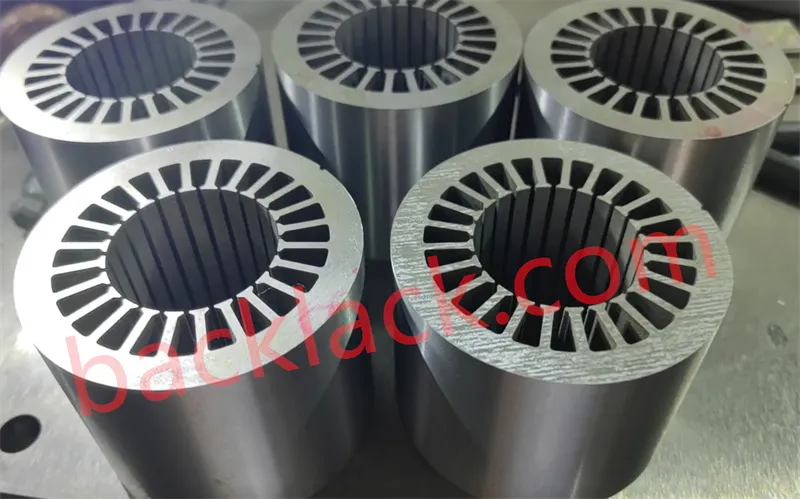
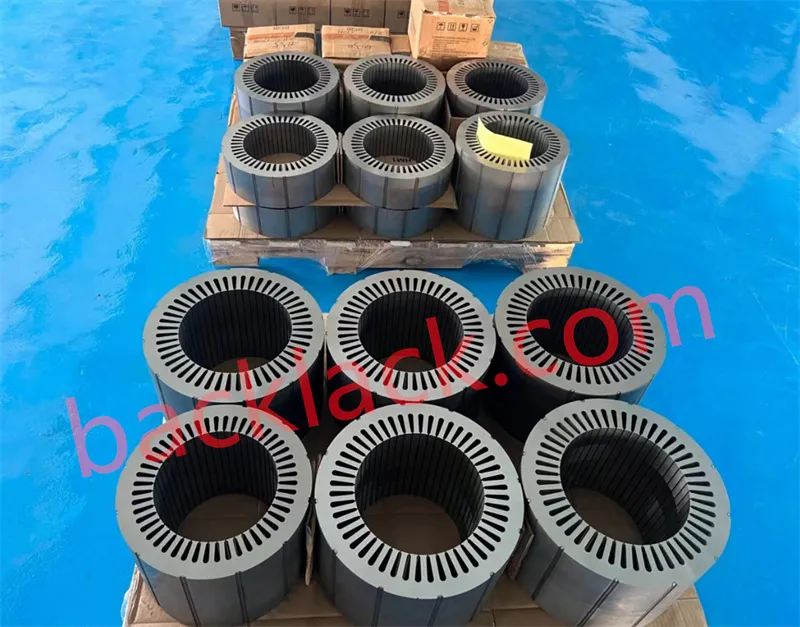
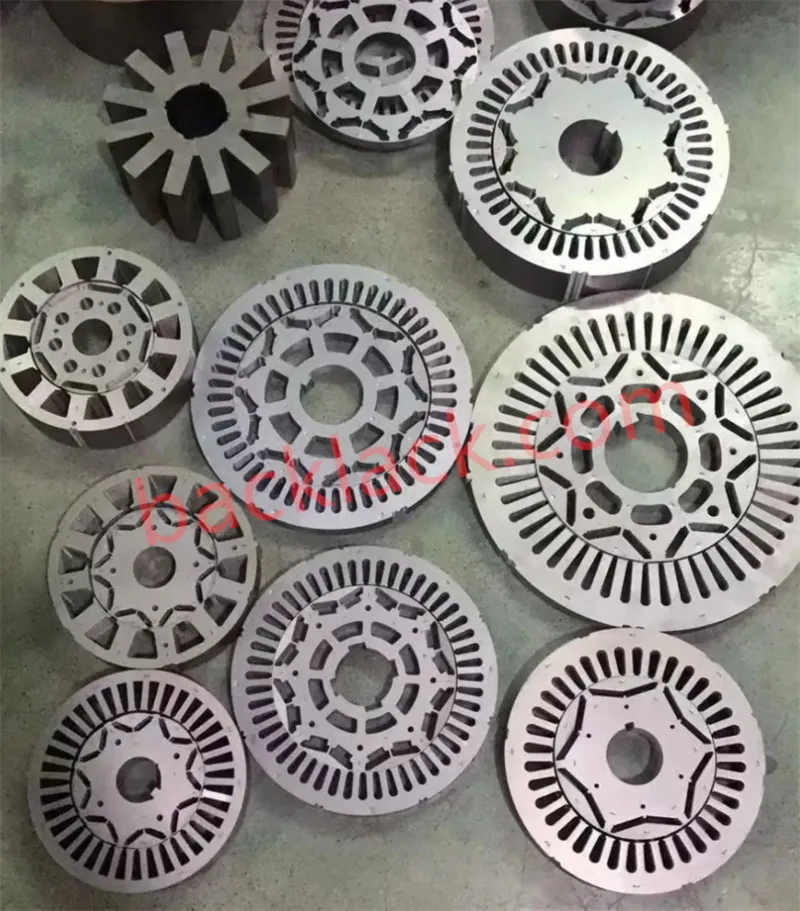
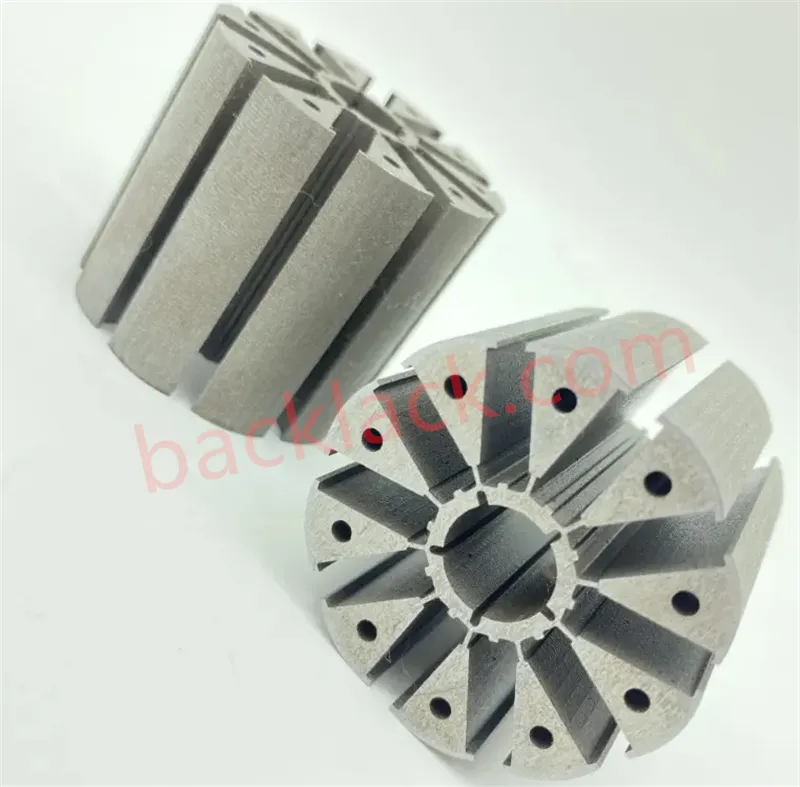
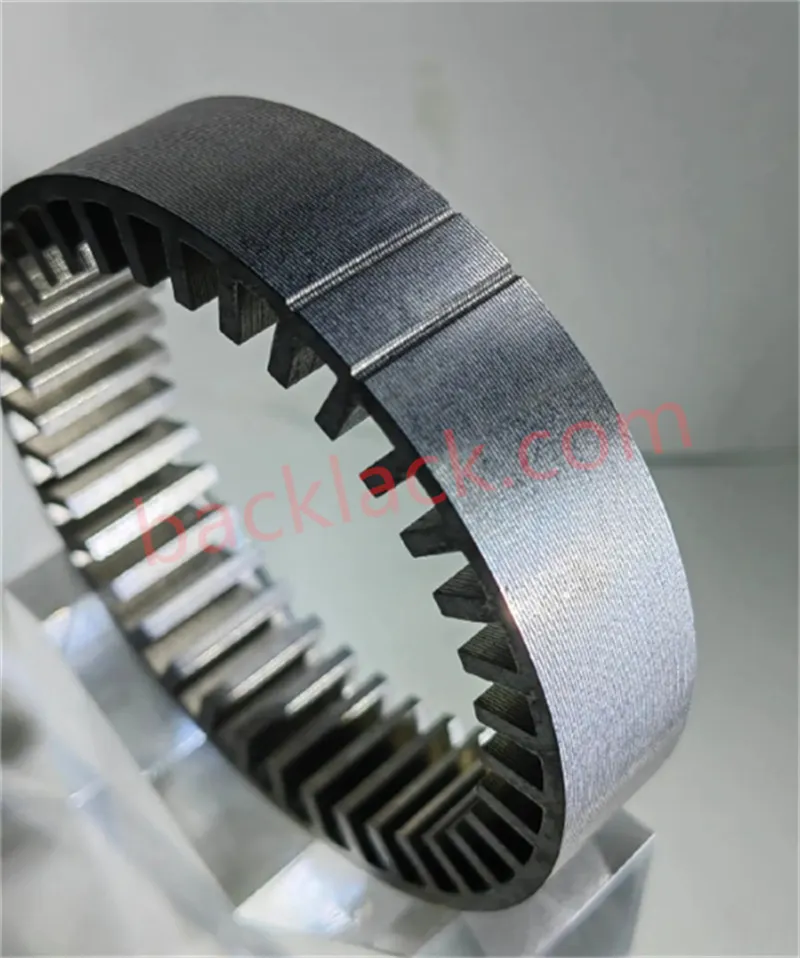
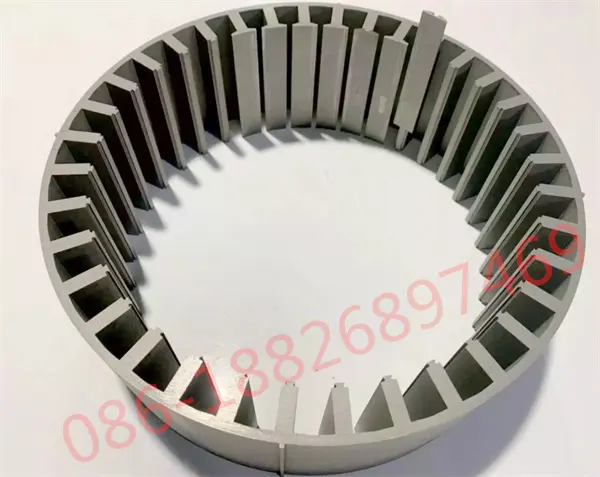
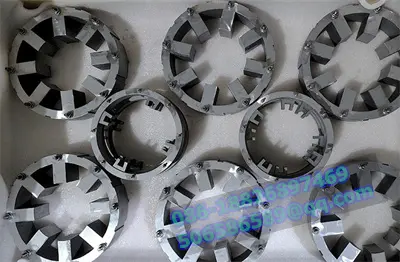
The Core Pain Point: Why High-Frequency Motors Turn into "Electric Furnace Wires"
In conventional line-frequency motors operating at 50Hz or 60Hz, 0.35mm, 0.5mm, or even thicker silicon steel sheets are industry standard because losses are negligible. However, in high-speed electric propulsion systems, the electrical switching frequency (fundamental frequency) often reaches 1kHz, 2kHz, or higher.
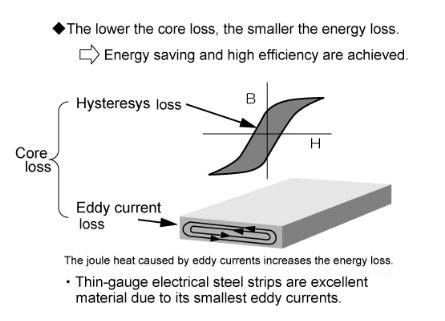
According to classic electromagnetic theory, total iron loss (\(P_{fe}\)) is the summation of hysteresis loss (\(P_h\)), eddy current loss (\(P_e\)), and anomalous loss (\(P_a\)). In high-speed applications, eddy current loss dominates the total loss profile. The governing formula for eddy current loss is:
Where:
- \(f\): Frequency of the magnetic field (directly proportional to motor RPM and pole count)
- \(B_m\): Peak magnetic flux density within the core
- \(d\): Thickness of the individual silicon steel lamination
- \(\rho\): Electrical resistivity of the steel material
The Harsh Reality of Physics: Loss is proportional to the square of the frequency and the square of the lamination thickness. This exponential relationship means that if the lamination thickness (\(d\)) is not reduced, even an exceptionally efficient liquid cooling system will struggle to dissipate the heat generated within the core, leading to rapid demagnetization of permanent magnets, winding insulation failure, and catastrophic system failure.
0.1mm Ultra-Thin Silicon Steel: A "Dimensional Reduction" in Thermal Management
Switching from 0.35mm or 0.2mm to 0.1mm ultra-thin silicon steel sheets is far more than a simple material change; it is a fundamental optimization of the magnetic circuit's behavior at high frequencies.
1. Exponential Mitigation of Eddy Current Loss
By reducing the thickness (\(d\)) from 0.35mm to 0.1mm, the eddy current loss component theoretically decreases to approximately 1/12 of its original value (since \(0.1^2 / 0.35^2 \approx 0.081\)). This physical-level mitigation operates fundamentally within the material itself, reducing the heat generation rate before it requires active cooling solutions.
2. Optimization of Magnetic Permeability and Hysteresis
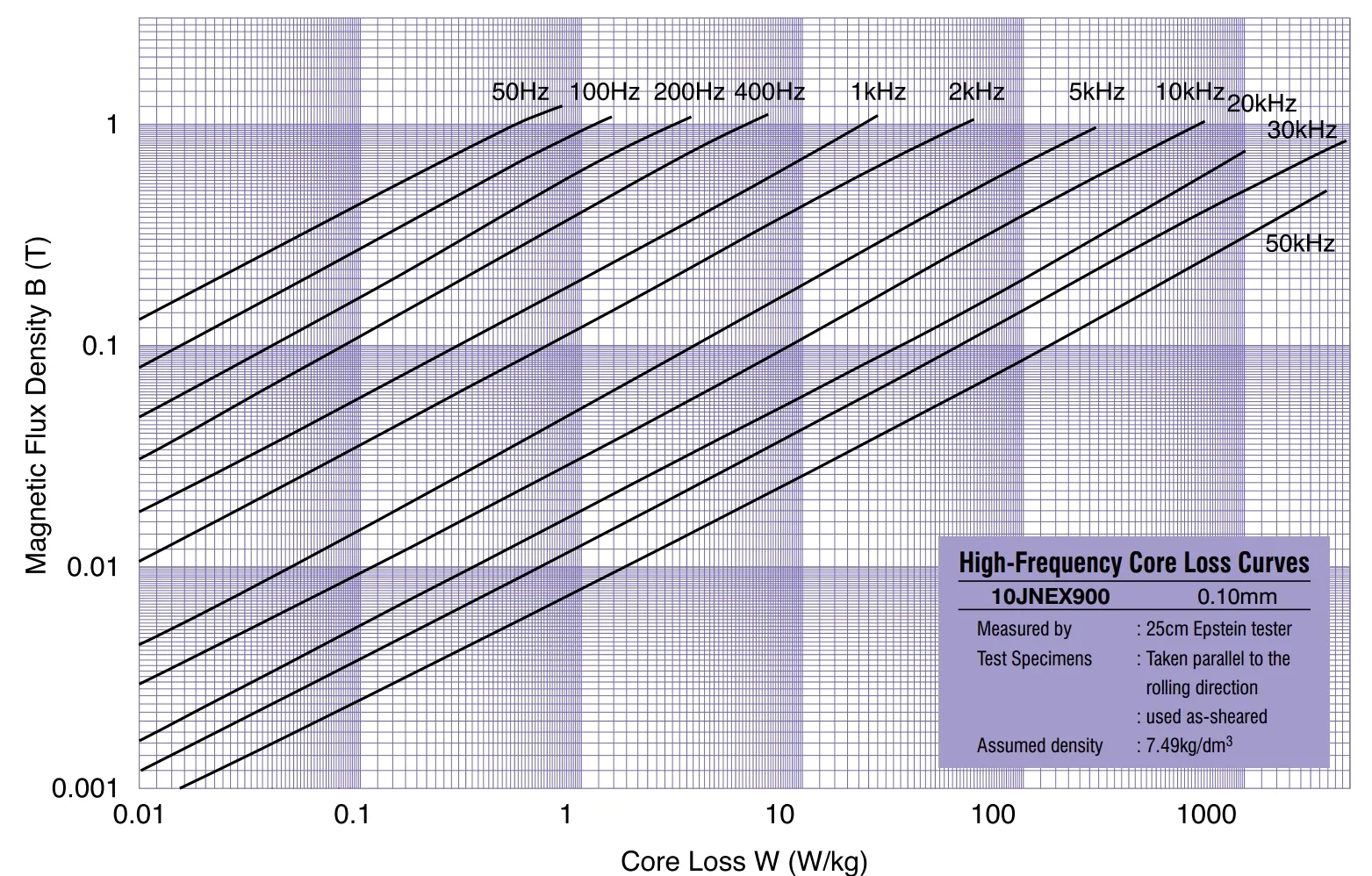
Ultra-thin silicon steel sheets (such as specialized materials like high-silicon content 10JNEX900 or amorphous metals) are manufactured using advanced rolling technologies that impart superior magnetic properties. They typically exhibit lower hysteresis loss per cycle and better high-frequency permeability. The result is higher torque output for the same excitation current—achieving the ultimate goal of "less weight, greater thrust and efficiency."
From "Thin Sheets" to "High-Performance Cores": The Manufacturing Challenges
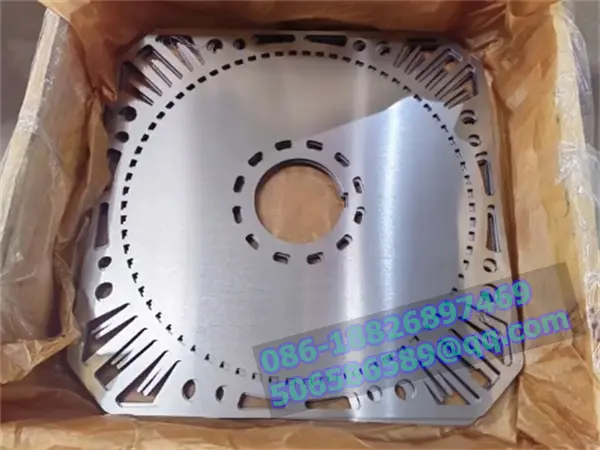
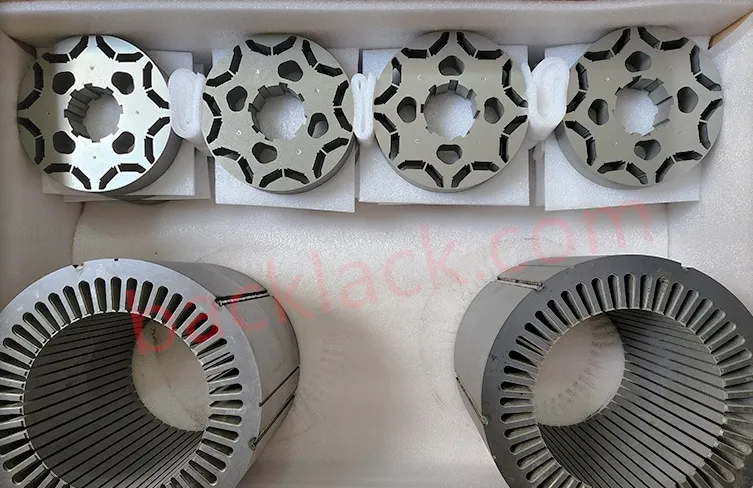
While 0.1mm sheets offer superior electromagnetic performance, the manufacturing difficulty increases exponentially. A premium motor core manufacturer must possess expertise in these three core areas to translate material potential into actual performance:
1. Extreme Burr Control and Lamination Quality
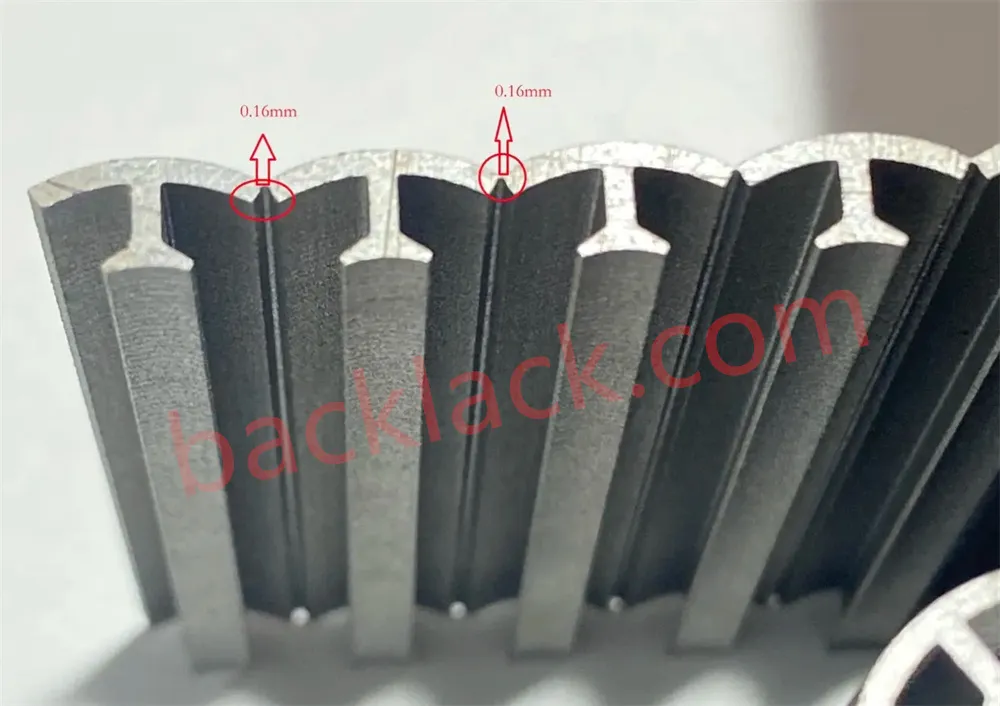
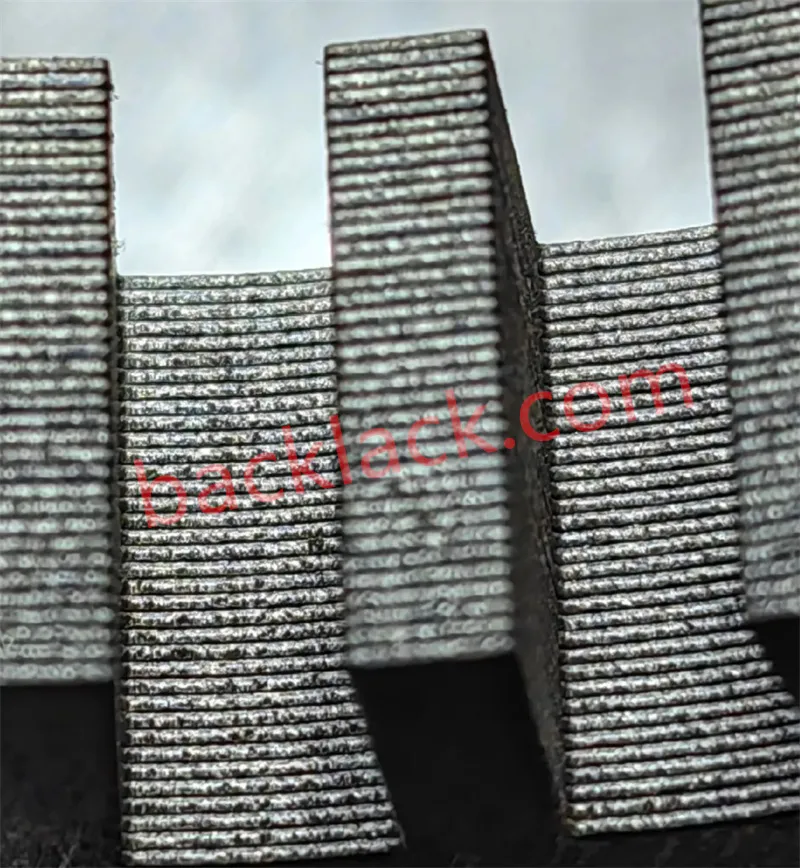
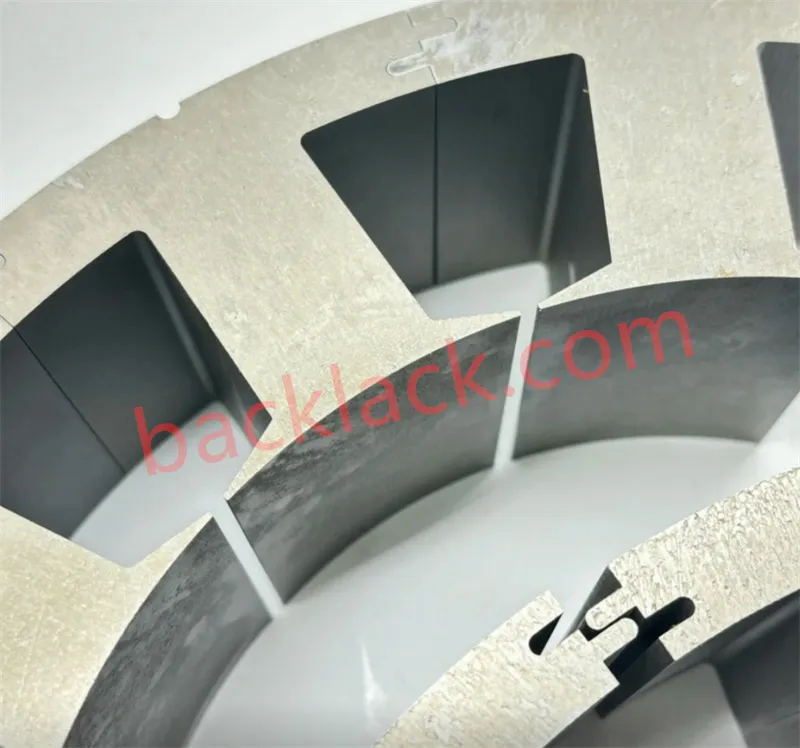
For 0.1mm thin sheets, a burr height of even 0.02mm can cause insulation failure between layers during stacking. These micro-short circuits across laminations allow eddy currents to bridge the sheets, effectively increasing the localized thickness (\(d\)) and triggering massive heat generation.
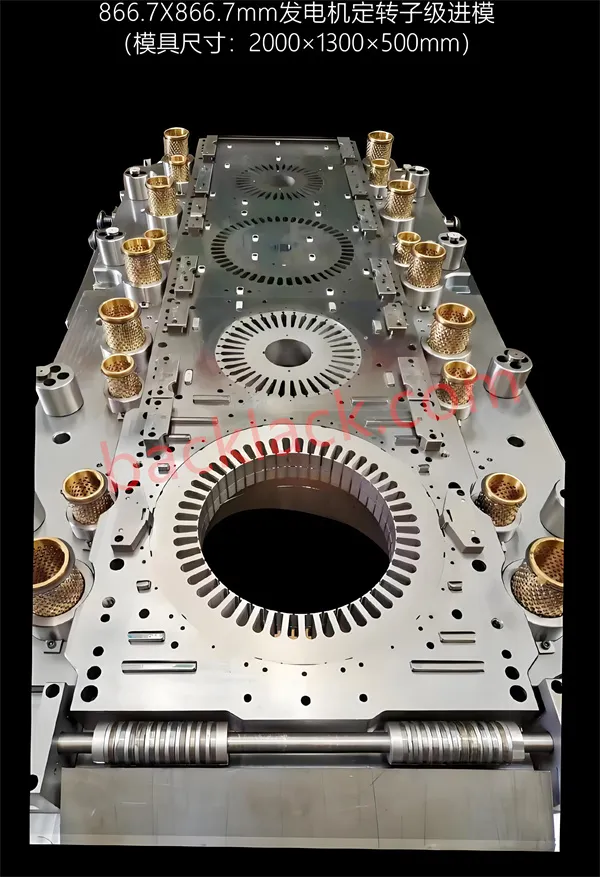
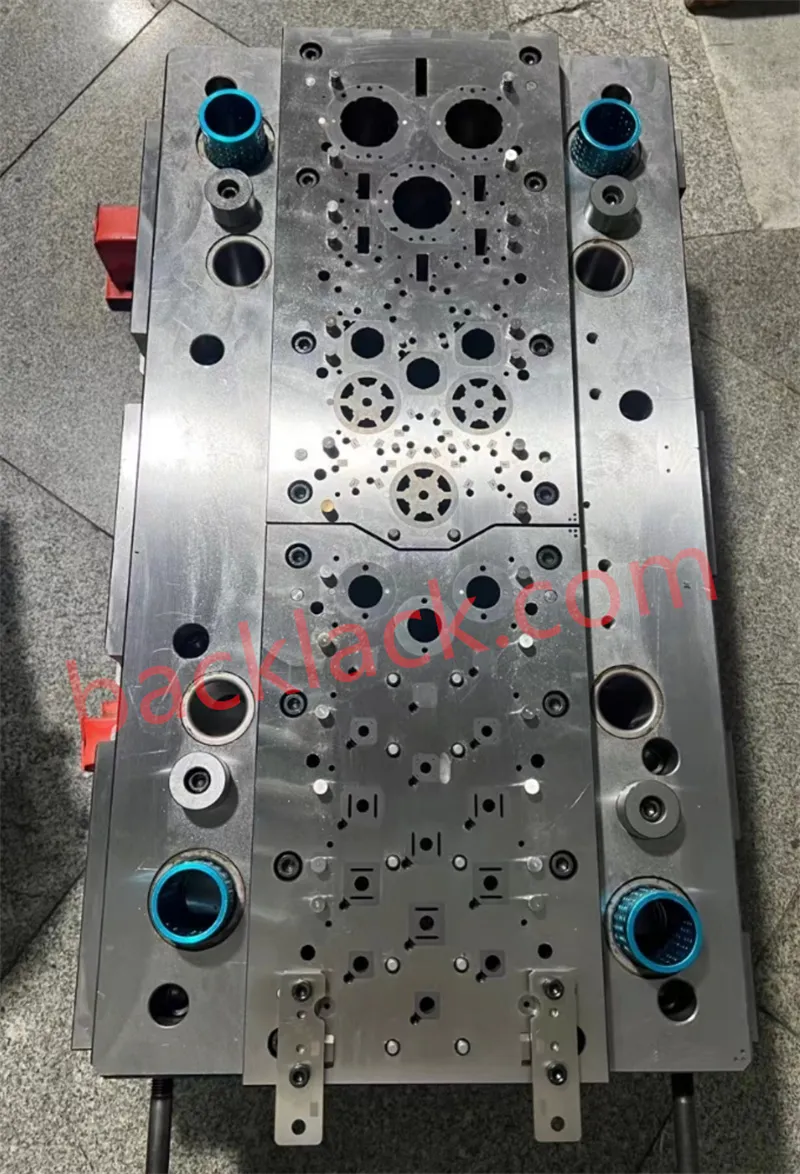
- Technical Standard: We utilize ultra-precision carbide progressive dies with manufacturing clearances controlled at the micron level. This ensures stamping burrs are kept within 3-5μm, guaranteeing perfect electrical insulation between each layer of thin sheets and preserving the intended magnetic path.
2. Innovation in Stacking: The Rise of Self-Bonding Technology
In high-speed scenarios, traditional "riveting" or "welding" processes are detrimental. Mechanical fasteners introduce stress, and welds create localized high-conductivity paths that become "highways" for eddy currents, deteriorating magnetic performance and inducing localized hot spots.
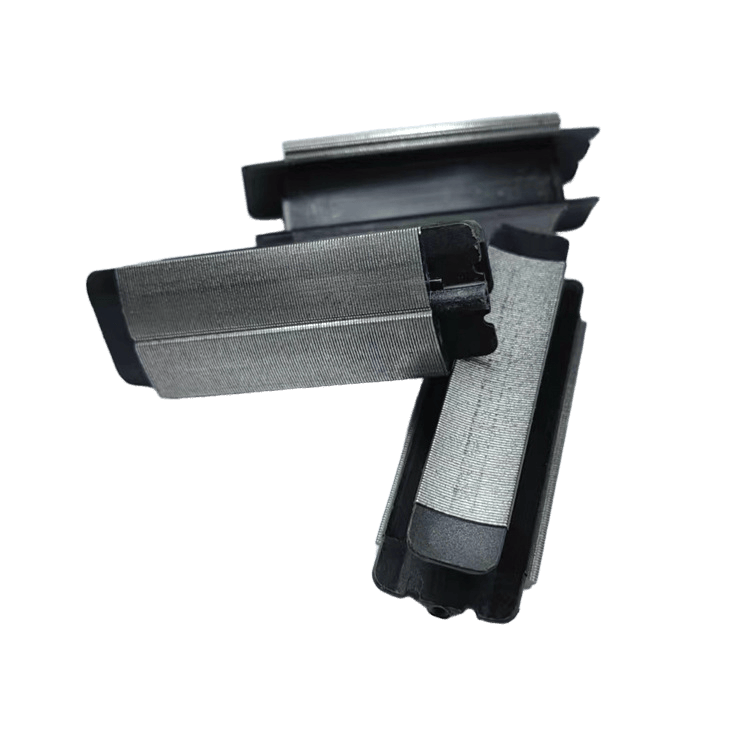
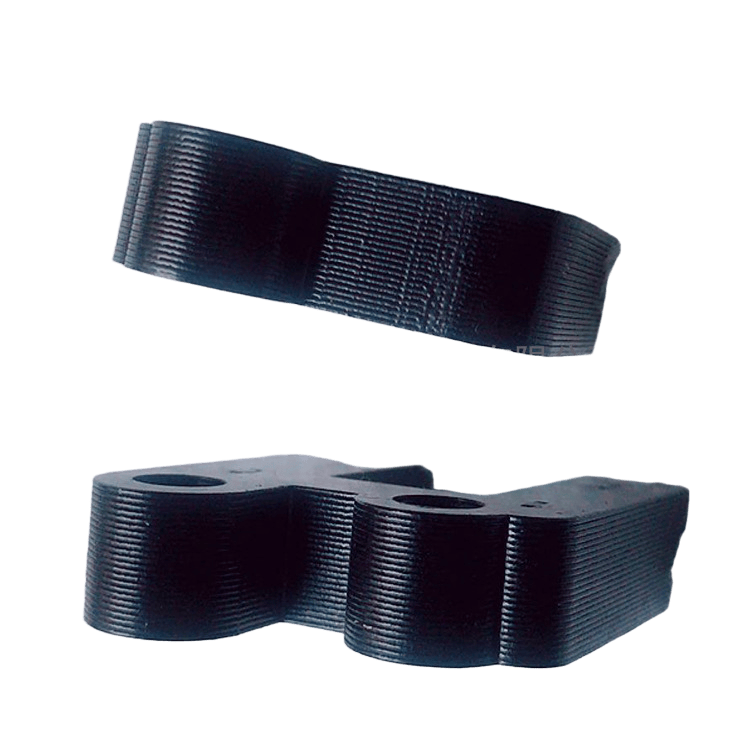
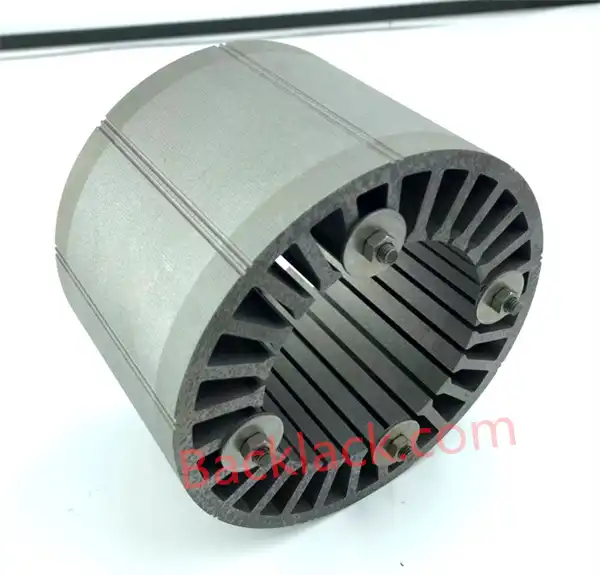
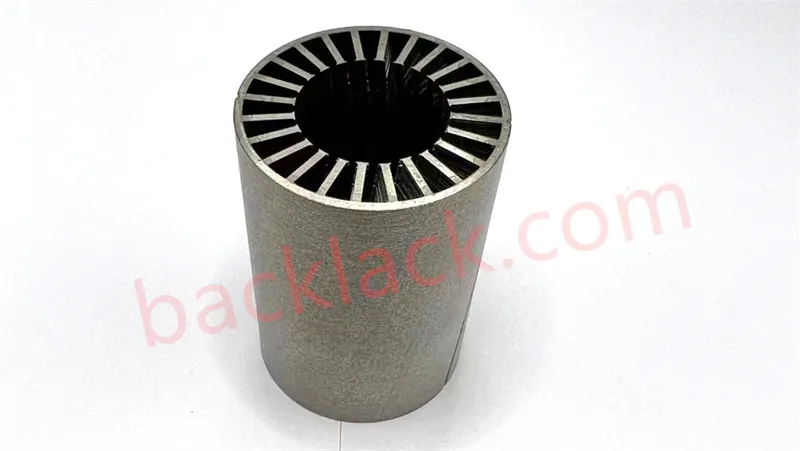
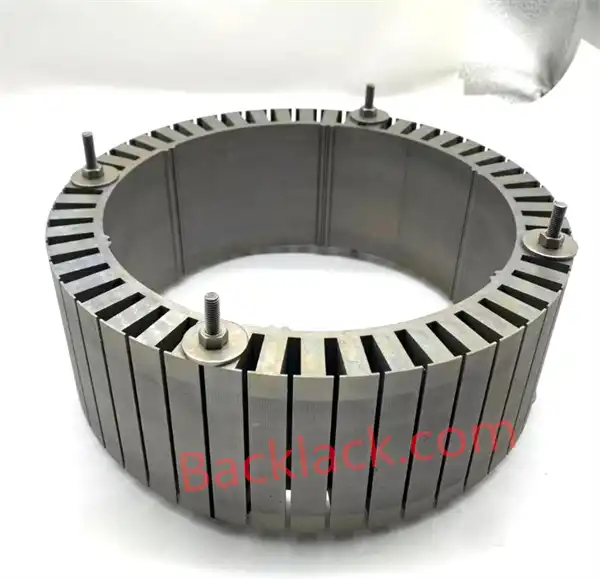
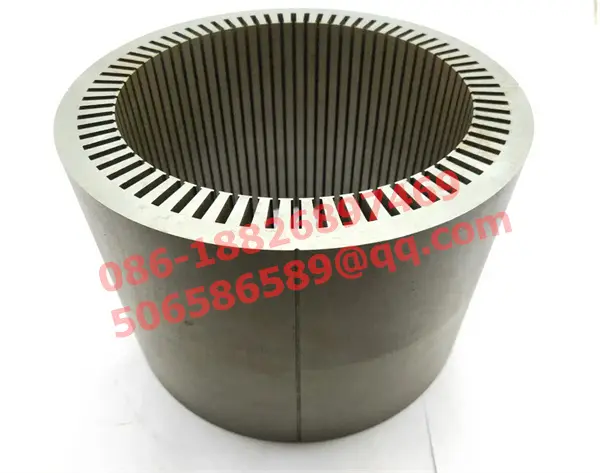
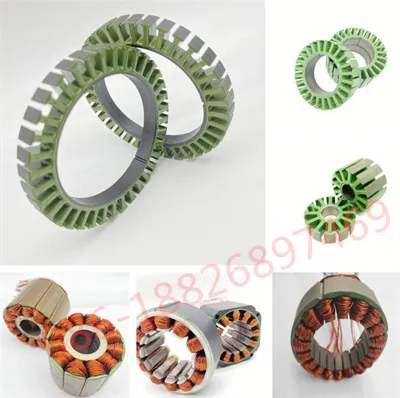
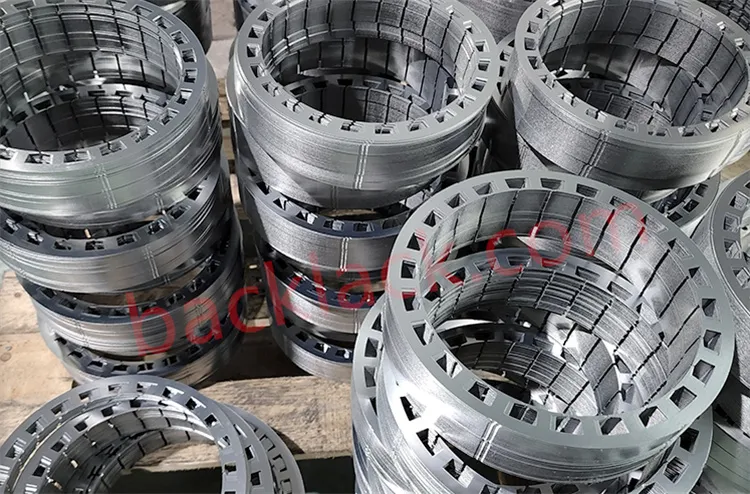
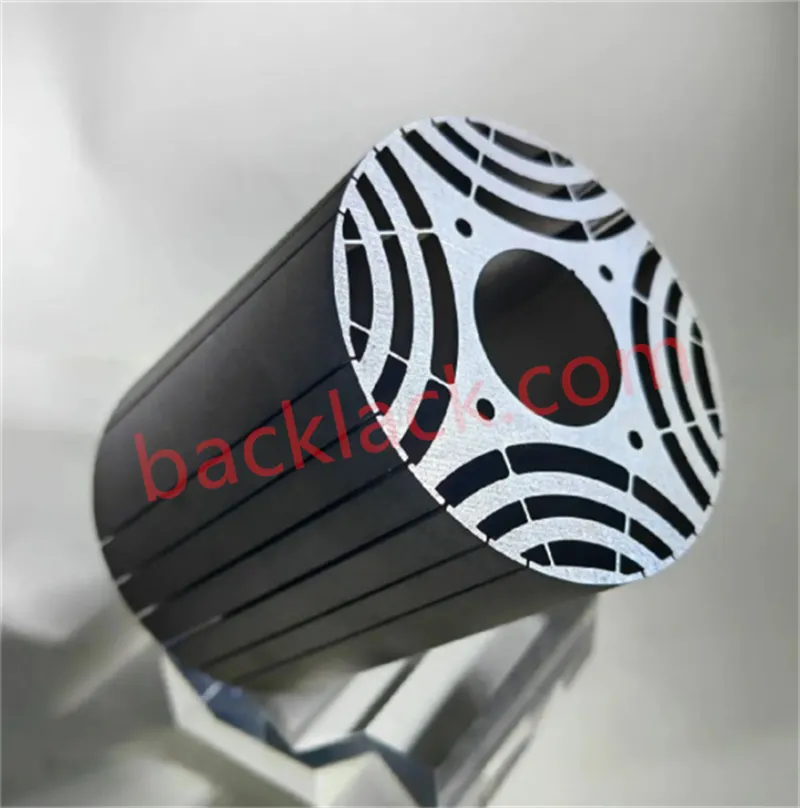
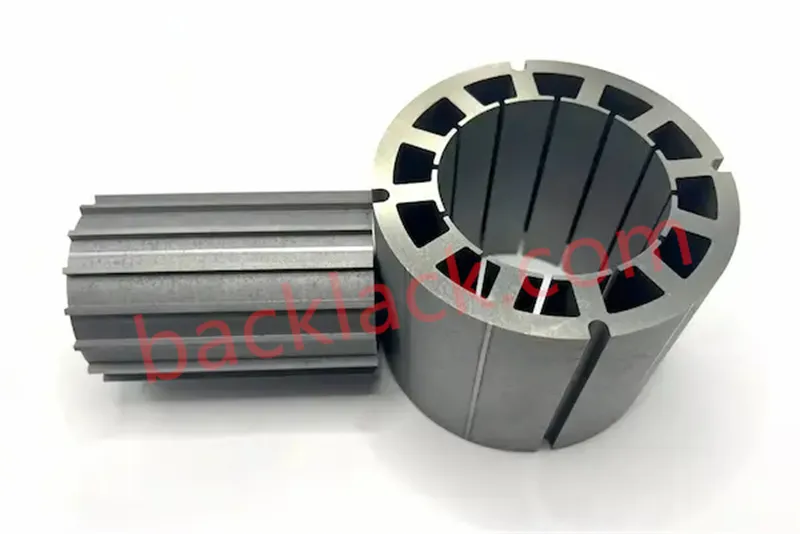
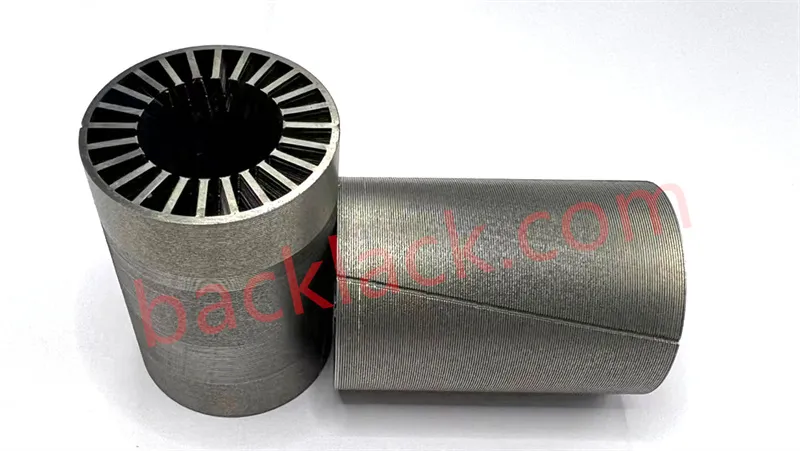
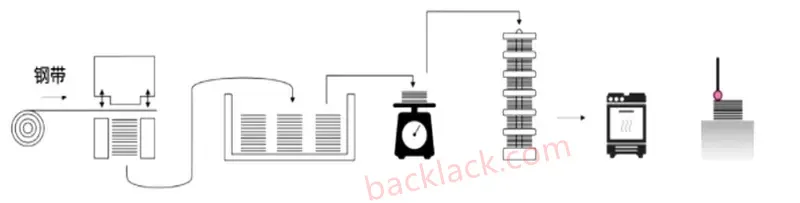
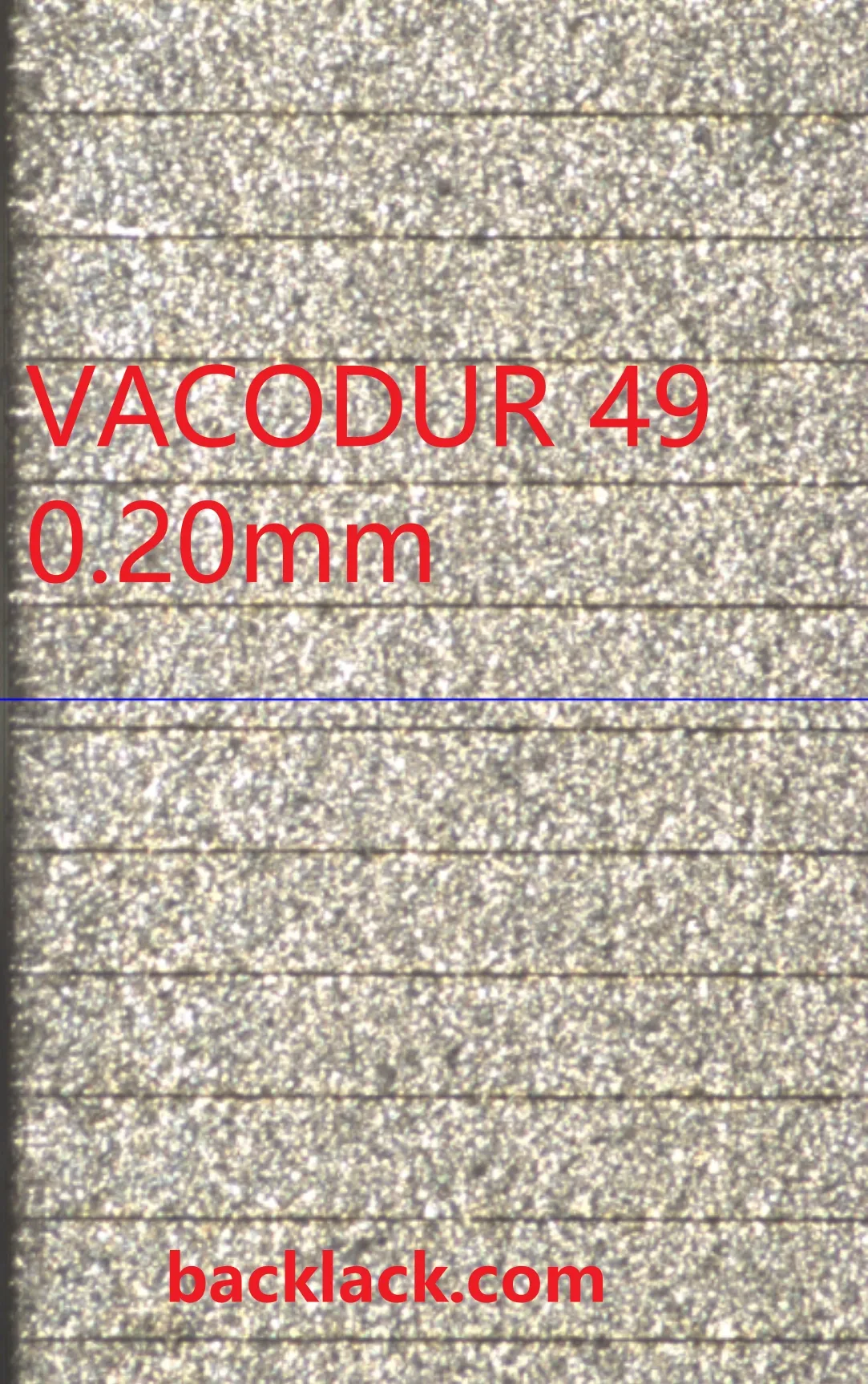
- Advanced Solution: Self-bonding stacking technology. This involves applying a micron-level epoxy coating to the silicon steel sheet before stamping. The completed stack is then subjected to a precise heat-and-pressure cycle to activate the adhesive.
- Zero Magnetic Damage: No punching or welding required, preserving the magnetic circuit integrity 100%.
- Ultra-High Stacking Factor: Stacking Factor can reach over 97%, maximizing the magnetic material volume.
- Enhanced Mechanical Strength:The epoxy bonding creates a monolithic core with superior physical stability, essential for handling high-speed centrifugal forces and vibration without deformation.
3. Dynamic Balance and Precision Tolerances
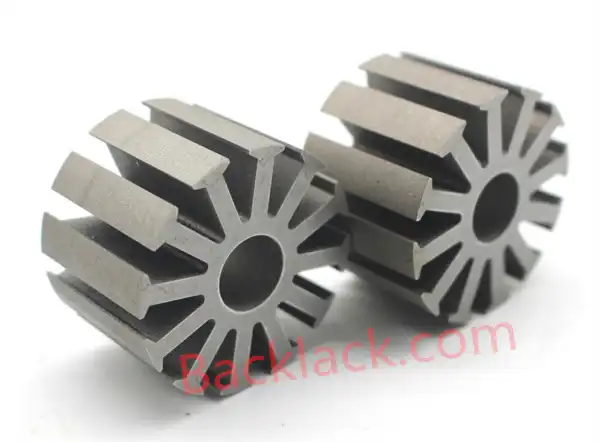
For high-speed rotating rotor cores, mass imbalance is not just a noise issue; it is a structural failure mechanism. Even a negligible imbalance will turn into severe vibration and structural loading at 50,000+ RPM.
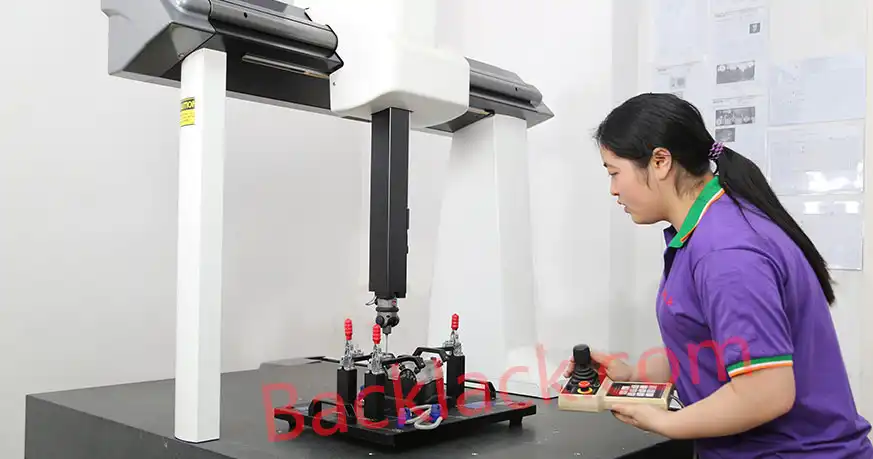
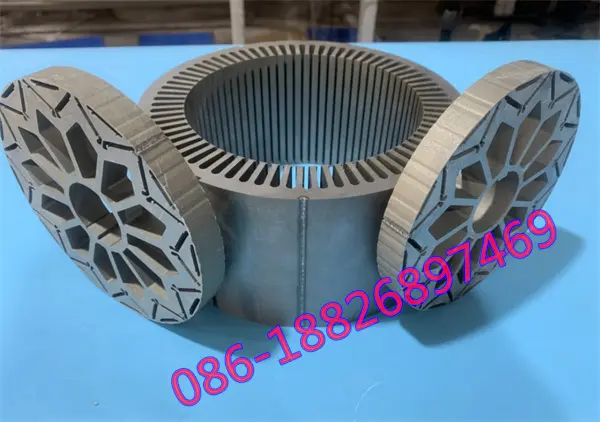
- Control Measures: We combine high-precision slow-feed wire EDM for complex geometries with ultra-precision progressive stamping. We ensure concentricity, roundness, and coaxiality tolerances are controlled within ±0.005mm, minimizing the requirement for post-production dynamic balancing and ensuring operational longevity.
Application Scenarios: Who Needs This "Fever Reducer"?
This precision manufacturing technology based on 0.1mm ultra-thin sheets is the core support for the following cutting-edge fields:
| Application | Core Requirement | Role of 0.1mm Cores |
|---|---|---|
| eVTOL Aircraft | Extreme Thrust-to-Weight Ratio | Drastically reduces heat, allowing for lighter cooling systems and longer flight times. |
| High-Speed Compressor | Extremely High RPM | Ensures structural integrity and minimizes iron losses at frequencies exceeding 2kHz. |
| Aerospace Spindle Motors | Extreme Reliability | Minimizes thermal expansion and deformation, ensuring machining precision under continuous high load. |
| Drone Propulsion | Efficiency & Compactness | Enables smaller, lighter motors to achieve high power output without overheating. |
Conclusion: Empowering Global Electric Propulsion Innovation
As a team deeply rooted in precision motor core manufacturing, we provide not just "products," but "high-frequency magnetic circuit optimization solutions."
We maintain a comprehensive stock of 0.1mm, 0.15mm, and 0.2mm specifications of high-frequency, low-loss silicon steel. Supported by a full chain of processes including advanced self-bonding, precision stamping, and rapid prototyping, we can take your design from concept to physical reality.
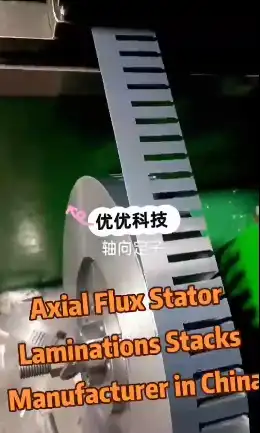
Whether your design utilizes a radial flux structure or a complex axial flux structure, and whether your prototype is in early development or pre-production, we are ready to inject more durable and cooler power into your electric propulsion system through micron-level precision.
Ready to thermal management motor core?
Is temperature rise dominated by winding copper loss or stator iron loss in your motor development?
Request a Technical ConsultationLooking for 0.1mm ultra-thin sheet sample processing services? Let's discuss your technical challenges.
About Youyou Technology
With decades of experience in precision motor core manufacturing, we specialize in custom stator and rotor laminations for the most demanding applications. Our capabilities include:
- Material expertise: Silicon steel (0.05mm–0.5mm), amorphous alloys, cobalt-iron alloys, and soft magnetic composites
- Advanced manufacturing: Laser cutting, precision stamping, automated stacking, and specialized coating technologies
- Quality standards: ISO 9001, IATF 16949, and industry-specific certifications
- Global partnerships: Serving leading OEMs in automotive, aerospace, industrial automation, and renewable energy sectors