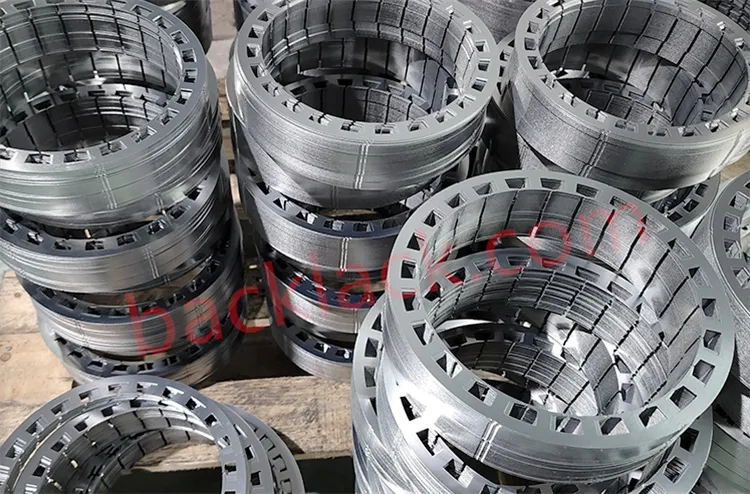
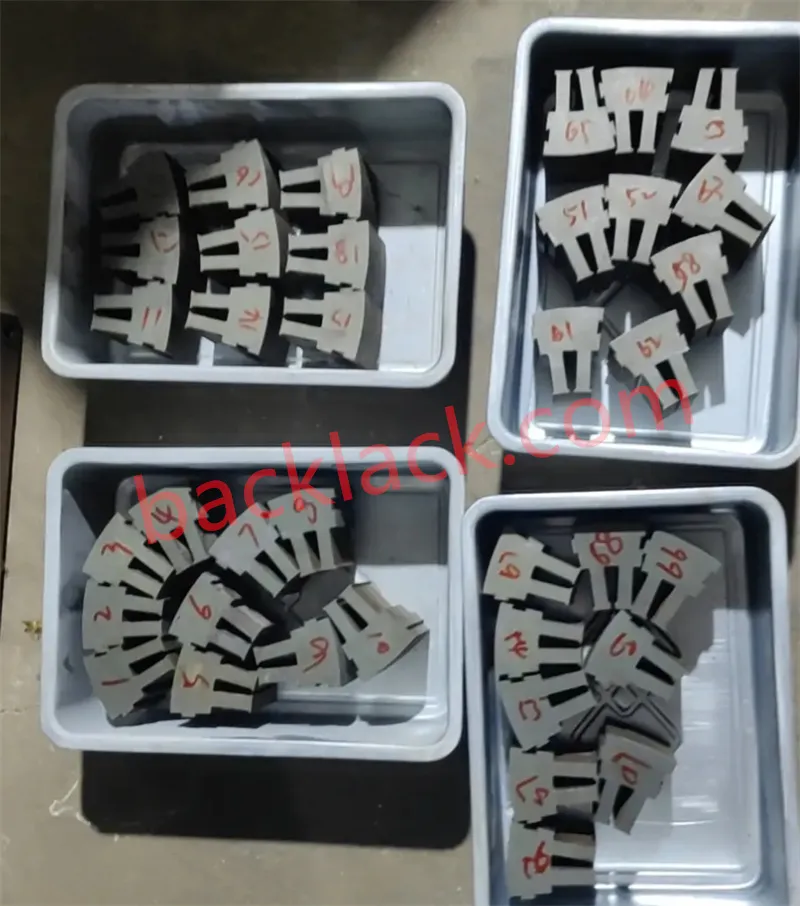
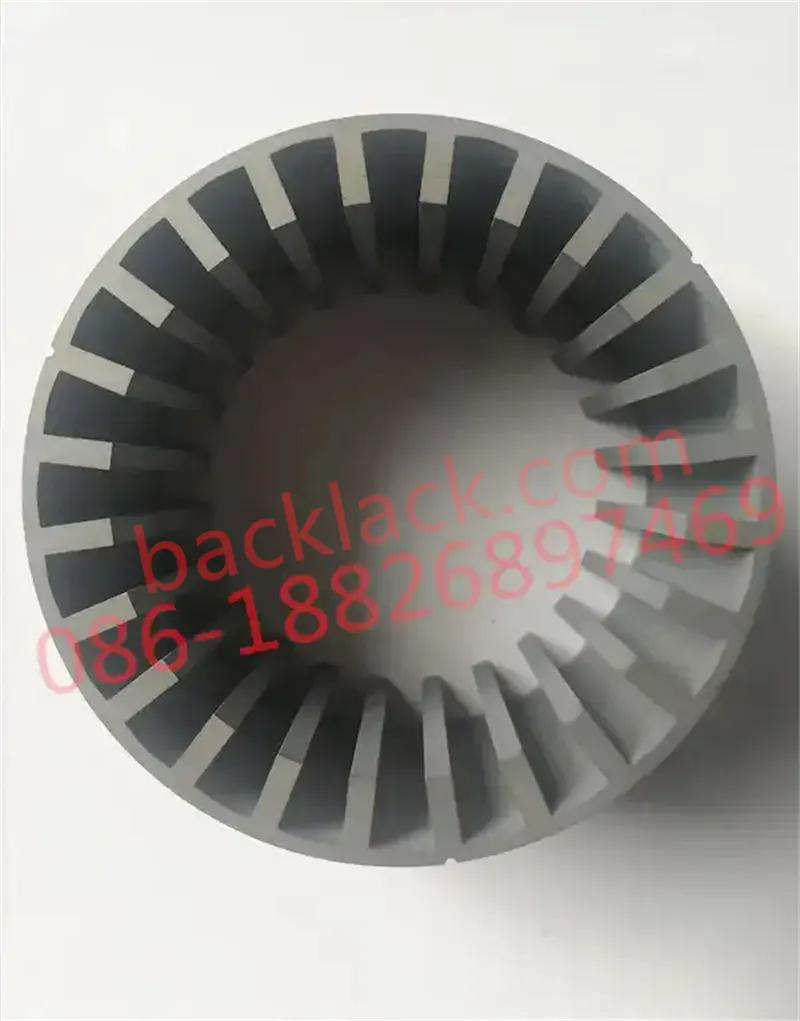
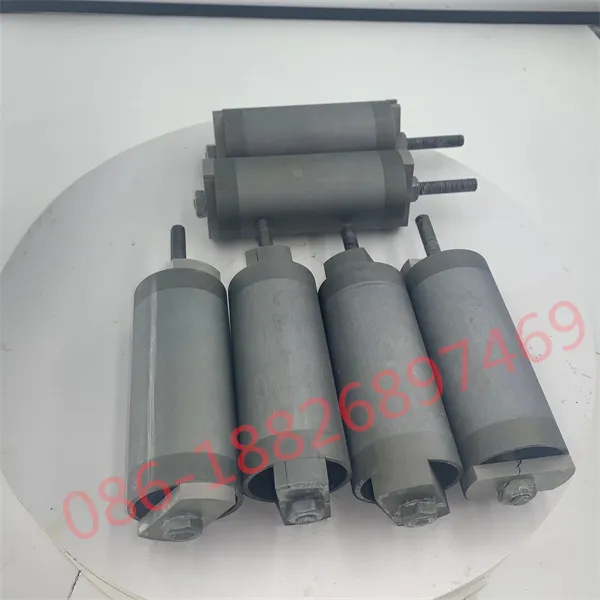

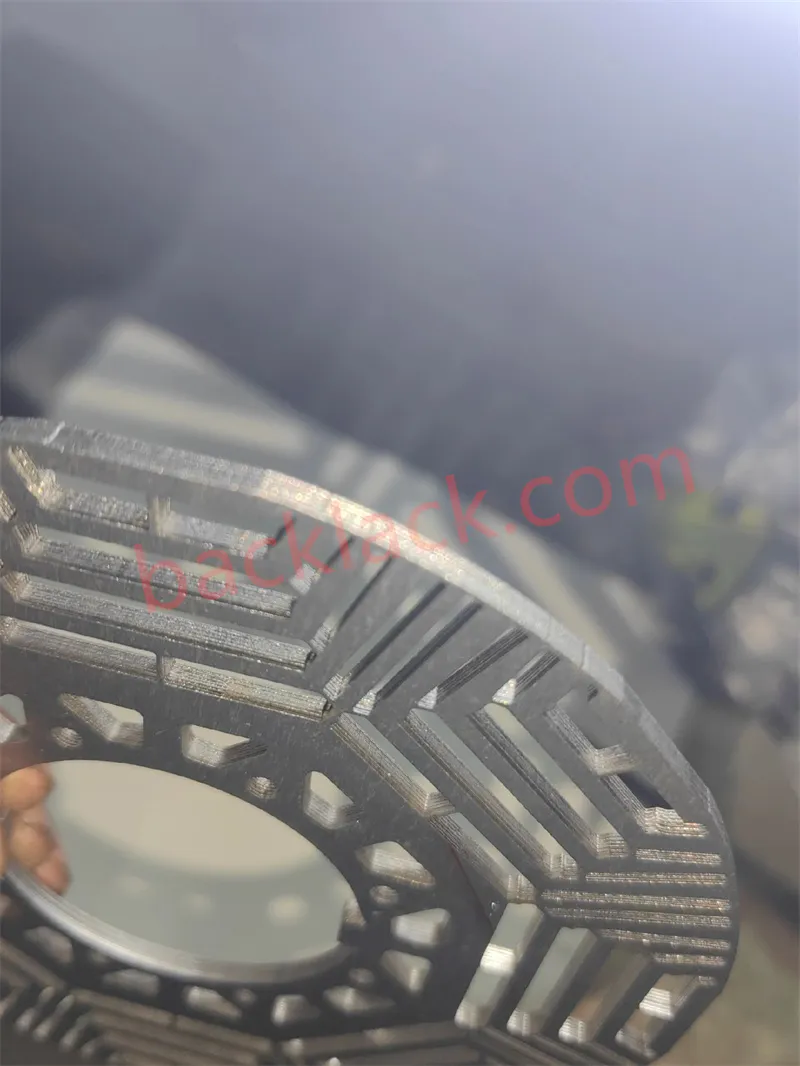
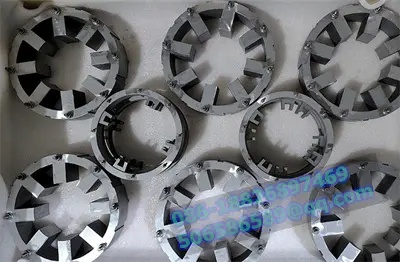
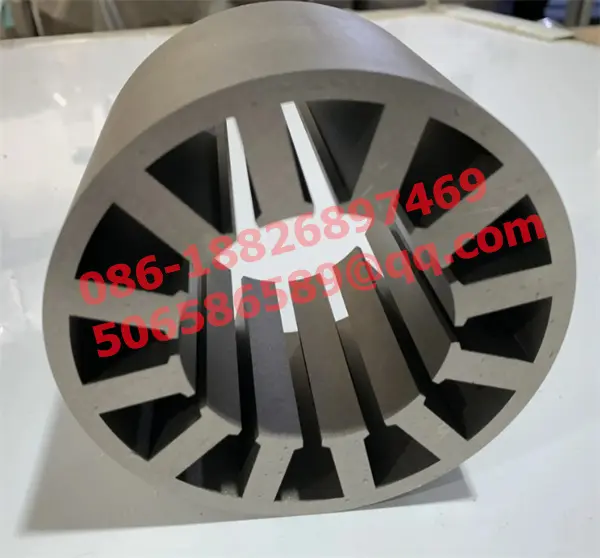
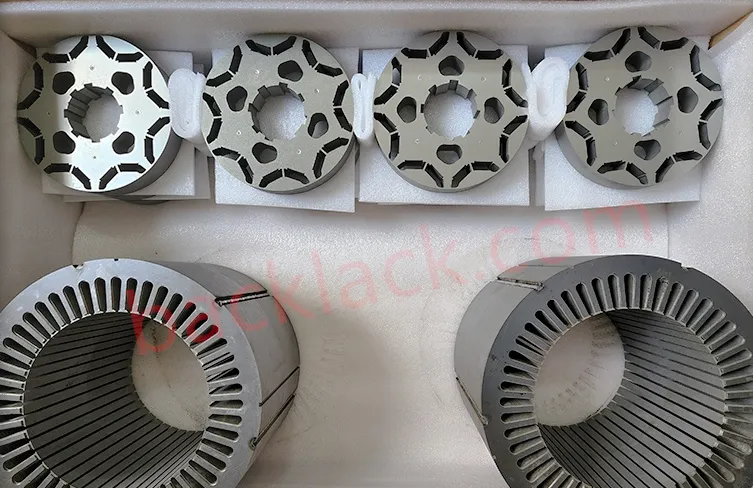
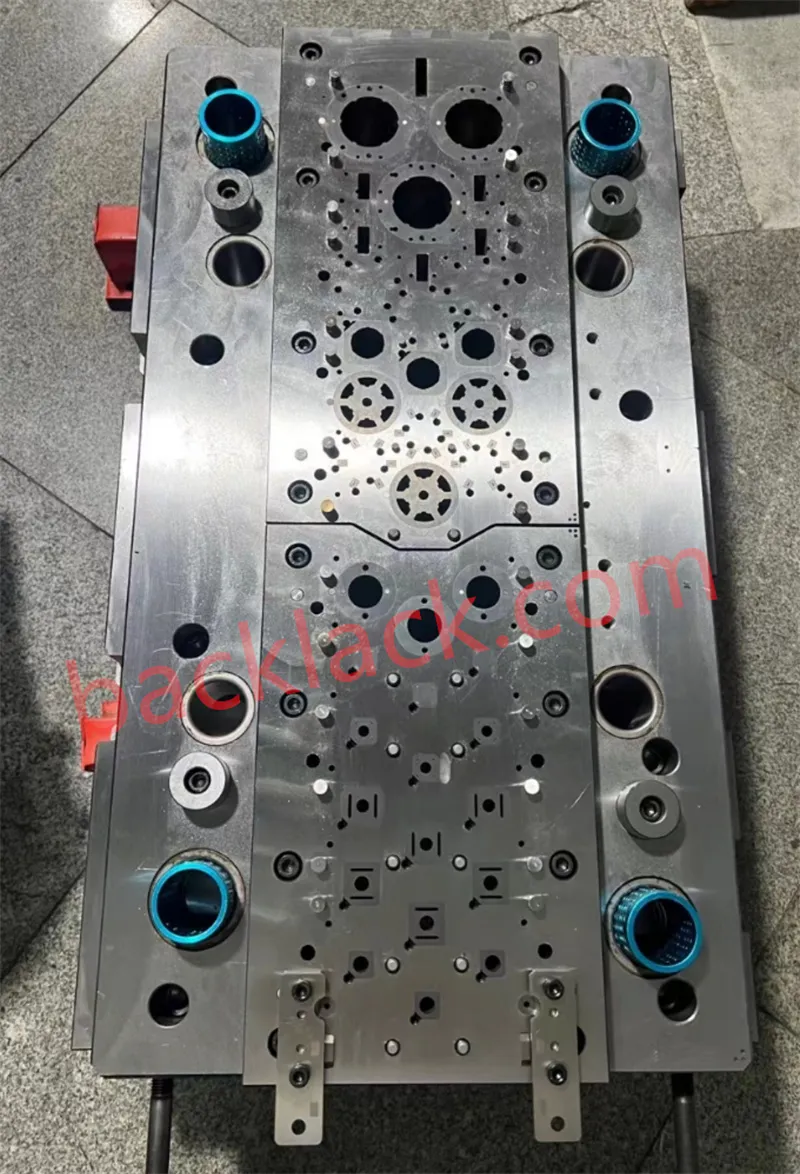
Overview: The "Core" Challenge of Linear Motors, High-Precision Motor Laminations Determine the Upper Limit of High-End Manufacturing Accuracy
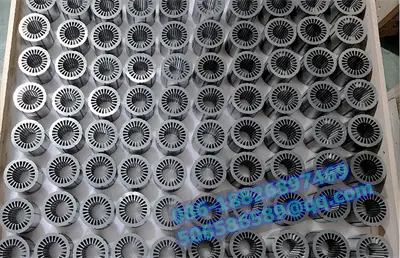
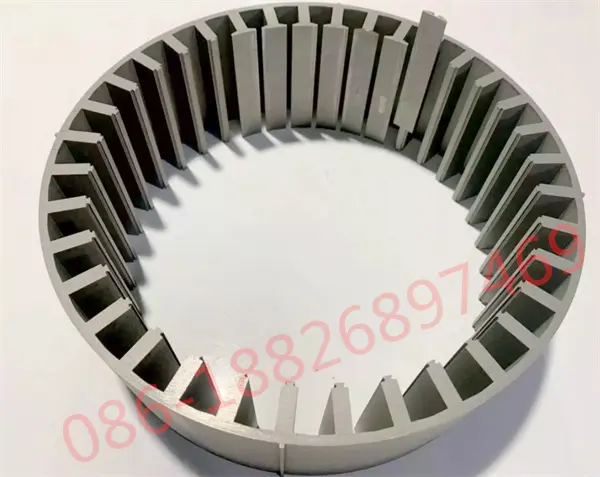
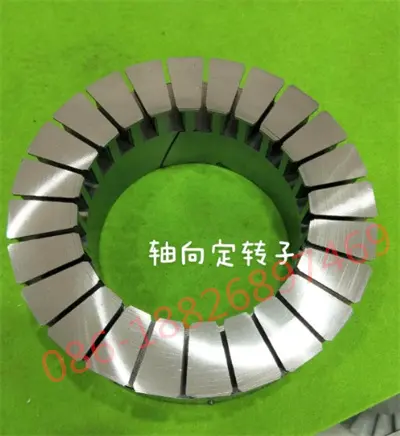
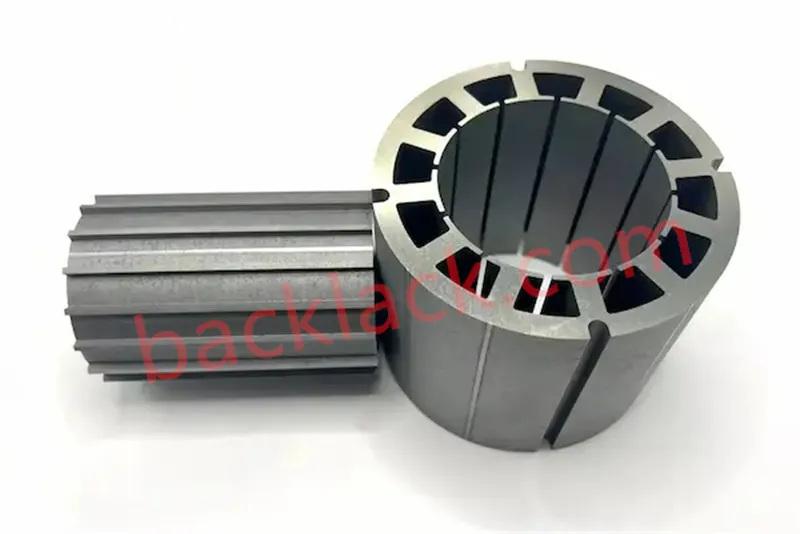
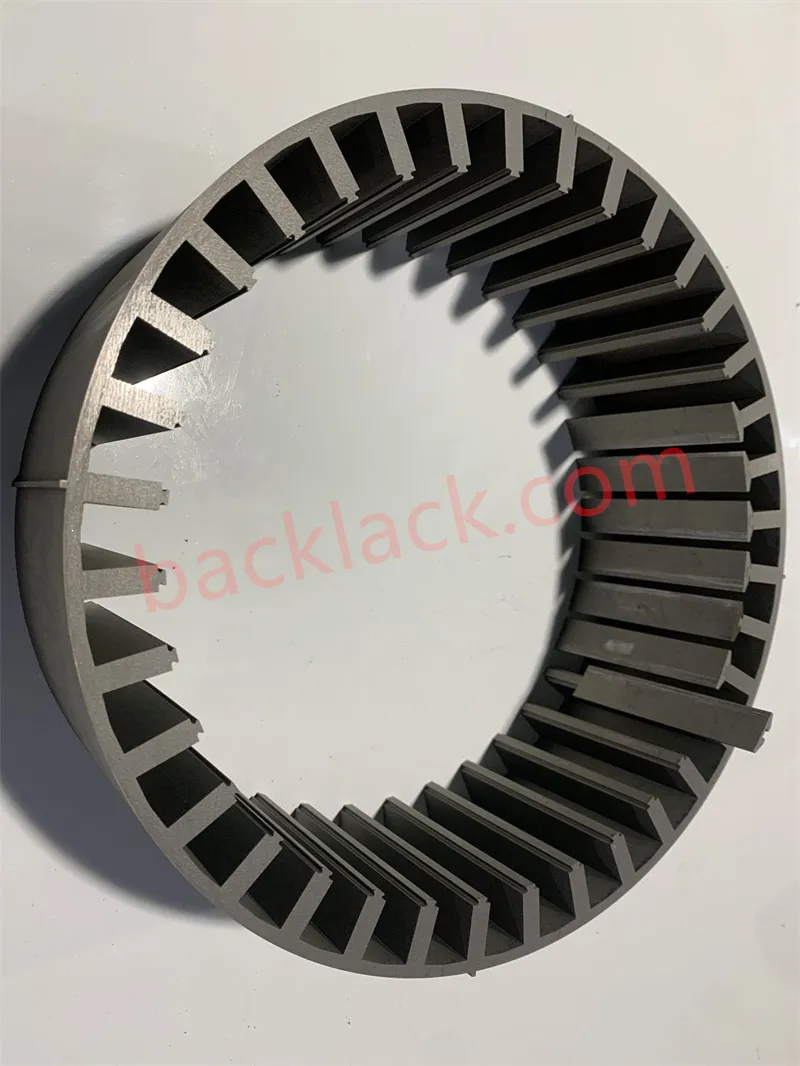
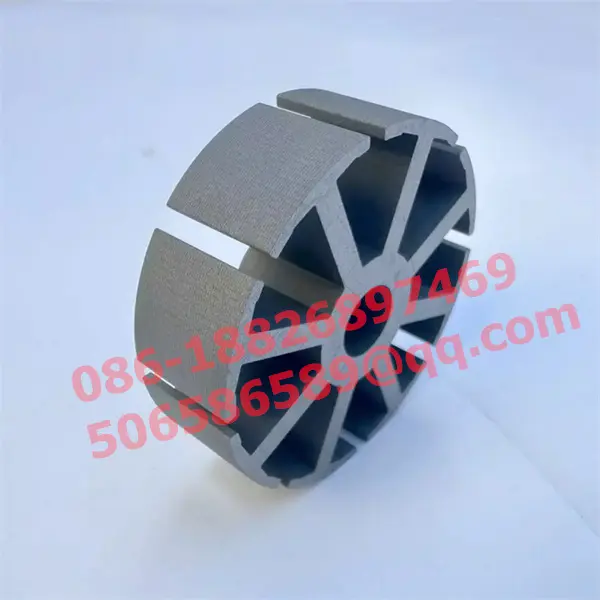
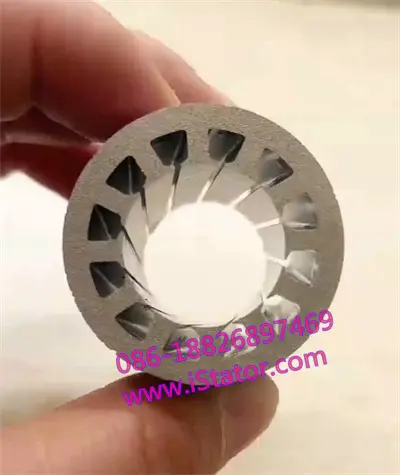
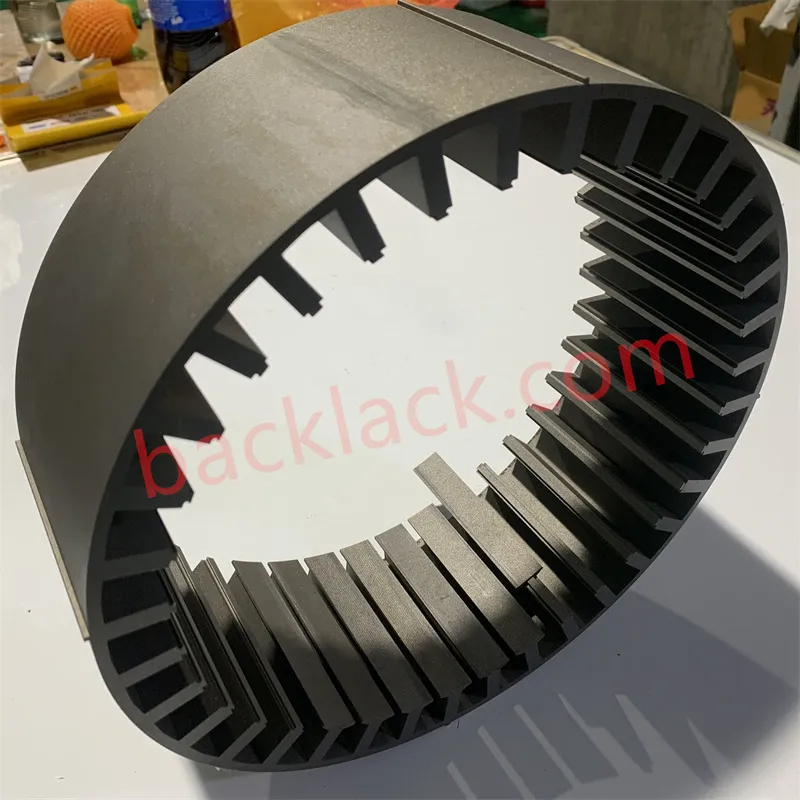
As the "power core" of high-end automation and semiconductor equipment, the quality of the Linear Motor Stator Core (linear motor stator core), the core component of linear motors (Linear Motor), directly determines the upper limit of motor performance. The core advantage of linear motors lies in eliminating intermediate transmission links such as lead screws and gears, directly converting electrical energy into mechanical energy, fundamentally eliminating backlash, wear, and hysteresis caused by mechanical transmission, and becoming the core solution for nanoscale positioning and high-acceleration motion control. According to industry technology trends, the performance requirements for linear motors in current high-end application scenarios such as semiconductor and display panel (e.g., semiconductor wafer handling, laser micromachining) have entered the "dual extreme" era — acceleration exceeding 10g and positioning accuracy reaching sub-nanometer level. Under this requirement, minor defects in High-precision Motor Laminations will be infinitely amplified, becoming the core bottleneck restricting motor performance.
Traditional riveting and welding processes, as the traditional mainstream methods for stator core lamination, have three fatal flaws in the application of high-precision linear motors, directly limiting the performance breakthrough of semiconductor and high-end automation equipment and failing to meet the core requirements of low loss and high precision:
- High-frequency heating: Local stress generated during riveting and welding will damage the insulation layer of silicon steel sheets, forming "short-circuit loops", intensifying eddy current loss, leading to uncontrolled temperature rise of the motor during high-frequency operation and failing to meet the low-loss requirement;
- Thrust fluctuation: The magnetic circuit asymmetry caused by the process will change the magnetic permeability μ of silicon steel sheets, resulting in obvious cogging effect, making it impossible to achieve stable thrust output of Low Cogging Force Core Design, which is difficult to meet the extremely high requirements of semiconductor equipment for motion smoothness;
- Mechanical micro-vibration: Under long-term high-frequency impact, riveting joints are prone to fatigue and loosening, and welding joints are prone to stress cracks, leading to a decrease in motor dynamic stiffness, affecting the servo control bandwidth, and unable to adapt to precision motion needs under high-speed commutation.
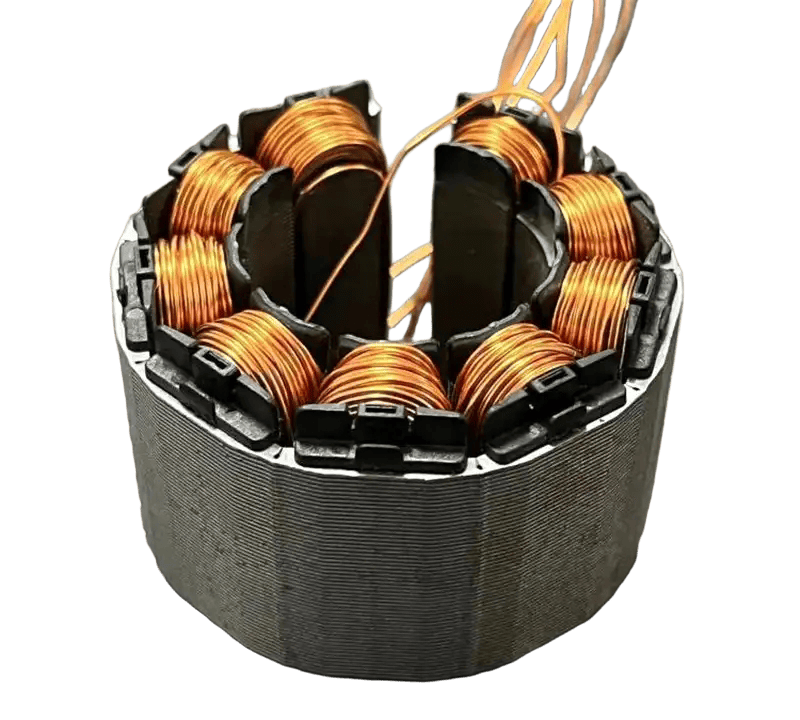
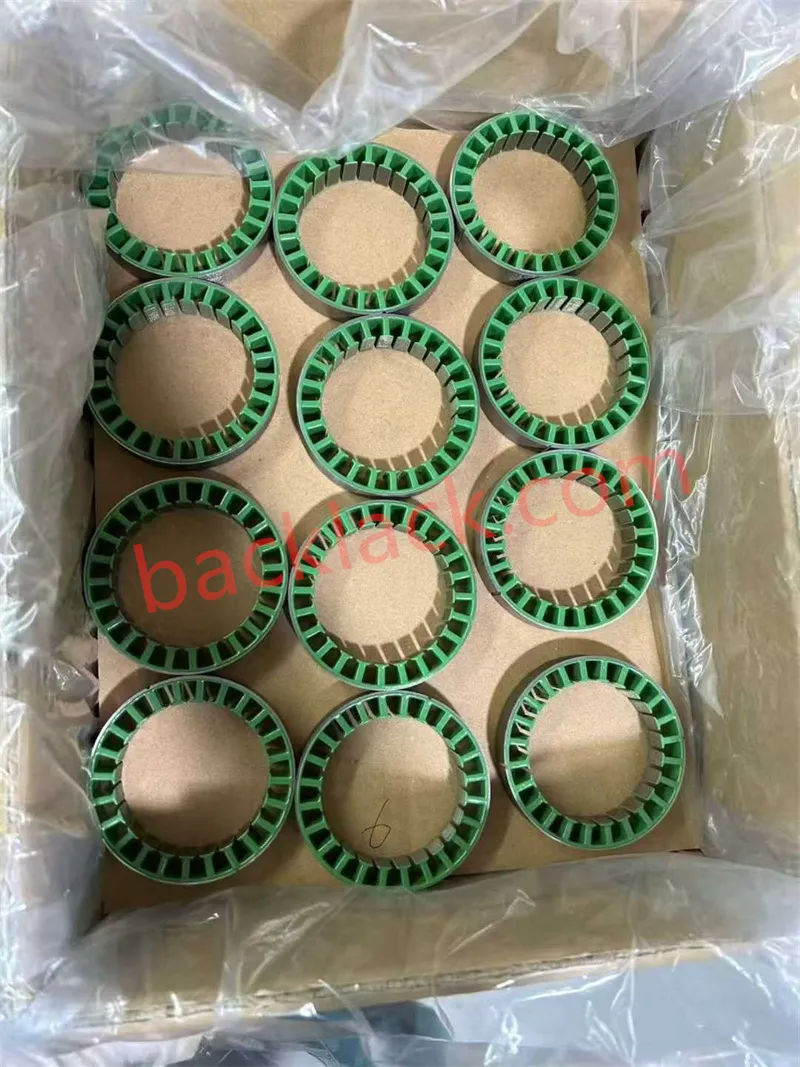
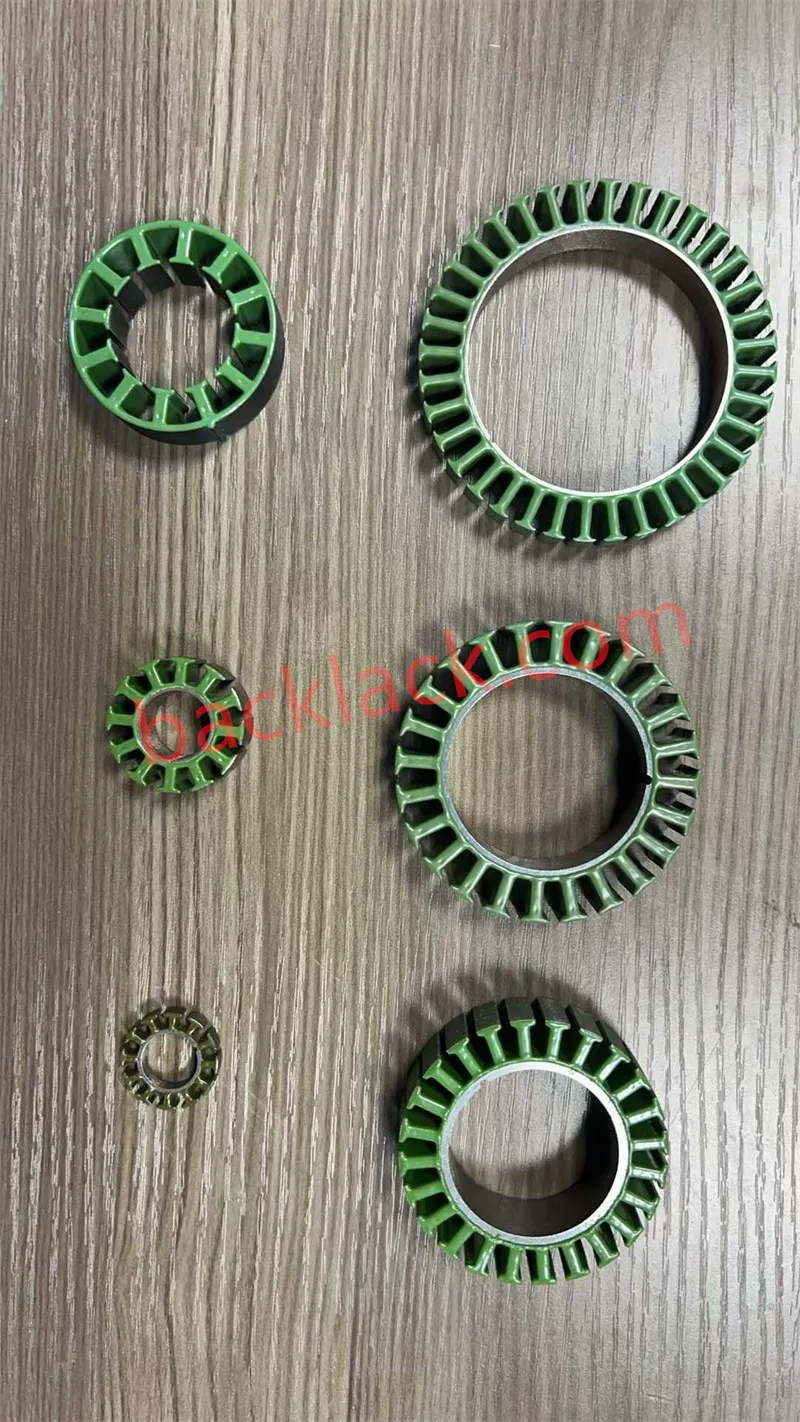
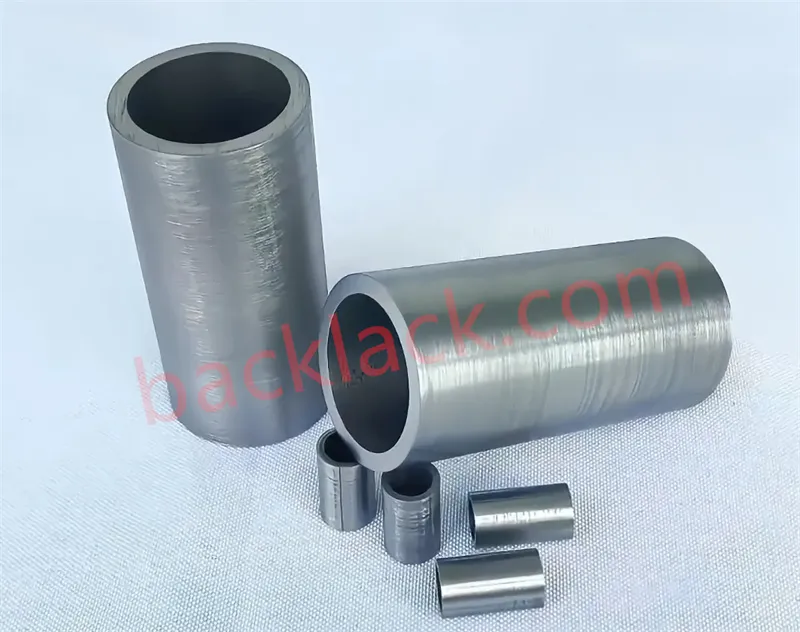
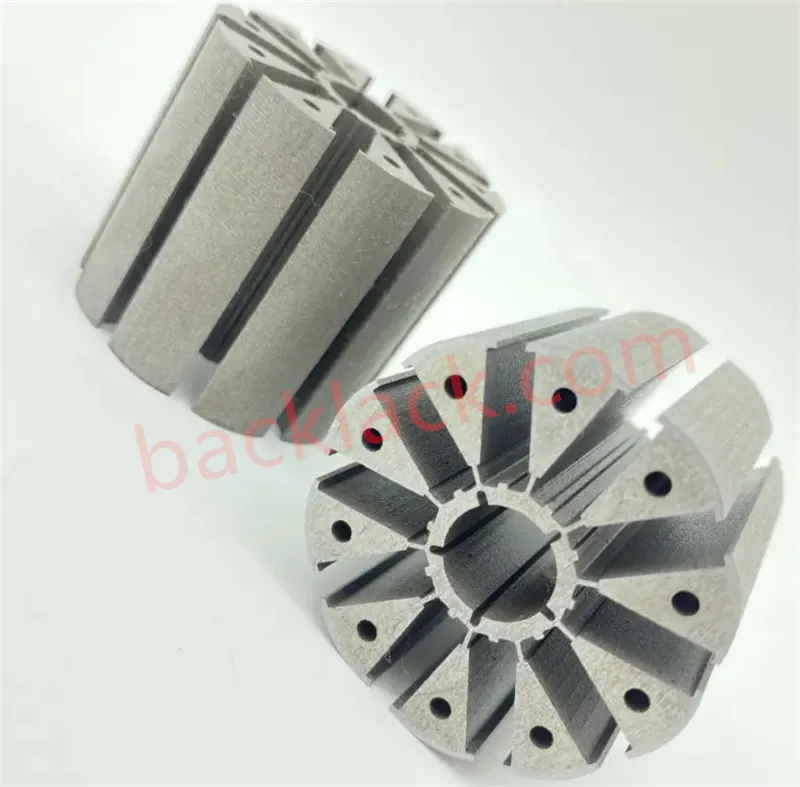
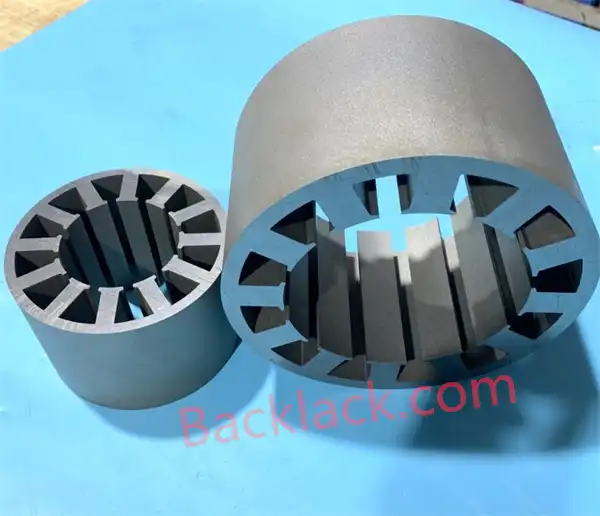
Our rivet-free self-bonding linear motor stator fundamentally solves the above pain points with its core advantages of high physical strength, low noise, and high electromagnetic efficiency, accurately adapting to the high-end application needs of semiconductors and linear motion systems. Especially in scenarios such as semiconductor 7nm and below processes and laser TGV micro-hole machining, defects of traditional processes will directly lead to reduced equipment yield and soaring maintenance costs (motor failures caused by traditional process stator cores account for more than 35% of total failures of high-end equipment). Youyou Company's Backlack Stator Core (self-bonding stator core) is specially designed to solve such pain points, accurately matching the core needs of semiconductor equipment for motion smoothness and low loss.
Technology Comparison: Why "Rivet-Free Self-Bonding" is the Only Solution?
Faced with the inherent defects of traditional processes, the industry has tried to improve riveting accuracy and optimize welding processes, but none can fundamentally solve the three core problems of stress, insulation, and heat conduction. With years of experience in High-precision Motor Laminations manufacturing, Youyou Company has independently developed the Backlack (self-bonding) process. Through the innovative idea of "rivet-free and full bonding", combined with Stress-free Annealing technology, it has achieved a leapfrog improvement in the performance of Backlack Stator Core (self-bonding stator core), becoming the core supporting technology for the next generation of high-precision linear motors. The following is a laboratory-level multi-dimensional comparison between Youyou Company's Backlack self-bonding process and traditional processes, intuitively presenting the core advantages of "low loss and high precision" with data, accurately matching the needs of linear motion system and semiconductor equipment customers:
| Evaluation Dimension | Traditional Process (Riveting/Welding) | Youyou Company Backlack Stator Core (Self-Bonding Stator Core) | Performance Improvement & Core Value (Low Loss + High Precision) |
|---|---|---|---|
| Thrust Smoothness (Cogging) (Core of High Precision) | Local stress changes the magnetic permeability μ of silicon steel sheets, resulting in obvious thrust fluctuation, unable to achieve Low Cogging Force Core Design | Stress-free lamination, combined with Stress-free Annealing, ensuring extremely uniform air gap magnetic density and perfectly realizing Low Cogging Force Core Design | Completely eliminating thrust ripple, achieving nanoscale smooth motion, adapting to scenarios with extremely high requirements for motion smoothness such as semiconductor wafer handling and precision measurement, and accurately matching the needs of semiconductor equipment customers |
| Thermal Radial Conduction (Auxiliary for Low Loss) | Trace air gaps between sheets, high thermal resistance, and heat cannot be conducted quickly | Thermal conductive adhesive fills all gaps, forming a continuous heat conduction path combined with Thin Lamination Stacking process | Stator temperature rise reduced by 8-12°C, effectively protecting permanent magnets from demagnetization, extending motor service life, and adapting to heat dissipation needs of high thrust density scenarios, further enhancing low-loss advantages |
| Lamination Factor (Packing) (Auxiliary for High Precision) | About 95.0% - 95.5%, loose lamination, insufficient magnetic conductive cross-section, unable to achieve high-precision lamination | 98.2% (±0.2%), through Thin Lamination Stacking process, the lamination is compact and uniform, with stable magnetic conductive performance, highlighting the strength of High-precision Motor Laminations | Thrust density increased by 5-8%, which can improve output thrust without increasing motor volume, helping equipment miniaturization and integration, and adapting to the compact design needs of Linear Motor Stator Core and Iron Core for Linear Actuators |
| Dynamic Stiffness (High Precision + Low Loss) | Prone to fatigue and loosening under long-term high-frequency impact, poor structural stability, high noise, and low electromagnetic efficiency | Integral curing molding, modulus close to monolithic metal, integrated structure, highlighting the core advantages of rivet-free self-bonding linear motor stator with high physical strength, low noise, and high electromagnetic efficiency | Greatly improving servo control bandwidth, adapting to high acceleration motion above 10g, avoiding mechanical micro-vibration under high-speed commutation, meeting the dynamic response needs of laser cutting and high-speed placement machines, and adapting to the application scenario of Segmented Stator for Long-stroke Motors |
Core Conclusion: The inherent defect of traditional processes is the stress and gaps caused by "mechanical connection". Youyou Company's Backlack Stator Core (self-bonding stator core), through the combined process of "chemical bonding + Stress-free Annealing + Thin Lamination Stacking", achieves lamination integration, fundamentally solving the three major pain points of insulation, heat conduction, and stiffness. It has both low-loss and high-precision advantages, perfectly adapting to application scenarios such as Linear Motor Stator Core and Iron Core for Linear Actuators, and is the optimal choice for linear motion system and semiconductor equipment customers to break performance bottlenecks.
Core Manufacturing Expert Advantages of Youyou Company, Building High-Precision and Low-Loss Technical Barriers
The implementation of self-bonding technology requires not only core technological breakthroughs but also extreme manufacturing precision and detail control. With years of experience in High-precision Motor Laminations manufacturing, Youyou Company focuses on the R&D and production of Backlack Stator Core (self-bonding stator core) combined with the application needs of the linear motor industry, forming three core manufacturing advantages, giving full play to the low-loss and high-precision potential of self-bonding technology, distinguishing it from similar products in the industry, and accurately matching the needs of customers in linear motion systems and semiconductors:
-
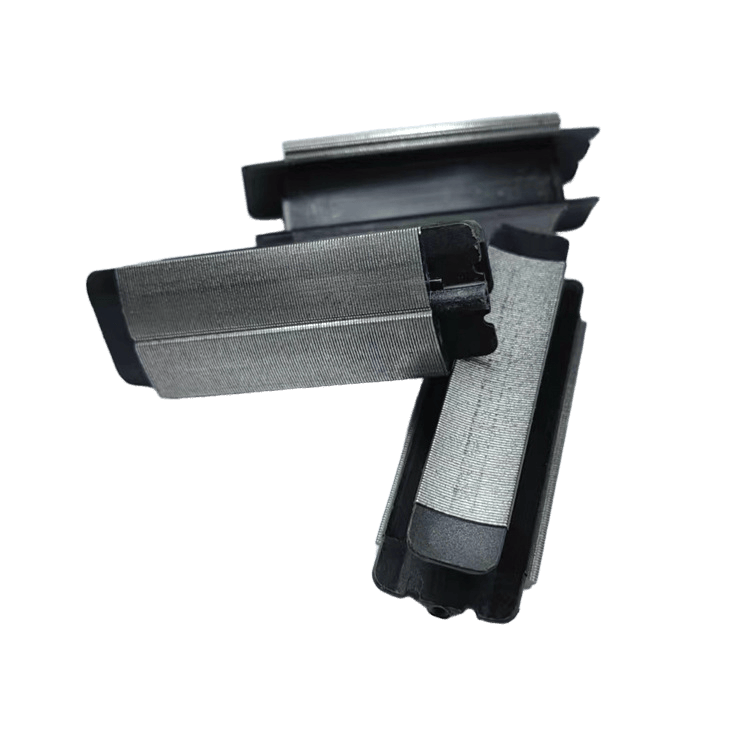
0.1mm/0.2mm Ultra-Thin Silicon Steel Lamination Assemblies, Proficient in Thin Lamination Stacking Process
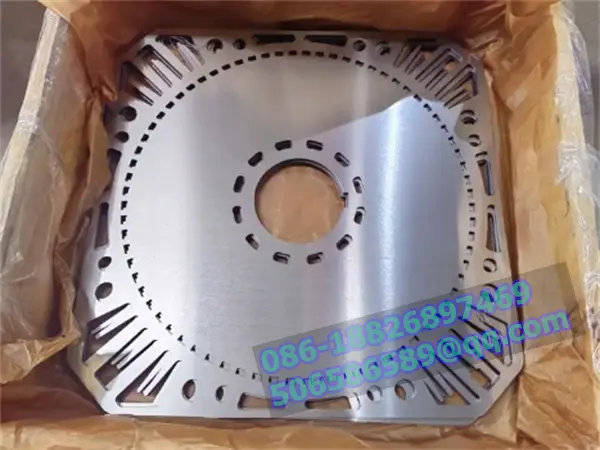
When linear motors operate at high speed, the stator operating frequency can reach several thousand hertz. The thickness of Silicon Steel for High-speed Linear Motors is the key to reducing eddy current loss and improving motor dynamic performance — the thinner the silicon steel sheet, the smaller the eddy current loss, the better the temperature rise control of the motor during high-frequency operation, and the more obvious the low-loss advantage. Youyou Company is deeply engaged in the field of ultra-thin high-performance silicon steel processing, capable of accurately processing high-end Silicon Steel for High-speed Linear Motors such as Japan's JFE 10JNEX900 and Nippon Steel 20HT1500, professionally manufacturing 0.1mm/0.2mm Ultra-Thin Silicon Steel Lamination Assemblies, proficient in Thin Lamination Stacking process, covering all specifications from 0.1mm to 0.2mm, fully demonstrating the factory's core strength in processing high-end materials, and meeting the low-loss and high-precision needs of high-frequency and high-acceleration scenarios.
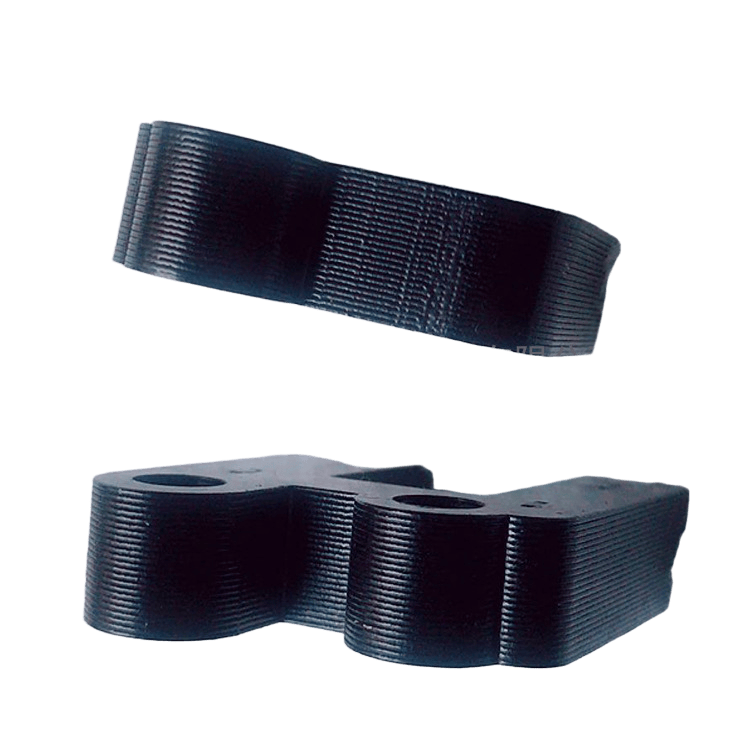
Technical Details: Ultra-thin silicon steel sheets are prone to edge warping and lamination misalignment during lamination and curing, leading to uneven magnetic circuits and thrust fluctuations, affecting the quality of High-precision Motor Laminations. Through independently developed special curing pressure curve control technology, combined with Stress-free Annealing process, Youyou Company accurately controls the pressure and curing temperature of each lamination layer. While ensuring the thickness of 0.1mm/0.2mm Ultra-Thin Silicon Steel Lamination Assemblies, it completely solves the edge warping problem of thin sheets after curing, ensuring lamination parallelism and flatness, providing a basic guarantee for uniform magnetic circuits and Low Cogging Force Core Design. This technological breakthrough also solves the core problem of Thin Lamination Stacking of ultra-thin silicon steel in the industry.
-
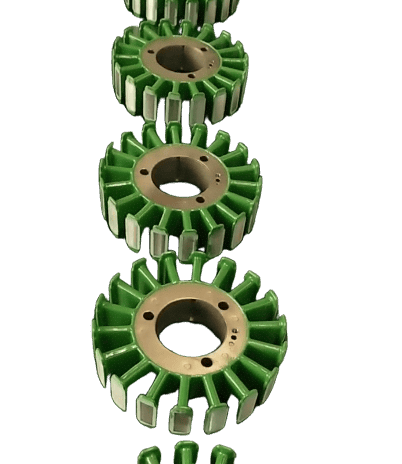
Precise Control of Segmented Stator for Long-stroke Motors, Breaking the Bottleneck of Long-Stroke Applications
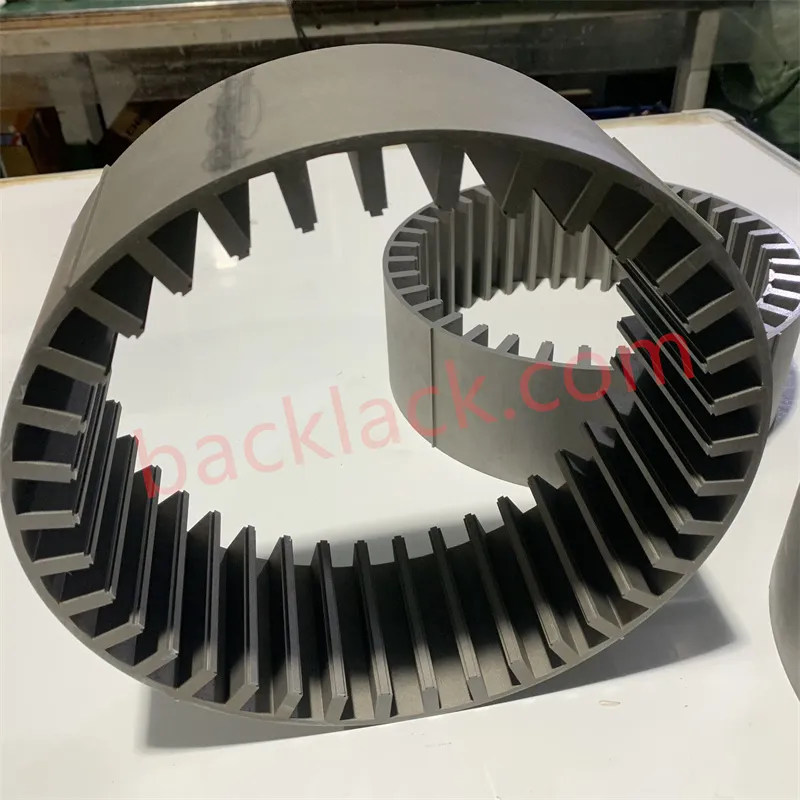
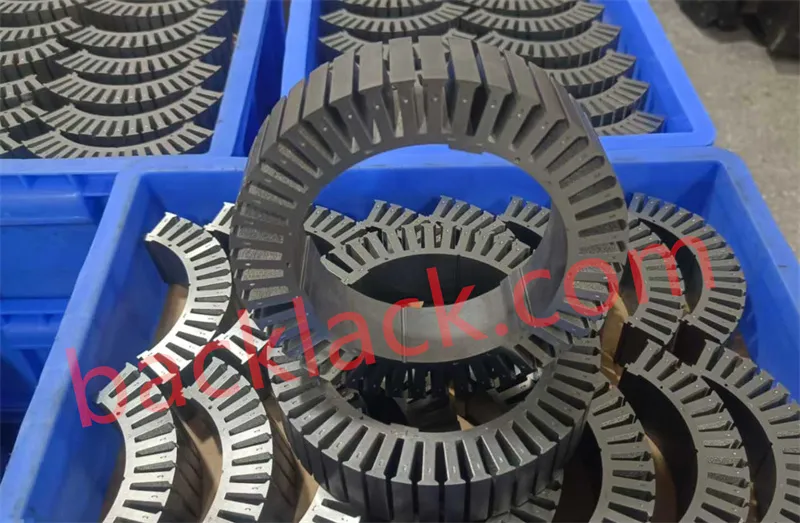
High-end automation equipment (such as high-speed placement machines, long-stroke laser processing equipment) and semiconductor equipment often require multi-segment stator splicing to achieve infinite long-stroke operation. The geometric consistency and magnetic circuit continuity at the splicing of Segmented Stator for Long-stroke Motors are the key to determining long-stroke motion accuracy — traditional process stator splicing is prone to tooth misalignment and magnetic circuit jump, leading to impact and high noise during motor operation, affecting positioning accuracy, and unable to meet the needs of semiconductor equipment.
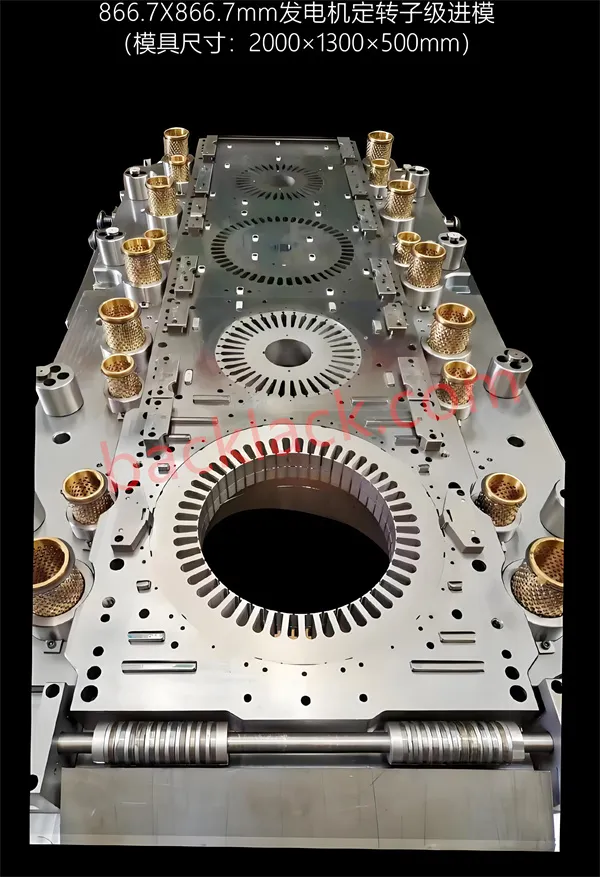
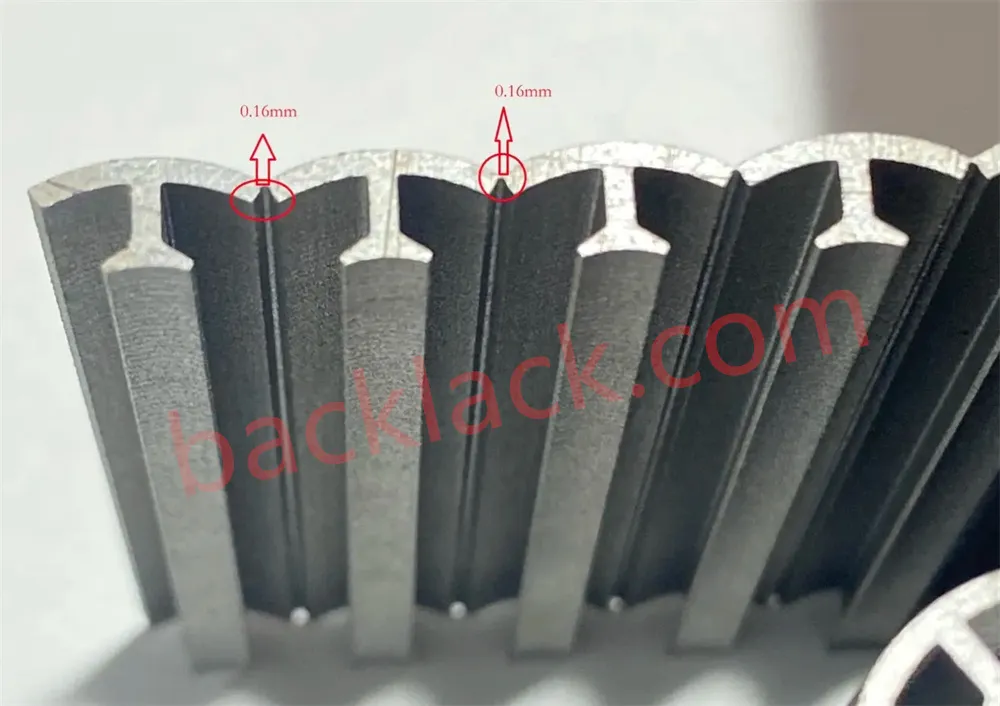
Accuracy Guarantee: Focusing on High-precision Motor Laminations processing, Youyou Company adopts high-precision Progressive Die combined with secondary finishing process, strictly controlling the tooth processing accuracy of Silicon Steel for High-speed Linear Motors, ensuring that the tooth position tolerance is within ±0.01mm, far higher than the industry standard of ±0.03mm, fundamentally ensuring the geometric accuracy of each Segmented Stator for Long-stroke Motors and helping to achieve Low Cogging Force Core Design.
Splicing Solution: Relying on the integration advantage of Backlack Stator Core (self-bonding stator core), combined with Stress-free Annealing process, the self-bonding stator provided by Youyou Company has excellent geometric consistency and magnetic circuit continuity at the segmented splicing. The air gap magnetic density uniformity deviation after splicing is ≤0.5%, effectively avoiding the impact caused by magnetic circuit jump during long-stroke motion, adapting to the needs of scenarios such as semiconductor wafer handling and long-stroke precision detection, achieving the core goal of "infinite stroke, consistent accuracy", and perfectly matching the application needs of Linear Motor Stator Core and Segmented Stator for Long-stroke Motors.
-
Innovative Application of Grain-Oriented Electrical Steel (GOES): 23ZDKH85, Enhancing Dual Advantages of Low Loss and High Precision
In application scenarios requiring extremely large instantaneous thrust such as high-power laser cutting, military vibration tables, and semiconductor equipment, the magnetic conductivity of Linear Motor Stator Core directly determines the upper limit of motor thrust and loss level. Youyou Company innovatively adopts 23ZDKH85 grain-oriented electrical steel (GOES) as the core choice of Silicon Steel for High-speed Linear Motors. Combined with Backlack self-bonding process and Thin Lamination Stacking process, it achieves a leapfrog improvement in both thrust performance and low loss — the magnetically easy axis of grain-oriented electrical steel has obvious directionality. By accurately controlling the alignment of the magnetically easy axis of silicon steel sheets with the magnetic circuit direction of linear motors, the magnetic resistance can be reduced by more than 15%, significantly increasing the upper limit of single thrust, and further reducing energy consumption, enhancing the low-loss advantage.
Optimization Logic: Different from non-oriented silicon steel commonly used in the industry, grain-oriented electrical steel (GOES) is a high-quality Silicon Steel for High-speed Linear Motors with more excellent magnetic conductivity, and its magnetic permeability in a specific direction can be increased by more than 30%, but it has extremely high requirements for Thin Lamination Stacking accuracy and magnetic circuit alignment. Through precise lamination positioning and curing control, combined with Stress-free Annealing process, Youyou Company perfectly matches the magnetically easy axis direction of grain-oriented electrical steel, giving full play to its magnetic conductivity advantage, creating high-precision and low-loss Backlack Stator Core (self-bonding stator core), providing customized solutions for high-thrust and high-precision scenarios, and adapting to high-end semiconductor and linear motion system application needs of heavy load and high acceleration.
Technical Specifications & Quality Assurance, Building the Foundation of High-Precision and Low-Loss Products
In the application scenarios of high-precision linear motors and semiconductor equipment, the quality stability and consistency of Linear Motor Stator Core and Iron Core for Linear Actuators are extremely high — the continuous operation of semiconductor equipment and high-end automation equipment is inseparable from the reliable performance of each set of High-precision Motor Laminations. Youyou Company strictly implements Industry 4.0 standards in the production process, establishes a full-process quality control system, focuses on the production of Backlack Stator Core (self-bonding stator core) and 0.1mm/0.2mm Ultra-Thin Silicon Steel Lamination Assemblies, ensuring that each set of products delivered to customers meets high-end application needs. The specific technical specifications and quality assurance are as follows:
Material Specifications
Selected Silicon Steel for High-speed Linear Motors, covering all specifications of 0.1mm, 0.15mm, 0.2mm, and 0.35mm. Among them, 0.1mm/0.2mm Ultra-Thin Silicon Steel Lamination Assemblies are core advantage products, covering all series of non-oriented (NO) and grain-oriented (GO) (including 23ZDKH85). They can be customized according to customer application scenarios (high frequency, high thrust, long stroke), professionally processing high-performance steel from Japan's JFE and Nippon Steel. At the same time, the burr of silicon steel sheets is strictly controlled to ≤0.05mm to avoid damaging the insulation layer and magnetic circuit performance, ensuring low-loss and high-precision advantages.
Physical Performance
The bonding shear strength of Backlack Stator Core (self-bonding stator core) is >15MPa, far exceeding the industry standard of 10MPa, fully reflecting the advantage of high physical strength of rivet-free self-bonding linear motor stator, ensuring the stability of the integrated lamination structure. It supports high and low temperature cycle tests from -40°C to 150°C, adapting to extreme industrial environments. At the same time, through strict lamination pressure control (2.0-2.5MN/m²) combined with Stress-free Annealing process, it ensures the tightness of the iron core, avoids loosening and noise during operation, and ensures the core advantage of high electromagnetic efficiency.
Geometric Inspection
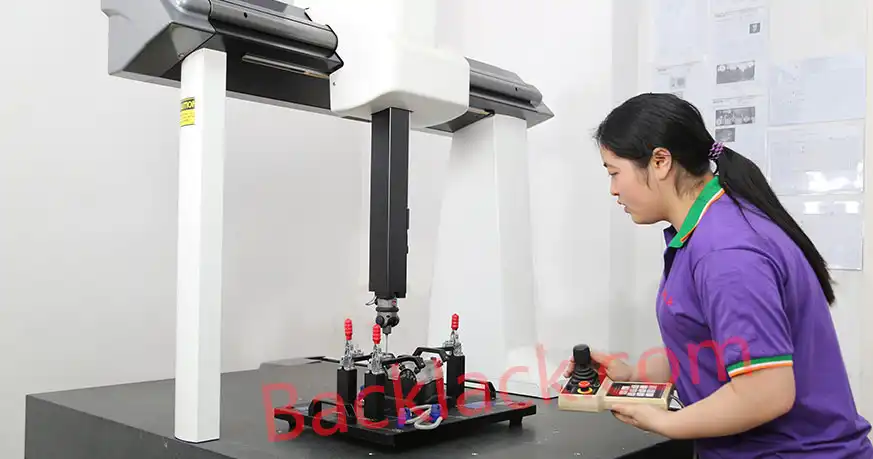
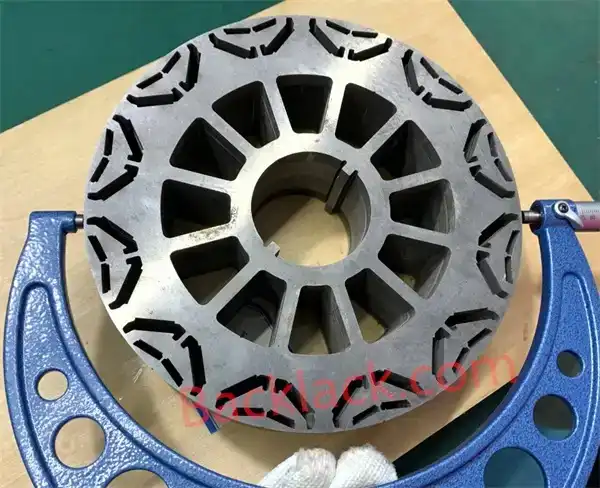
100% tooth shape inspection is carried out using a 3D image measuring instrument to ensure the Thin Lamination Stacking accuracy and tooth size accuracy, meeting the requirements of Low Cogging Force Core Design. The lamination parallelism is <0.03mm, and the air gap magnetic density uniformity deviation is ≤0.5%, avoiding thrust fluctuation and loss increase caused by magnetic circuit asymmetry, and ensuring the quality of High-precision Motor Laminations. At the same time, the coaxiality of the inner and outer diameters of the iron core is strictly controlled to prevent sweeping.
Surface Treatment
Diversified customized solutions are provided, including optional environmentally friendly anti-rust oil, vacuum epoxy resin encapsulation, or special insulating paint coating. Among them, vacuum epoxy resin encapsulation can achieve IP67 protection level, adapting to special environments such as semiconductor clean rooms and humidity, meeting the clean needs of semiconductor and medical equipment, and further ensuring the long-term stability of the low-loss and high-precision performance of Backlack Stator Core (self-bonding stator core).
Industry Implementation: Youyou Backlack Stator Core Empowers Breakthroughs in Semiconductor/Linear Motion Systems
Currently, Youyou Company's Backlack Stator Core (self-bonding stator core) and 0.1mm/0.2mm Ultra-Thin Silicon Steel Lamination Assemblies have been successfully implemented in many core fields such as semiconductors, high-end automation, and laser processing, accurately adapting to application scenarios such as Linear Motor Stator Core, Iron Core for Linear Actuators, and Segmented Stator for Long-stroke Motors. It solves the low-loss and high-precision pain points that traditional processes cannot break through for customers in linear motion systems and semiconductors, realizing the upgrading of equipment performance.
In the semiconductor field, it provides Backlack Stator Core (self-bonding stator core) for 12-inch wafer handling equipment, adopting Low Cogging Force Core Design and 0.1mm ultra-thin silicon steel lamination assemblies, achieving ±50nm repeat positioning accuracy within 500mm stroke, helping customers break through the 7nm process bottleneck, and increasing equipment yield by more than 12%. In the laser micromachining field, it adapts to TGV micro-hole processing equipment, providing high-precision Backlack Stator Core (self-bonding stator core), achieving a tracking error of ≤±2μm at 2m/s speed, ensuring the consistency of micro-hole roundness, and meeting the processing needs of foldable screen backplanes. In the high-speed automation field, it provides Segmented Stator for Long-stroke Motors for high-speed placement machines. With the core advantages of rivet-free self-bonding linear motor stator of high physical strength, low noise, and high electromagnetic efficiency, it achieves 5-year maintenance-free operation, reducing annual maintenance man-hours from 120h to 10h, and greatly improving production efficiency.
Combined with the current linear motor industry trend — developing towards higher precision, higher efficiency, more compactness, and more reliability, Youyou Company's Backlack Stator Core (self-bonding stator core) and Thin Lamination Stacking process accurately meet the industry's core requirements for Linear Motor Stator Core of "low loss, high rigidity, high precision, and high consistency", becoming the core driving force for the development of the next generation of high-precision linear motors, and also the preferred supplier for semiconductor and linear motion system customers.
Conclusion: Reconstruct the Core Competitiveness of Your Linear Drive System with High-Precision and Low-Loss Core Advantages
In the competition of high-precision motion control, the quality of High-precision Motor Laminations determines the upper limit of motor performance, and the performance of the motor determines the core competitiveness of high-end equipment. Traditional riveting and welding processes can no longer adapt to the needs of the next generation of high-precision linear motors. Youyou Company's Backlack Stator Core (self-bonding stator core), relying on the core processes of Thin Lamination Stacking and Stress-free Annealing, combined with the processing strength of 0.1mm/0.2mm Ultra-Thin Silicon Steel Lamination Assemblies, not only solves the inherent defects of traditional processes but also achieves a dual breakthrough in low loss and high precision, perfectly adapting to application scenarios such as Linear Motor Stator Core, Iron Core for Linear Actuators, and Segmented Stator for Long-stroke Motors.
Youyou Company is not only your High-precision Motor Laminations processor but also your technical partner — we deeply understand the pain points of customers in linear motion systems and semiconductors, focus on the R&D and production of Backlack Stator Core (self-bonding stator core), and can provide a full-process solution from Silicon Steel for High-speed Linear Motors selection, Low Cogging Force Core Design to quality control, helping your equipment break through performance bottlenecks and gain an advantage in the competition of high-end manufacturing.
In the future, Youyou Company will continue to deepen the Backlack Stator Core (self-bonding stator core) technology, optimize the Thin Lamination Stacking and Stress-free Annealing processes, continuously improve the processing accuracy of 0.1mm/0.2mm Ultra-Thin Silicon Steel Lamination Assemblies, combine with industry new technologies such as AI-driven predictive maintenance, continuously optimize processes, enhance low-loss and high-precision advantages, and promote the iterative upgrading of high-precision linear motor technology, injecting new vitality into the development of high-end manufacturing industries such as semiconductors and linear motion systems.
Ready to elevate your motor performance?
Are you researching high-performance stator lamination solutions that deliver ultra-low loss, high precision, and high rigidity while eliminating the high losses, thrust ripple, and vibration of traditional riveting and welding for next-generation high-precision linear motion systems?
Request a Technical ConsultationContact us today for a technical consultation and sample evaluation. Our team will work with you to understand your specific requirements, optimize your core design, and deliver a solution that meets your performance, budget, and timeline needs.
About Youyou Technology
With decades of experience in precision motor core manufacturing, we specialize in custom stator and rotor laminations for the most demanding applications. Our capabilities include:
- Material expertise: Silicon steel (0.05mm–0.5mm), amorphous alloys, cobalt-iron alloys, and soft magnetic composites
- Advanced manufacturing: Laser cutting, precision stamping, automated stacking, and specialized coating technologies
- Quality standards: ISO 9001, IATF 16949, and industry-specific certifications
- Global partnerships: Serving leading OEMs in automotive, aerospace, industrial automation, and renewable energy sectors